
One Day in The Andes Itinerary
This one-day Andes itinerary follows Argentina’s Alta Montaña corridor from Mendoza City along Ruta Nacional 7. It links the mountain landscapes around Potrerillos and Uspallata with the Aconcagua area and Puente del Inca. It is a focused day of road travel and short stops, not a tour of the entire Argentine Andes or a full experience of Aconcagua Provincial Park.
- Leave Mendoza early and use Ruta Nacional 7 as the route’s backbone.
- Make Potrerillos, Uspallata, the Aconcagua or Horcones area, and Puente del Inca your main stops.
- Treat Aconcagua as a viewpoint or short permitted visit, not a summit attempt or long trek.
- Keep Las Cuevas and Cristo Redentor as conditional extras, especially in winter.
- Plan on a guided excursion, private driver, or self-drive arrangement rather than an unconfirmed public-transport schedule.
- Pack warm layers, sun protection, water, and suitable footwear for high elevations and changing temperatures.
A realistic one-day route from Mendoza
Use the order below as a flexible plan, not a fixed timetable. Aconcagua Provincial Park is 185 km from Mendoza City on Ruta Nacional 7, and the mountain corridor connects the main stops. Weather, road conditions, park access, and the time you spend along the way all shape the day, so leave room to adjust rather than trying to fit in every possible stop.
| Part of the day | Suggested stop | How to plan it |
|---|---|---|
| Early journey | Mendoza City to Potrerillos | Begin the westbound drive and allow time for a brief scenic stop. |
| Morning | Uspallata | Pause before continuing farther into the mountain corridor. |
| Middle of the route | Aconcagua or Horcones | Prioritize a viewpoint or short permitted visit if access is operating. |
| Later stop | Puente del Inca | Make time for the landmark, then begin the return toward Mendoza. |
| Conditional extension | Las Cuevas or Cristo Redentor | Add only if access, weather, and the day’s pace make it practical. |
The route is best treated as a full-day outing from Mendoza, with the return journey included in your plan. Avoid assigning every stop a strict time before you know the conditions and itinerary format. A guided tour may set its own sequence, while a private driver or self-drive plan gives you more control over how long to pause.
Start with Potrerillos and Uspallata
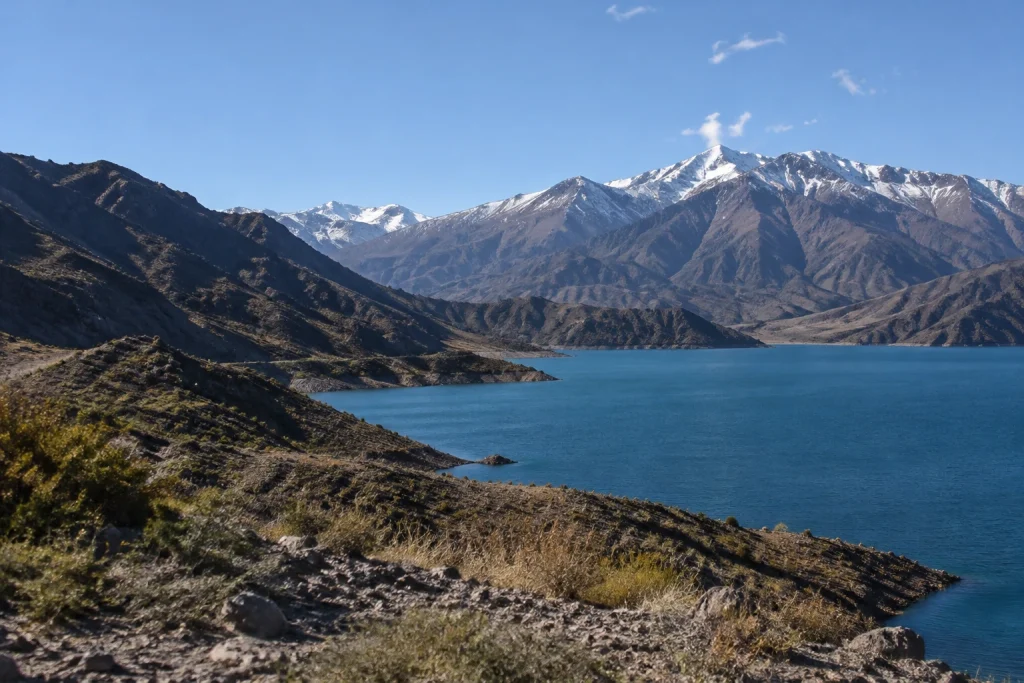
Begin with a short scenic pause around Potrerillos, then continue to Uspallata. These early stops break up the drive before the route reaches its higher mountain sections. If Aconcagua and Puente del Inca are your priorities, keep the pauses purposeful and leave enough flexibility for the farther-west stops.
A useful rule for this itinerary is to choose your essential stops before leaving Mendoza. The mountain corridor offers several places to pause, but a one-day trip has a finite amount of daylight and time. A relaxed stop in the morning is worthwhile; turning every pull-off into a long visit can leave the main high-altitude stops rushed.
Make Horcones a focused Aconcagua stop
For a one-day itinerary, plan to see the Aconcagua area from a viewpoint or take a short permitted walk if conditions and access allow. Horcones is at 2,800 metres, so even a brief stop places you well above Mendoza’s city altitude. Take your time, follow current park rules, and keep the visit suited to the conditions on the day.
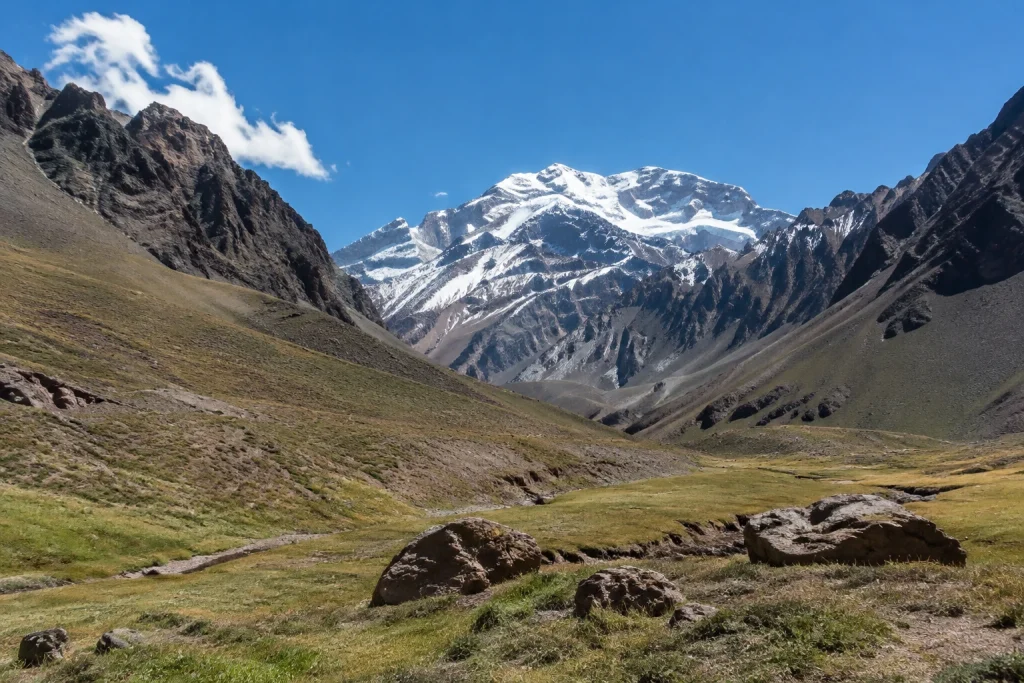
One day is not enough to experience Aconcagua Provincial Park in depth. Argentina’s national tourism guidance recommends allowing two to five days for the park, with additional time for specific tours. Keep expectations to roadside scenery, viewpoints, or a short permitted visit; do not build this itinerary around a summit attempt, expedition, or long trek.
If trekking is part of your plan, a park permit may be an additional cost. Requirements and tariffs depend on the activity and applicable visitor category, so check the current provincial booking rules before setting out. A quick viewpoint stop and a trekking itinerary are different kinds of visits, so make sure your plans match the access and permissions for the activity you choose.
Continue to Puente del Inca, then turn back
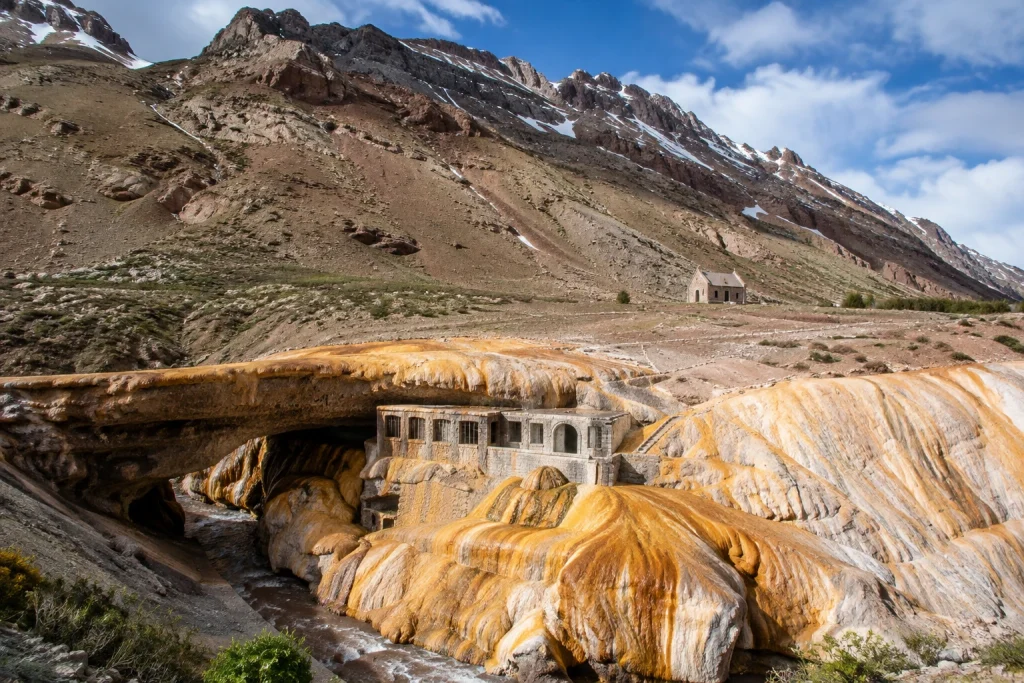
Puente del Inca is a natural main stop on the westbound route. The landmark sits at 2,730 metres and belongs to the same Ruta Nacional 7 corridor as Potrerillos, Uspallata, and the Aconcagua viewpoint. Build in enough time to look around rather than treating it as a rushed photo stop, while keeping the return to Mendoza in mind.
For a compact day, Puente del Inca is a sensible point to turn back. Las Cuevas lies farther along the corridor, but adding it can stretch the day and depends on conditions and access. Choosing a clear turnaround point helps preserve time for the main stops and avoids making the itinerary depend on a further-west extension.
Treat Las Cuevas and Cristo Redentor as extras
Las Cuevas and Cristo Redentor should not be assumed as standard parts of a one-day Mendoza itinerary. They sit farther along the mountain corridor, and access depends on the season and conditions. Mendoza Tourism describes Cristo Redentor access in summer, making it a particularly uncertain addition outside that season.
In August, plan a winter version of the route and check current conditions before leaving Mendoza. Heavy snow can affect the Puente del Inca area in winter, and protected-area activities may be suspended in adverse weather. Do not assume that a road, park trail, or border-area extension will be open on a particular day.
Choose transport that works for a full mountain day
A guided excursion, private driver, or self-drive vehicle is the practical way to plan this one-day route. The main stops are spread along Ruta Nacional 7, and a tight itinerary needs transport that can follow your chosen sequence and return to Mendoza. The right option depends on whether you value a set tour plan or more control over your stops.
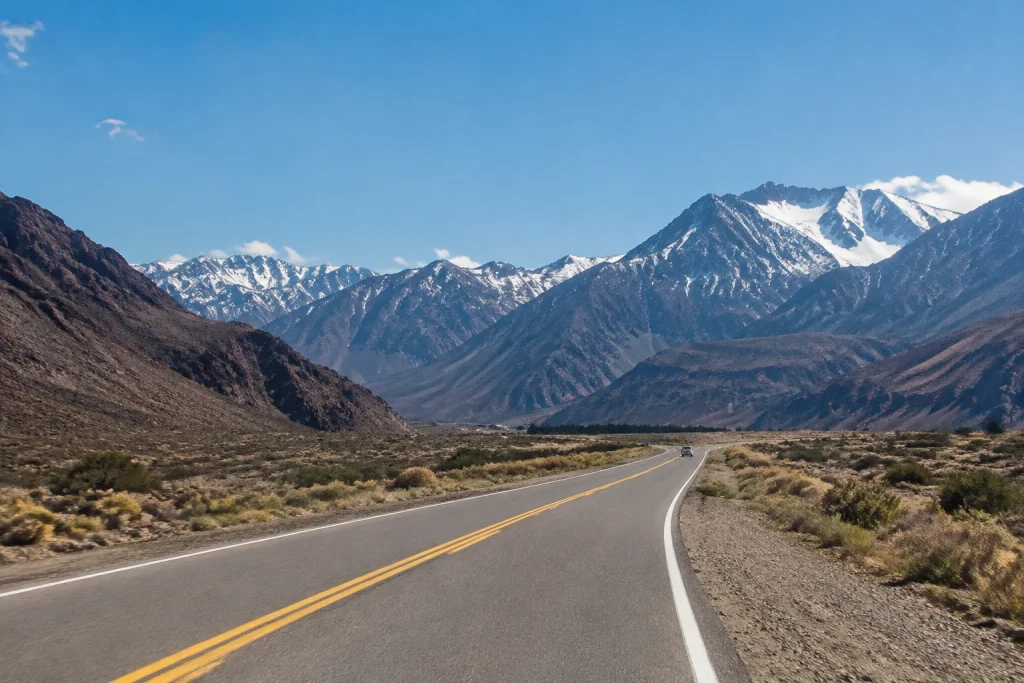
A guided trip can simplify the day’s logistics. Check your booking confirmation for pickup details, included stops, and the return arrangement. A private driver offers more flexibility over pauses, while self-driving puts the route decisions in your hands. In either case, keep the plan flexible enough to respond to weather and access changes.
Do not build a tightly timed same-day itinerary around public transport without first confirming a current schedule that suits the route and return. The corridor is established, but that alone does not make a bus timetable fit a full day of stops. If you are comparing trip formats, focus on the pickup point, planned route, time at each stop, and how the return is handled.
Plan around winter conditions and park season
Aconcagua Provincial Park’s listed season runs from November through March. The park area is described as dry and cold, with substantial temperature variation, while winter brings heavy snow around Puente del Inca. These conditions make season an important part of the itinerary, not a small detail to check after choosing your stops.
The route is weather- and access-dependent at any time of year, and winter calls for extra flexibility. Before departure, check current road conditions and whether your planned park activities are operating. If conditions change, shorten the route rather than treating Las Cuevas, Cristo Redentor, or a park walk as non-negotiable.
For a warm-season visit, the November-to-March park season is a useful planning reference, but it does not guarantee access to every activity on every date. Keep the same habit of checking current conditions and the details for your chosen tour or park visit. In winter, make the core stops conditional too, rather than assuming a published route description means the road and attractions are operating that day.
Pack for altitude, cold, and strong sun
Horcones reaches 2,800 metres and Puente del Inca 2,730 metres. The park’s dry, cold conditions and temperature changes with altitude call for practical layers, even if you expect to spend most of the day in a vehicle. Move at an unhurried pace at the higher stops and avoid turning a short visit into a demanding walk.
- Warm layers and a wind-resistant outer layer.
- Sunglasses, a hat, and sun protection.
- Supportive footwear suited to uneven ground.
- Water and simple snacks for a long road day.
- A small daypack for carrying and adjusting layers.
If this is your first high-elevation outing, read an altitude acclimatisation guide before the trip and plan a comfortable pace. The practical aim is to enjoy the views without making the day a test of endurance. Bring layers you can add or remove, and pay attention to how you feel as the road climbs.
Check accessibility and activity details before booking
Do not assume the full route is wheelchair accessible. Practical details can differ between stops, including parking, paths, gradients, toilets, viewpoints, and transport. Travelers with mobility needs should confirm current arrangements for each planned stop with their tour operator or Mendoza Tourism before booking.
Also check which stops and activities are included in a tour, particularly if you expect to visit the park or take a walk. Trekking may involve a separate permit and current tariff. Keep the plan clear: a road-corridor sightseeing day is not the same product or experience as a multi-day park visit.
Who this one-day Andes itinerary suits
This route suits travelers based in Mendoza who want a focused high-mountain outing without committing to a trek. Its strength is the sequence of stops along Ruta Nacional 7, including the Aconcagua area and Puente del Inca. Its main limitation is time: one day can introduce you to the corridor, but it cannot replace a longer visit to Aconcagua Provincial Park.
Leave early, keep the western extensions optional, and make current conditions part of your plan. If this day inspires a longer trip, Best Places to Visit in the Andes for First-Time Visitors is a useful starting point for thinking beyond Mendoza. For this outing, a steady pace and a clear return plan make the mountain corridor easier to enjoy.
Frequently asked questions
Can you see Aconcagua in one day from Mendoza?
Yes. A one-day trip can include the Aconcagua or Horcones area as a viewpoint stop or short permitted visit, depending on access. A fuller experience of Aconcagua Provincial Park generally calls for two to five days.
What stops should I include on a one-day Andes itinerary from Mendoza?
Prioritize Potrerillos, Uspallata, the Aconcagua or Horcones area, and Puente del Inca. Treat Las Cuevas and Cristo Redentor as optional extensions that depend on conditions, access, and the time available.
How high are Horcones and Puente del Inca?
Horcones is at 2,800 metres and Puente del Inca is at 2,730 metres. Bring layers, sun protection, water, and suitable footwear, and take an unhurried pace at the higher stops.
Can I visit Cristo Redentor on this itinerary?
Treat Cristo Redentor as a conditional extension rather than a standard stop. Mendoza Tourism describes access in summer, and current seasonal and weather conditions determine whether it fits your trip.
Is the route suitable for August?
It can be planned as a winter outing, but the route and activities are weather- and access-dependent. Winter brings heavy snow around Puente del Inca, so check current road and park conditions before departure.
Should I rely on public transport for this day trip?
Do not rely on public transport for a tightly timed itinerary unless you have confirmed a current schedule that fits the route and return. A guided excursion, private driver, or self-drive plan is a more practical format for planning the main stops.
Do I need a permit to visit Aconcagua?
A park permit may be an additional cost for trekking, and requirements depend on the activity. Check the current provincial booking rules and tariffs if you plan to walk in the park.
More bookable experiences
Three tours to compare
Review current provider details before booking. Discover Andes may earn a commission at no extra cost to you.
Continue exploring
More practical guides selected from the Discover Andes library.
7 Days in The Andes Itinerary
Plan a week in Argentina’s Northern Andes with Salta, the Quebrada de Humahuaca, Purmamarca, Tilcara, and Salinas Grandes.…
Cusco Airport Layover Guide
Planning a layover at Cusco Airport? Learn when to stay at the terminal, how to approach a focused…
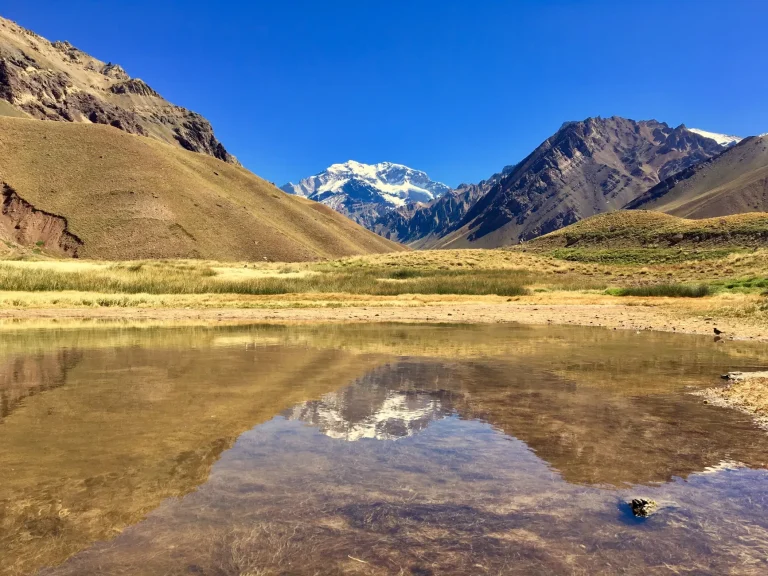
Best Mountains in the Andes
Compare four standout mountains in Argentina’s Andes, including Aconcagua, Fitz Roy, Cerro Tronador, and Lanín, with practical guidance…
Best Markets in the Andes
Plan a craft-focused route through northwest Argentina with Cafayate’s artisan fairs, Seclantás’s textile makers, San Lorenzo, San Francisco…