Mendoza Andes Travel Guide
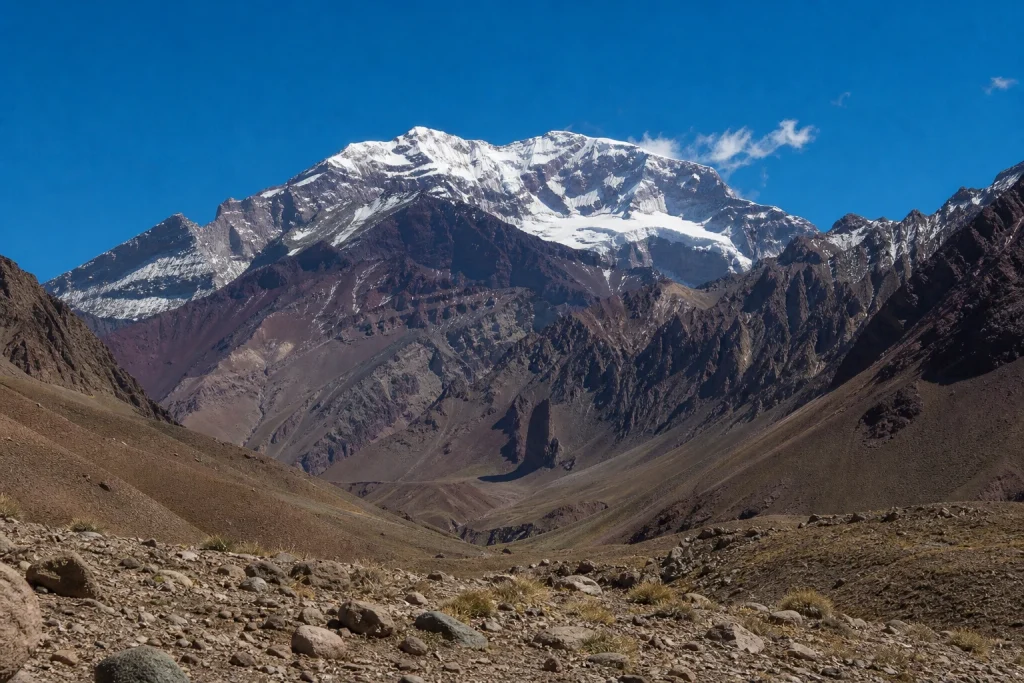
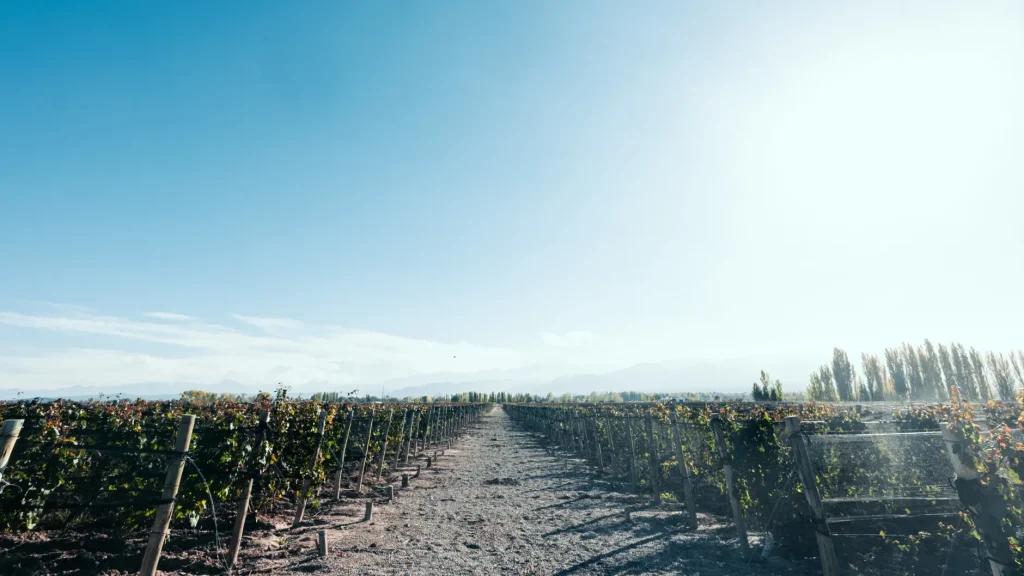
Mendoza is one of Argentina’s most rewarding places to combine vineyards with high-Andes scenery, but the mountain part of the trip deserves its own pace. Aconcagua Provincial Park, the Horcones area, and National Route 7 put dramatic terrain within reach of Mendoza City, while the large rise in altitude changes how you should plan each day. This Mendoza Andes travel guide focuses on building a realistic, flexible itinerary.
Mendoza Andes travel at a glance
- Use Mendoza City as your base and Francisco Gabrielli International Airport, also called El Plumerillo, as the main air gateway.
- Treat a visit to Aconcagua and Horcones as a long, high-altitude mountain day rather than a quick city excursion.
- Choose autumn or spring for a balanced wine-and-mountains trip. June through September is the broad snow season.
- Reserve protected-area entry online before you travel. Aconcagua tickets are not sold at the park entrance.
- Leave room in an August schedule for wind, weather, road, and mountain-access changes.
The essential choice is simple: plan a high-mountain sightseeing day, or prepare for a permit-led trekking or climbing objective. Horcones offers the more practical starting point for many visitors. Aconcagua’s summit, at 6,962 metres, belongs in a different category entirely. Let that distinction shape your time, budget, fitness expectations, and booking sequence.
Arrive in Mendoza and orient your route
Francisco Gabrielli International Airport, commonly known as El Plumerillo, is Mendoza’s air gateway. Once you are in the province, National Route 7 is the principal east-west road running toward Chile, while National Route 40 follows a north-south line. These roads define the geography of a Mendoza Andes itinerary, especially if you are pairing city time and vineyard visits with a day in the high mountains.
Do not build a tightly timed plan around the mountain road. Conditions, border traffic, and transport schedules change, and the route toward Aconcagua is best treated as a dedicated day. If Chile is the next stop, keep onward travel separate from your main mountain excursion instead of relying on a same-day crossing.
Give the city, vineyards, and altitude their own days
Mendoza works best when the first part of the trip stays close to your base. The city and wine country provide a lower-key introduction before the high Andes enter the picture. This is especially useful for visitors arriving from lower elevations, since the altitude difference between Mendoza City and other parts of the province can be substantial.
- Start with an arrival day in Mendoza, leaving time for the city or vineyard visits instead of immediately committing to a high route.
- Make the high-Andes outing a standalone day, with a relaxed evening and no nonrefundable onward transport afterward.
- Keep one flexible day for another vineyard visit, city time, or a rescheduled mountain plan if weather interrupts access.
Altitude is the reason this rhythm matters. Allow your body time to adapt rather than scheduling a demanding trek right after landing. For more context, read the site’s plain-English guide to altitude acclimatisation in the Andes before finalizing major mountain days. The practical goal is to keep the first high-altitude experience manageable, then increase ambition only if you feel well.
Choose between Horcones, trekking, and an Aconcagua ascent
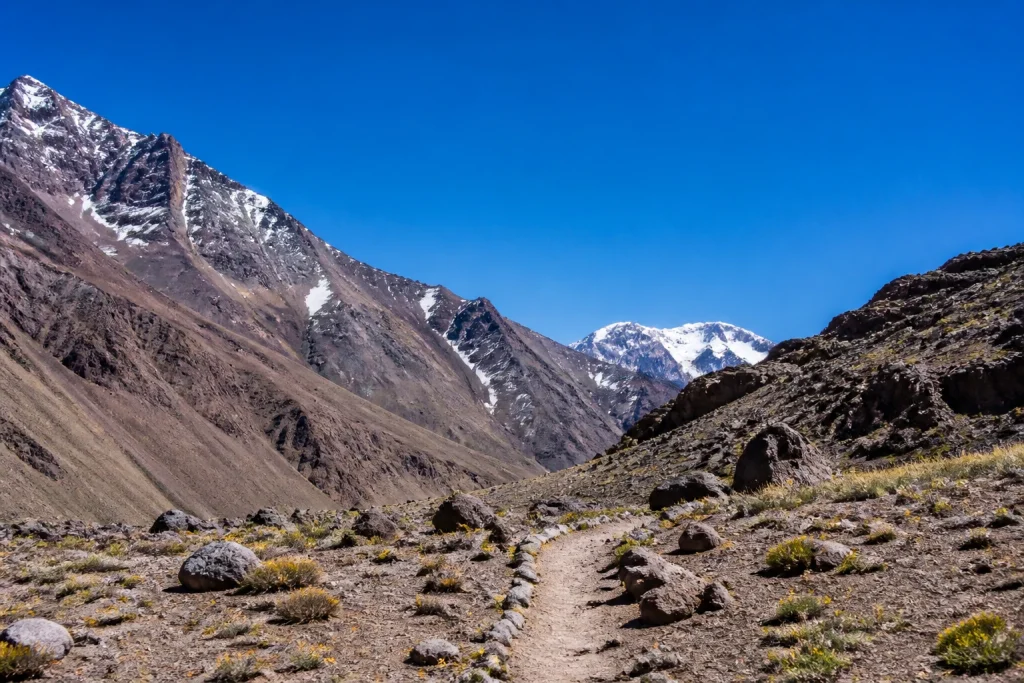
Aconcagua Provincial Park lies 185 kilometres from Mendoza City on National Route 7. Horcones sits at roughly 2,800 metres, making it a serious change in elevation even for a sightseeing-focused visit. It is the logical option for travelers who want the scale of the Andes and an introduction to the park without turning the trip into a multi-day expedition.
Horcones for a high-mountain encounter
The Horcones interpretive area is a sensible focus for a mountain day. Plan it as an outdoor, high-altitude visit with time for the journey itself, not as a brief detour between other bookings. The elevation alone is a good reason to move slowly, drink water regularly, and turn back if you feel unwell.
Trekking and climbing require a different commitment
Long trekking, three- or seven-day expeditions, and a summit attempt are distinct activities with their own routes, regulations, and permits. Do not treat the 6,962-metre summit as an optional extension of a Mendoza city break. It calls for expedition planning, the correct authorization, and a schedule built around the mountain rather than around winery reservations.
Book Aconcagua access before leaving Mendoza
Protected-area tickets, including Aconcagua entry, must be reserved online before travel and are not sold at the park gate. Book the appropriate activity rather than assuming one ticket covers every route. This is worth doing before you commit to transport or a guided day, particularly in a short itinerary where a missed booking window can disrupt the whole plan.
For three- or seven-day expeditions and summit permits, the provincial process directs travelers to the tourist-information office at Rotonda Caballitos de Marly in Parque General San Martín, rather than Horcones. Permit steps can change between seasons, so review the current workflow before arranging equipment, accommodation, or mountain transport.
Pick the season that matches your Mendoza trip
Autumn and spring are the strongest general seasons for travelers who want a balanced Mendoza visit with vineyard time, city exploration, and mountain scenery. These shoulder periods suit an itinerary built around variety rather than snow sports. They also make it easier to reserve a separate day for the high Andes without making the entire trip winter-focused.
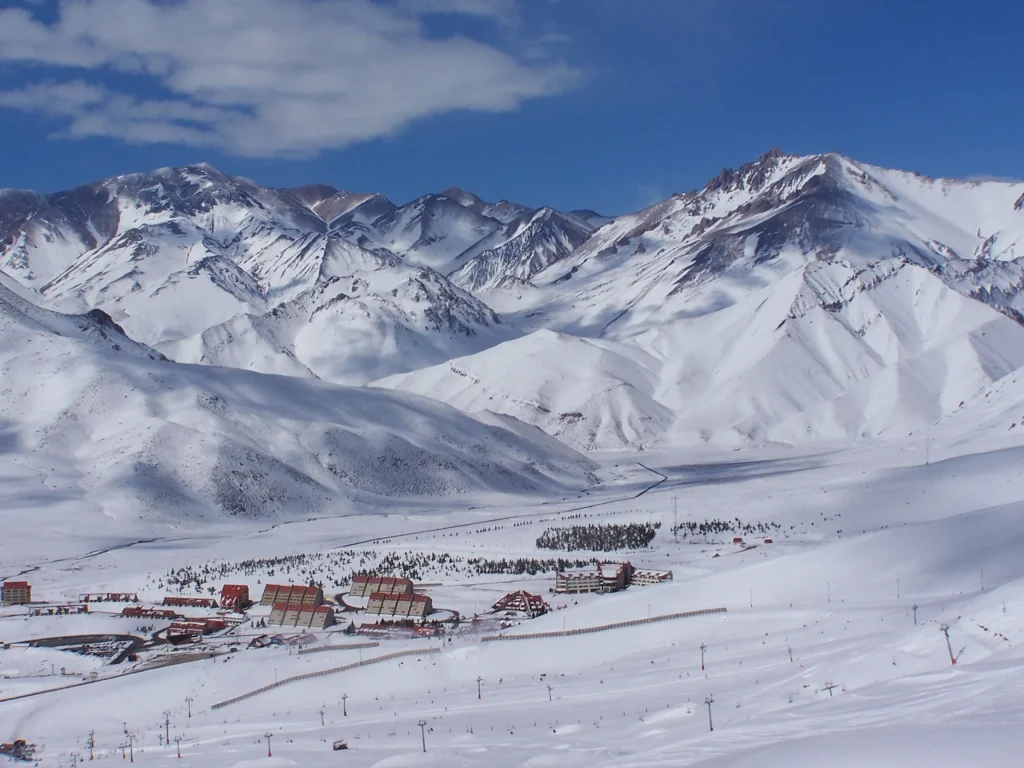
Snow-oriented trips belong to the June-through-September season, with July and August commonly suggested for skiing. For an August 17 visit, plan as a winter traveler: the Zonda wind is strongest in August and September, and Aconcagua’s winter season runs from May 1 through October 31. Winter activities require a written application for approval, so keep the mountain portion of your trip adaptable.
Research ski areas carefully in winter
Las Leñas, Los Penitentes, Los Puquios, and Vallecitos are names to investigate for Mendoza snow travel. Do not assume that a listed area has current lift operations, suitable snow, transport, or the services you need on your travel date. Confirm its status before reshaping an itinerary around it, and reserve accommodation early when winter demand is high.

Keep a weather buffer for every mountain day
Protected-area access and activities can be suspended by adverse weather or force majeure. A paid visit that is suspended can be eligible for rebooking under the applicable conditions, but that does not help if you have already committed to a nonrefundable flight, border transfer, or overnight plan. Put the Andes outing before your final departure day and leave one workable alternative in Mendoza.
Budget for permits and confirm accessibility needs
Protected-area costs depend on the activity selected, and rates published for the 2025-26 season are historical by August 2026. Use the current booking system for the final total rather than budgeting from an older tariff chart. This matters most at Aconcagua, where short trekking, long trekking, and ascent permits are separate categories.
| Planning item | What to expect | Best next step |
|---|---|---|
| Aconcagua entry and permits | Short trekking, long trekking, and ascent activities use different permit categories. | Select the exact activity first, then check the live booking total before paying. |
| Payment method | A prior tariff policy converted US dollar-denominated charges into Argentine pesos using a bank exchange rate. | Treat this as a past rule and confirm the current payment method during checkout. |
| Accessibility | A 2025 rule provided protected-area admission free of charge to people with disabilities, but it did not guarantee accessible trails, facilities, transport, or lodging. | Confirm the specific route, vehicle, restroom, and accommodation arrangements needed for your trip. |
Free admission and physical accessibility are different questions in the high Andes. A fee concession does not confirm step-free paths, accessible toilets, adapted vehicles, or suitable mountain lodging. Travelers with mobility, sensory, or medical requirements should build the itinerary around the individual services that can meet those needs, rather than relying on a general park-entry policy.
Pack for exposure and keep your plans simple
A high-mountain day calls for practical layers, sun protection, water, food, and footwear that matches the route. In winter, add warm, wind-resistant outer layers and protect hands and eyes. Keep your booking details handy, but avoid overpacking your schedule. The most useful item is often a spare day that lets you adjust to weather, wind, altitude, or a changed access plan.
- Layered clothing for a large change in elevation and winter exposure.
- Water, snacks, sun protection, and protective eyewear for time outdoors.
- Footwear suited to the exact activity, with proper trekking gear for any permit-led route.
- Online ticket or permit details for the protected area you plan to enter.
- A flexible final day in Mendoza instead of an immediate nonrefundable onward commitment.
Make Mendoza a journey of contrasts, not a race
Mendoza suits travelers drawn to vineyards, wide Andean landscapes, and the challenge of planning a mountain day well. The reward is in the contrast between a relaxed base and immense high-country terrain. Choose Horcones for a grounded first encounter with Aconcagua, save expeditions for a purpose-built trip, and give every winter or high-altitude plan enough room to change.
Frequently asked questions
What is the best time to visit Mendoza and the Andes?
Autumn and spring are the best general seasons for combining vineyards, Mendoza City, and mountain scenery. Snow travel is broadly centered on June through September, with July and August often favored for skiing.
How far is Aconcagua from Mendoza City?
Aconcagua Provincial Park is about 185 kilometres from Mendoza City on National Route 7. Horcones is around 2,800 metres above sea level, so allow for a long, high-altitude day.
Do I need to book Aconcagua in advance?
Yes. Protected-area tickets, including Aconcagua entry, must be reserved online before travel and are not sold at the park entrance. Multi-day expedition and summit permit procedures have additional steps.
Can I visit Aconcagua on a Mendoza city break?
You can plan a mountain sightseeing visit centered on the Horcones area during a Mendoza stay. A multi-day trek or ascent is a separate, permit-led expedition and should not be treated as a casual add-on.
Is August a good month for skiing near Mendoza?
August falls within Mendoza’s broad June-to-September snow season and is commonly suggested for skiing. Confirm the operating status, snow conditions, lifts, and transport for your chosen area before booking.
How should I manage altitude around Mendoza?
Give yourself time to adapt before scheduling a demanding high-altitude activity. Start with a lower-key day in Mendoza, then make the high-Andes outing a standalone commitment rather than stacking it immediately after arrival.