
Best Markets in the Andes

The best markets in the Andes are not always permanent halls packed with daily stalls. In northwest Argentina, the most rewarding documented shopping experiences are a mix of artisan fairs, maker-to-maker textile routes, and rural producer communities. This guide focuses on Salta’s Calchaquí Valleys and Jujuy’s Quebrada and Puna, where a handwoven poncho, a piece of pottery, or a salt-carved object can become part of the journey rather than a last-minute souvenir.
- Choose Cafayate for the clearest one-town browse of pottery, silverwork, and loom-woven crafts.
- Go to Seclantás for a direct-from-maker textile route and the traditions associated with the Salta poncho.
- Treat San Lorenzo as a smaller artisan-fair stop that pairs local products with time outdoors.
- Visit San Francisco de Alfarcito for rural producers working with wood, stone, salt, and llama wool.
- Use Tilcara as a festival-timed base, not as a guaranteed permanent-market stop.
What counts as a market on this Andes shopping route
A useful Andes shopping itinerary starts by matching the place to the experience you want. Cafayate and San Lorenzo are artisan-fair stops. Seclantás is an artisan route, where the appeal lies in seeking out makers. San Francisco de Alfarcito is a rural community visit with crafts and local producers. Tilcara earns its place for its cultural calendar, especially when a fair coincides with a festival.
| Stop | What it is | Best reason to go | Useful planning fact |
|---|---|---|---|
| Cafayate, Salta | Artisan fairs around the main square | Browse several classic craft categories in one town | Look for pottery, silverwork, and loom-woven pieces. |
| Seclantás, Salta | Camino de los Artesanos artisan route | Prioritize textiles and direct contact with makers | It is 30 km from Cachi. |
| San Lorenzo, Salta | Local artisan fair | Add a smaller shopping stop to an outdoors-focused day | The fair is associated with local products and the river area. |
| San Francisco de Alfarcito, Jujuy | Rural artisan and producer community | Seek wood, stone, salt, and llama-wool work | It lies 40 km from Salinas Grandes and 140 km from Tilcara. |
| Tilcara, Jujuy | Festival and cultural base | Plan around event-led craft and food fairs | It is reached via Ruta Nacional 9 from San Salvador de Jujuy. |
Build flexibility into every stop. Fair dates, access arrangements, payment options, facilities, and accessibility details are not fixed in the published visitor information for these places. Check the relevant municipal, provincial, or event calendar before committing a full day to a fair, particularly in Jujuy where many opportunities are tied to celebrations.
Cafayate artisan fairs: the best all-around craft browse
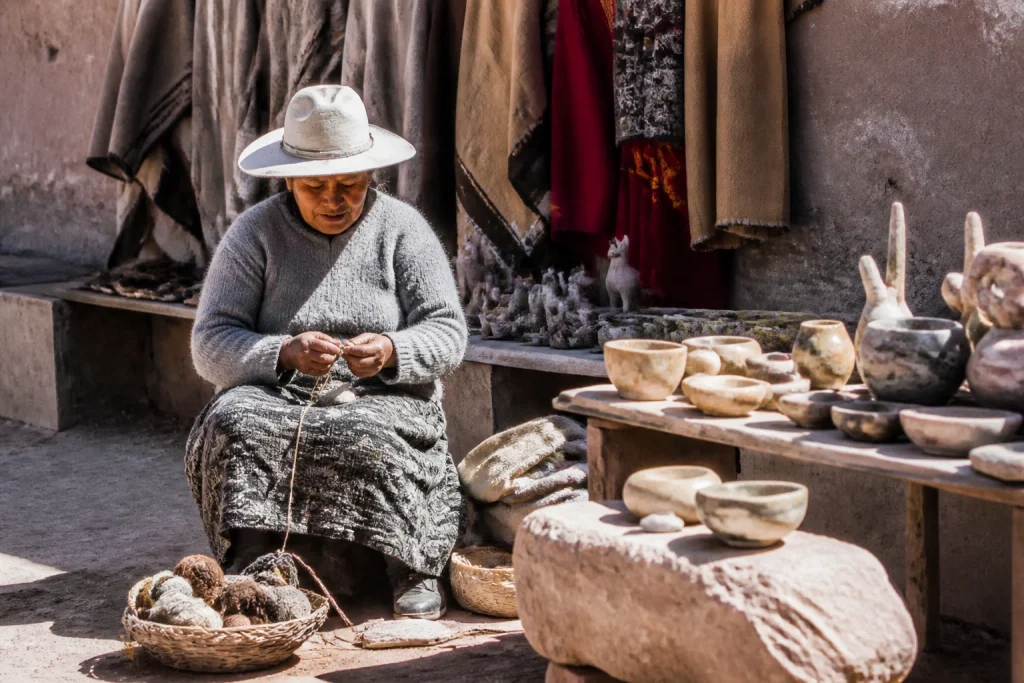
Cafayate is the strongest choice for travelers who want several classic Andean craft categories in one compact stop. Its main square and artisan fairs bring together pottery, silverwork, and loom-woven pieces, making this a practical place to begin a craft-focused trip through the Calchaquí Valleys. Rather than chasing a long list of villages, you can spend time comparing materials, techniques, and finishing details in one town.
What to look for in Cafayate
Start with the three categories that make Cafayate especially useful: pottery, silverwork, and pieces made on looms. The point is not to buy one of everything. It is to choose the craft that best fits your trip and give yourself time to notice the difference between a small decorative object and something you will use for years, such as a woven textile or a piece of jewelry.
Make Cafayate a flexible shopping stop
Cafayate works best when the fair is one part of the day rather than the only reason for it. The documented material does not set a daily schedule, stall count, price range, or access arrangements. Confirm the fair timing close to your visit, then leave enough room to browse without treating a fixed market timetable as guaranteed.
Seclantás: follow the Camino de los Artesanos for textiles
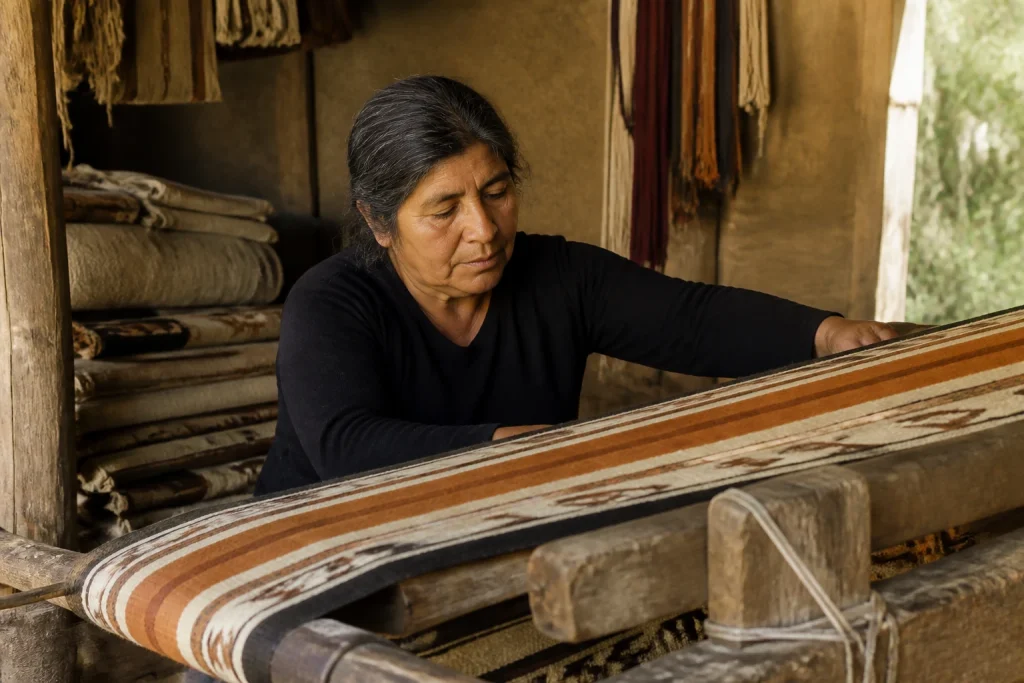
Seclantás is the choice for travelers who care most about textiles. Official tourism material presents the village as the birthplace of the Salta poncho and identifies its Camino de los Artesanos as a place to encounter accomplished artisans. This is not a one-stop market square. It is a more deliberate route, where the reward is spending time with the region’s weaving traditions rather than making a quick circuit of stalls.
Pair Seclantás with Cachi
Seclantás is 30 km from Cachi, so it makes sense as a focused addition for travelers already exploring this part of Salta. Give the stop more patience than you would a central fair. The value is direct-from-maker browsing, especially for visitors looking for a textile with a clear connection to the region rather than a broad selection of unrelated souvenirs.
A good approach is to decide in advance what kind of textile you would genuinely carry home. A small woven piece is easier to pack; a poncho is a more substantial purchase and a stronger statement of place. Ask practical questions about the material and care before you decide. That small conversation keeps the experience focused on the work itself.
San Lorenzo: a small artisan-fair stop with an outdoor day
San Lorenzo offers a lighter market-style stop in the Salta area. The local artisan fair is associated with local products and can be combined with time by the river and other outdoor activities. It suits travelers who enjoy fitting a little shopping into a wider day, rather than those who want the deepest possible craft hunt or a large destination market.
The sensible plan is simple: visit when a fair is confirmed, browse with modest expectations, and let the setting shape the day. San Lorenzo’s appeal is its combination of local products and an outdoor-oriented itinerary. For a more concentrated craft search, keep Cafayate and Seclantás higher on the list.
San Francisco de Alfarcito: a rural Puna producer visit
San Francisco de Alfarcito is for a different kind of shopping day. This Jujuy community is best approached as a rural artisan-and-producer visit, with people working in wood, stone, and salt as well as producers of llama-wool clothing. The experience has a direct connection to the local community, which makes it compelling for travelers who would rather meet the source of a craft than browse a conventional market layout.
Plan around the distance, not a quick detour
San Francisco de Alfarcito is 40 km from Salinas Grandes and 140 km from Tilcara. Those distances make it a purposeful addition to a Jujuy itinerary rather than a casual stroll between attractions. The community has lodging in inns and family homes, which can be useful context when shaping a slower rural visit. Confirm current travel and visitor arrangements before setting out.
This is a strong choice when the object matters as much as the shopping moment. A llama-wool garment or a work in stone, wood, or salt carries a more specific sense of where it was made. Give the visit enough space in your schedule to remain a community encounter, not a rushed retail stop.
Tilcara: use the festival calendar to find fair opportunities
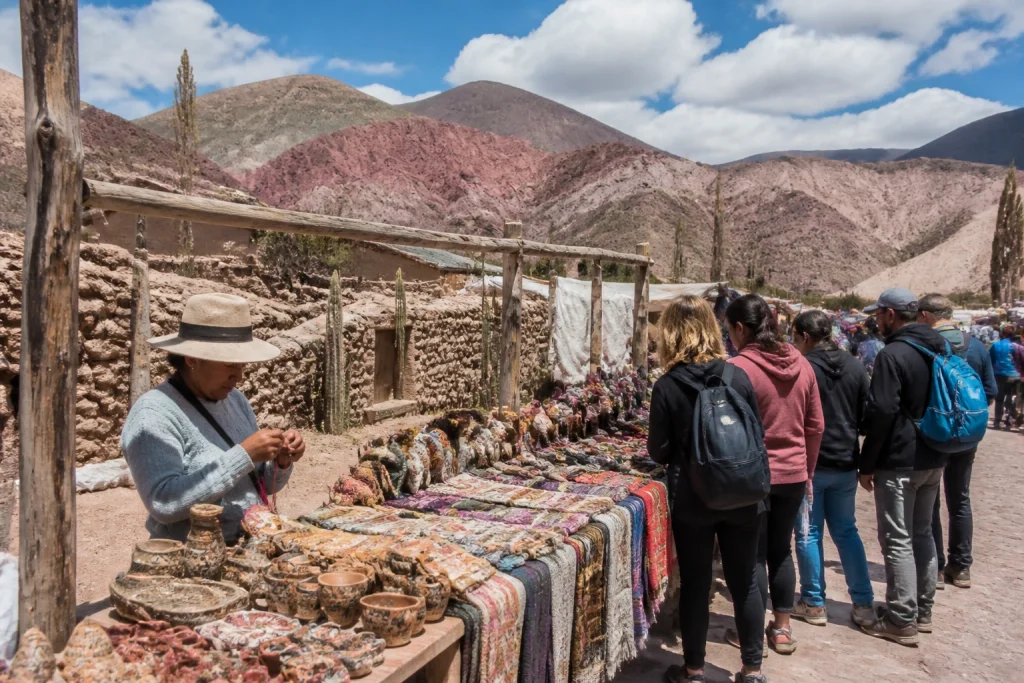
Tilcara belongs on an Andes market itinerary as a cultural base, not as a guaranteed permanent-market destination. It is reached from San Salvador de Jujuy via Ruta Nacional 9, and its major cultural dates include Enero Tilcareño, Holy Week, and Carnaval de Humahuaca. If your trip overlaps with these periods, a craft or food fair can add a lively local dimension to the Quebrada experience.
Festival dates matter more than a fixed market address
Jujuy’s 2026 Holy Week program included more than 150 activities across four regions, including fairs, showing how strongly market opportunities can follow the event calendar. That is useful for planning but not a promise of the same program in later years. Check the calendar for the specific year of travel before building your schedule around Tilcara or nearby festival fairs.
Maimará is a useful reminder to time things carefully. A craft-and-food fair formed part of a November 2025 celebration there, but that single event should not be treated as an always-on market. If a confirmed celebration fits your route, it can be a welcome addition. If not, keep Cafayate, Seclantás, or San Francisco de Alfarcito as the more clearly defined craft stops.
Build an Andes shopping route around your priorities
A successful route does not try to force every stop into a single shopping category. Use Cafayate for breadth, Seclantás for textiles, San Lorenzo for a modest fair combined with an outdoor day, San Francisco de Alfarcito for community producers, and Tilcara for event-led timing. This approach avoids the common mistake of expecting every Andean town to offer a daily market of the same scale.
- Choose your priority: broad craft browsing, textiles, an outdoor-oriented fair, or a rural producer visit.
- Anchor the Salta portion around Cafayate if you want several craft categories in one place.
- Add Seclantás when a textile route and the Salta poncho tradition are central to your plans.
- Use Tilcara only after checking the cultural calendar for your travel dates.
- Before departure, confirm the fair date and any visitor essentials that matter to you, including payment, access, and facilities.
For the wider itinerary, the site’s Best Places To Visit In The Andes guide can help you place these craft stops within a larger mountain journey. If the high Puna is part of your plan, the Altitude in the Andes: A Plain-English Acclimatisation Guide is also a useful read before you lock in a fast-moving schedule.
Leave room for the unexpected fair
The most satisfying plan has a firm structure and a little slack. Schedule the destinations with the clearest purpose first, then let a confirmed festival fair fill an open afternoon. This is especially helpful in Jujuy, where events can create timely opportunities that do not appear as permanent-market fixtures. A flexible itinerary turns changing dates into part of the adventure rather than a disappointment.
How to buy crafts with care
The best purchase is usually the one you can explain clearly when you get home: where you found it, what it is made from, and why that maker or community mattered to your trip. In Cafayate, that could be a piece of pottery, silverwork, or a loom-woven item. In Seclantás, it may be a textile connected to the region’s poncho tradition. In San Francisco de Alfarcito, it could be work in local materials or llama wool.
- Ask what material was used and how the piece should be cared for.
- Choose something practical for your luggage and your everyday life.
- Take time with textiles, since texture, weight, and weave are part of the decision.
- When buying direct, focus on the maker’s work rather than rushing to collect the most items.
- Keep the experience grounded in the place: a carefully chosen object is more memorable than a hurried haul.
This approach also makes a fair schedule less frustrating. You are not searching for a checklist of identical souvenirs. You are looking for a meaningful encounter with craft, one that can happen in a town square, along an artisan route, or in a rural Puna community. That is the thread connecting the best market experiences in this part of the Andes.
Choose the market experience that fits your Andes itinerary
Choose Cafayate if you want the most straightforward artisan-fair browse. Choose Seclantás when textiles are the reason for the detour. Add San Lorenzo for a smaller local-products stop alongside time outdoors. Make room for San Francisco de Alfarcito when direct community producers matter most, and use Tilcara when your dates align with its festival calendar. The main limitation is timing, so confirm current details before you travel and then browse slowly once you arrive.
Frequently asked questions
What is the best market stop in the Argentine Andes for crafts?
Cafayate is the strongest choice in this guide for a concentrated craft-shopping stop. Its artisan fairs around the main square are associated with pottery, silverwork, and loom-woven pieces.
Are Seclantás and San Francisco de Alfarcito formal markets?
No. Seclantás is best understood as the Camino de los Artesanos artisan route, while San Francisco de Alfarcito is a rural artisan-and-producer community visit.
Does Tilcara have a permanent artisan market?
This guide treats Tilcara as a festival and cultural base rather than a confirmed permanent-market stop. Look for fair opportunities around dates such as Enero Tilcareño, Holy Week, and Carnaval de Humahuaca after checking the current calendar.
When should I check fair dates in Jujuy?
Check dates before you finalize your itinerary. Jujuy fairs can be tied to specific cultural events, and the large 2026 Holy Week program does not establish recurring schedules for later years.
Where should I go for Andes textiles and ponchos?
Go to Seclantás for the most focused textile experience in this guide. The village is presented as the birthplace of the Salta poncho and its Camino de los Artesanos is the key draw.
How far is San Francisco de Alfarcito from Tilcara and Salinas Grandes?
San Francisco de Alfarcito is 140 km from Tilcara and 40 km from Salinas Grandes. Plan it as a dedicated rural visit rather than a quick market detour.
More bookable experiences
Three tours to compare
Review current provider details before booking. Discover Andes may earn a commission at no extra cost to you.
Continue exploring
More practical guides selected from the Discover Andes library.
Romantic Things to Do in The Andes
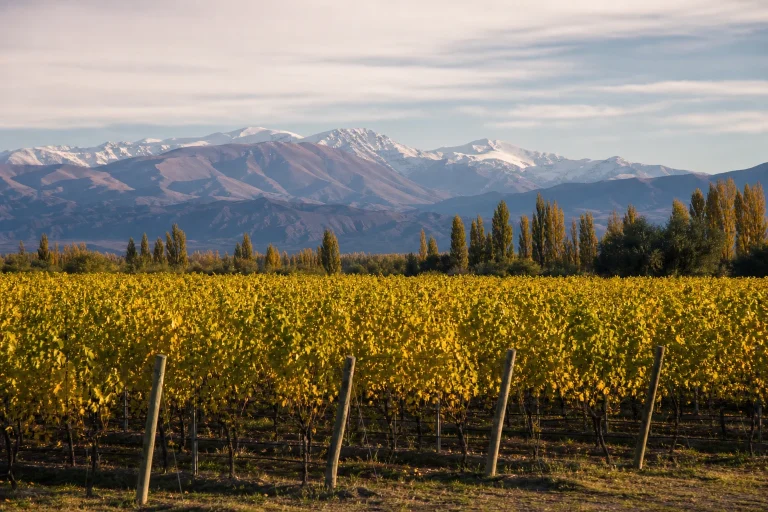
Plan a romantic escape in Argentina’s Andes with vineyard stays in Uco Valley, restorative experiences near Mendoza, highland…
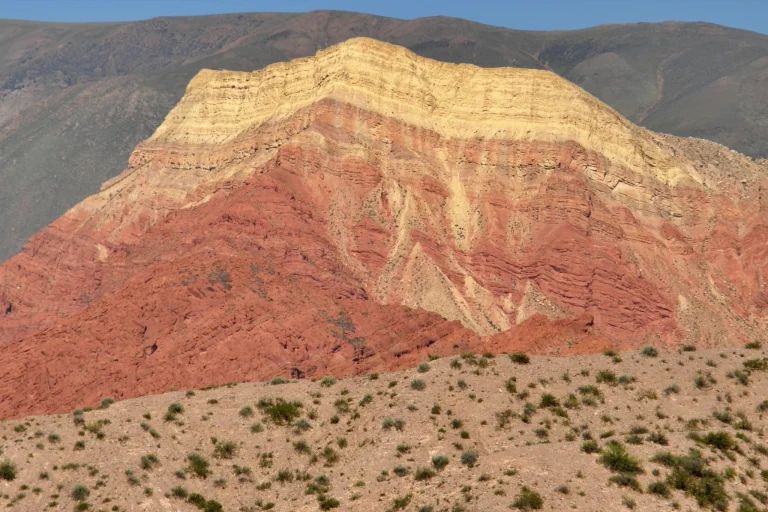
Best Things to Do in The Andes for First-Time Visitors
Plan a memorable first trip to Argentina’s Andes with high-desert experiences in the Quebrada de Humahuaca or glacier…
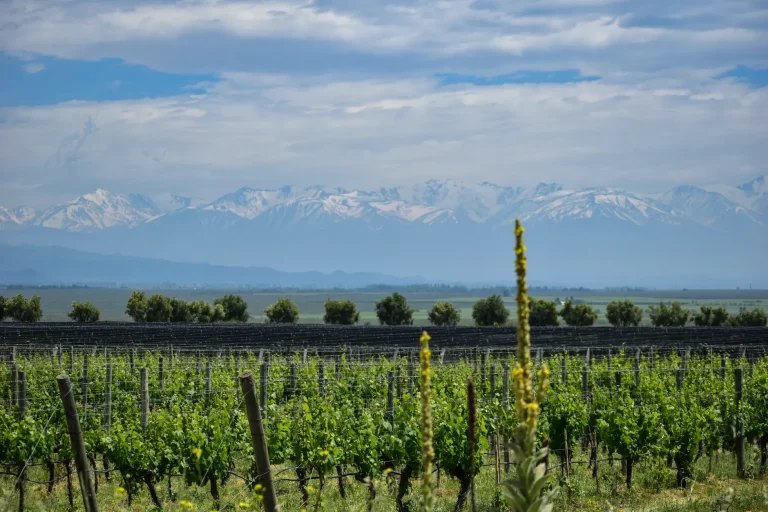
The Andes Foodie Weekend Itinerary
A focused two-night food itinerary for Mendoza, Argentina, pairing city meals with one vineyard lunch in Maipú or…
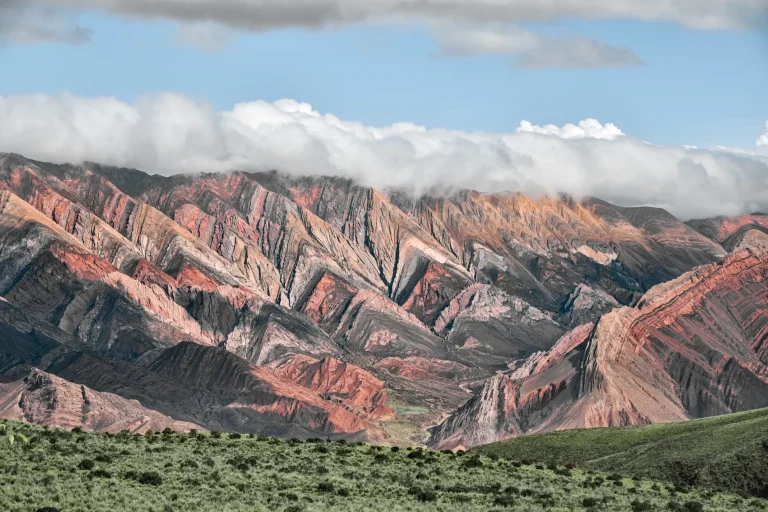
The Andes Sunset Spots Guide
Plan an Andes sunset outing in Argentina with realistic timing, high-altitude preparation, and the right choice between Aconcagua,…