
3 Days in The Andes Itinerary
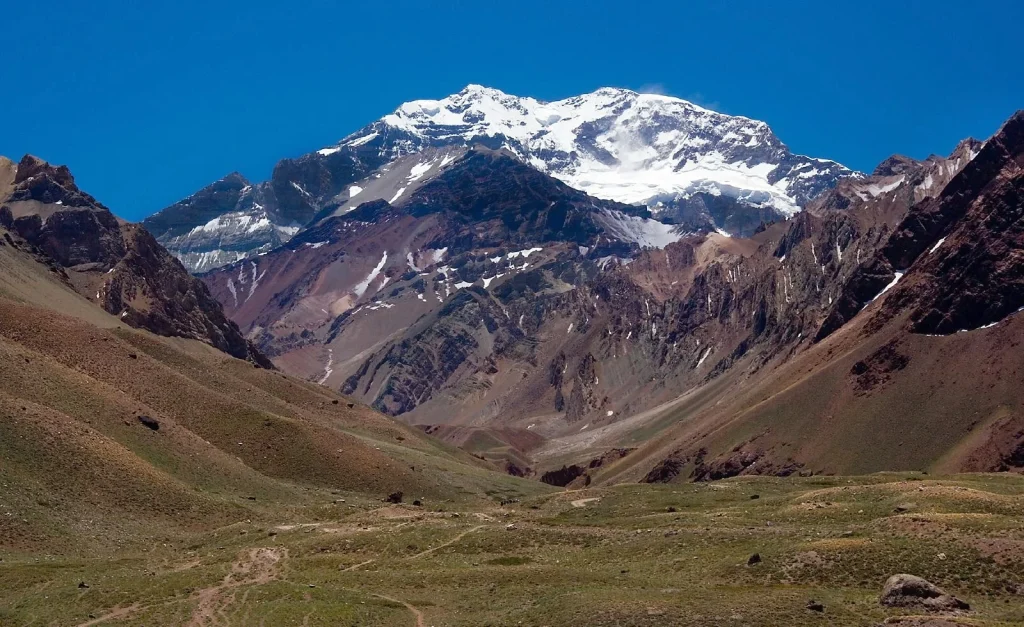
This 3 days in The Andes itinerary is designed for Argentina’s Central Andes, with Mendoza as the base for reaching the high-mountain corridor of Ruta Nacional 7. It is not an attempt to cover the entire Andes range. The focus is a compact, weather-aware trip that connects Mendoza with the Aconcagua area, Puente del Inca, and the dramatic approaches toward the Chilean frontier.
Three days is enough for a memorable introduction, provided you resist the urge to treat the mountains like a checklist. Give the high-altitude road day room to change, keep the final day flexible, and regard any winter park activity as conditional on current permits, trail access, and mountain weather.
- Base yourself in Mendoza rather than changing hotels along the route.
- Make Day 2 the main Ruta Nacional 7 sightseeing day, with Potrerillos, Uspallata, Horcones, Aconcagua, and Puente del Inca as the core sequence.
- Keep Day 3 free for a permitted Aconcagua visit or an easier Mendoza-based alternative if conditions shift.
- Do not confuse a visit to the Aconcagua area with an Aconcagua summit attempt.
- In winter, check official road and border status immediately before departure and again on the morning of travel.
- Pack for snow-season cold, strong sun, and high-elevation stops, then reserve accommodation ahead.
How to make three days in the Central Andes work
The useful rhythm is simple: arrive and settle into Mendoza on Day 1, devote Day 2 to the high mountains, then use Day 3 as insurance against weather or as a lower-commitment day before departure. This structure protects the part of the trip most exposed to snow, wind, road restrictions, and changing mountain conditions.
| Day | Base plan | Keep flexible |
|---|---|---|
| Day 1 | Arrive in Mendoza, organize layers and logistics, and stay in the city. | Avoid committing to a high-mountain outing on arrival day. |
| Day 2 | Follow the RN 7 high-mountain corridor via Potrerillos, Uspallata, Horcones and Puente del Inca. | Treat Las Cuevas and any border approach as an optional extra, not a promise. |
| Day 3 | Use a permitted Aconcagua-area visit if conditions allow, or stay closer to Mendoza before departure. | Let road, weather, and current park access decide the final plan. |
Day 1: Arrive in Mendoza and protect your mountain day
Start through Mendoza’s Francisco Gabrielli International Airport and make the city your two- or three-night base. A single base keeps the itinerary tidy and leaves you free to respond to mountain conditions rather than moving luggage between short stays. Aconcagua Provincial Park lies about 185 km from Mendoza city, so it deserves its own day rather than being squeezed around an arrival or departure.
Use the first afternoon for practical preparation. Confirm the next day’s road plan, set aside warm layers and sunglasses, and make sure your footwear is suitable for cold, uneven outdoor stops. During the June-to-September snow season, Mendoza accommodation is in higher demand, so arranging your room ahead is a sensible part of the itinerary rather than an afterthought.
Keep the pace gentle. The next day rises to Horcones at 2,800 m and Puente del Inca at 2,730 m, elevations that feel very different from a city arrival day. A relaxed first day also gives the trip a useful buffer if a delayed arrival, rental arrangements, or a changing forecast rearranges your plans.
Day 2: Follow Ruta Nacional 7 to Aconcagua and Puente del Inca
This is the centerpiece: a high-mountain sightseeing day along Ruta Nacional 7, generally shaped around Potrerillos, Uspallata, the Horcones and Aconcagua viewpoint area, and Puente del Inca. The order gives the day a natural westward flow from Mendoza into the Central Andes. Keep expectations flexible, because the route’s weather and operating conditions matter more than any fixed sequence of photo stops.
Potrerillos and Uspallata: build the route, not a rigid timetable
Potrerillos and Uspallata work best as waypoints that give shape to the drive rather than as stops to schedule by the minute. On a clear, open day, they help break up the journey toward the higher reaches of the corridor. In winter, leave enough slack to adapt to road controls, slower driving conditions, or a decision to turn around before the farthest planned stop.
Horcones and Aconcagua: admire the mountain without overreaching
Horcones is the key high-altitude stop, at 2,800 m, and the Aconcagua area is where the scale of this route becomes unmistakable. Aconcagua rises to 6,962 m, but a three-day itinerary is for viewing, short authorized access, and understanding the landscape, not for tackling the mountain itself. The official guidance for Aconcagua recommends two to five days, with longer periods needed for specific expeditions.
For an August trip, regard any park activity as a bonus that must be cleared by current conditions and the responsible authority. Aconcagua’s recommended visiting season is November through March because of climate. Winter activity categories have existed under Mendoza’s protected-area system, but adverse weather can suspend them and winter access is subject to authorization and current rules.
Puente del Inca: the essential landmark stop
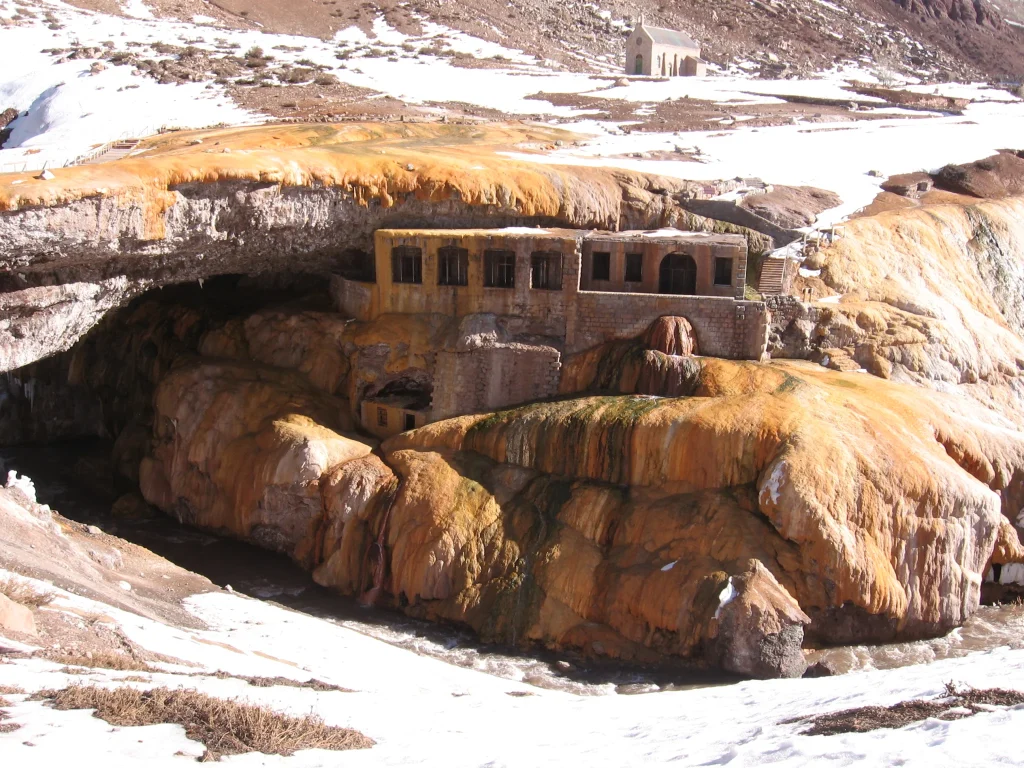
Puente del Inca is the route’s other essential landmark and sits at 2,730 m. Build time for the stop without assuming that every path, viewpoint, or roadside facility will operate normally in winter. Its elevation and exposed setting are reminders that this is a mountain outing first and a sightseeing circuit second.
Las Cuevas and the Chile border: treat them as optional
Las Cuevas can be added only if the day is running smoothly and conditions permit. You do not need to cross into Chile to have a complete Central Andes day, and keeping the itinerary within Argentina makes it more resilient. If you do intend to cross, bring valid travel documents and check the live Cristo Redentor border status before committing to the approach.
Day 3: Use a weather buffer instead of forcing a finale
Reserve Day 3 for the decision Day 2 could not make. If the mountains were closed or visibility was poor, this is your second chance for a permitted Aconcagua-area visit. If Day 2 went well, use the extra day for a lower-commitment Mendoza activity and keep the schedule easy before departure. The flexibility is the feature, not a gap in the plan.
This approach is especially useful in winter. The value of the trip is concentrated in one weather-exposed corridor, and a buffer day prevents one closure from unravelling the whole itinerary. It also avoids the common mistake of making high-mountain plans nonrefundable before road and park conditions are known.
Winter weather and road checks are part of the itinerary
August is winter in the Mendoza Andes. The snow season typically runs from June through September, and mountain weather can affect both the RN 7 corridor and Cristo Redentor operations. Official alerts recorded preventive closures and reopenings during the 2026 winter because of snow, wind, and other adverse conditions, so a clear plan on paper should never replace a same-day status check.
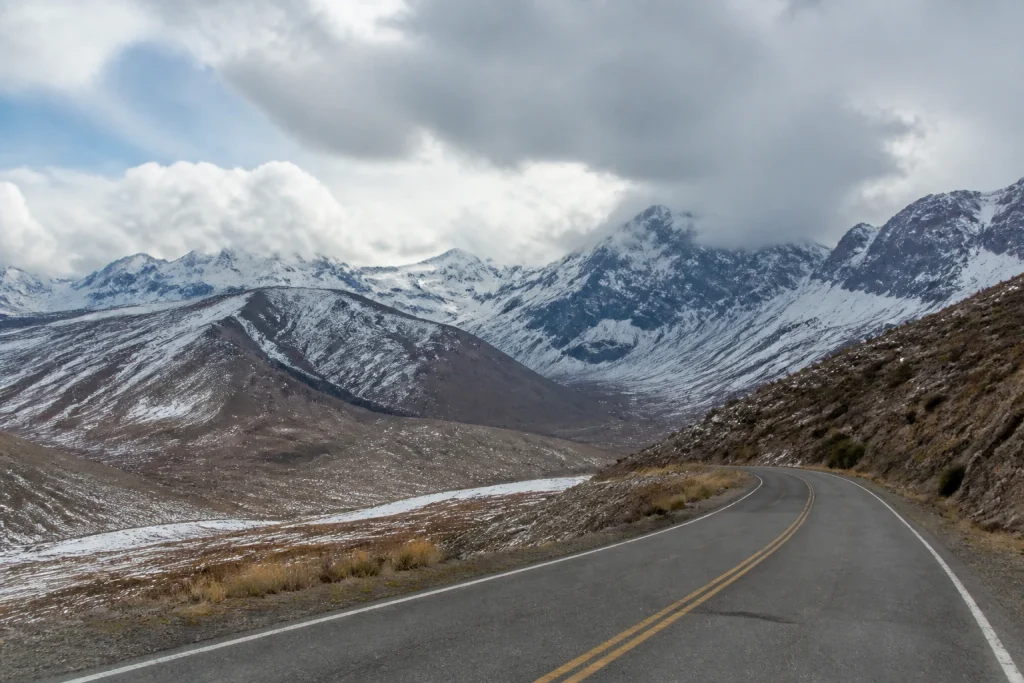
Check the official national-road and Cristo Redentor border updates the evening before your high-mountain day, then check again that morning. This matters even if you have no intention of crossing into Chile, since the same mountain corridor affects access toward Puente del Inca, Horcones, and Las Cuevas. If the route is restricted, shift to your Mendoza-based Day 3 plan without trying to salvage every stop.
Mendoza can also experience the Zonda wind, which is noted as stronger in August and September. It is another reason to leave breathing room around the road day and avoid chaining together fixed reservations that depend on a single mountain forecast.
Altitude: understand the difference between a visit and an expedition
The high-mountain stops are substantial in their own right: Horcones is listed at 2,800 m and Puente del Inca at 2,730 m. They are appropriate places to slow down, stay aware of how everyone in the group feels, and keep exertion modest. Aconcagua, at 6,962 m, belongs in a very different category and should not be treated as an add-on to a quick itinerary.
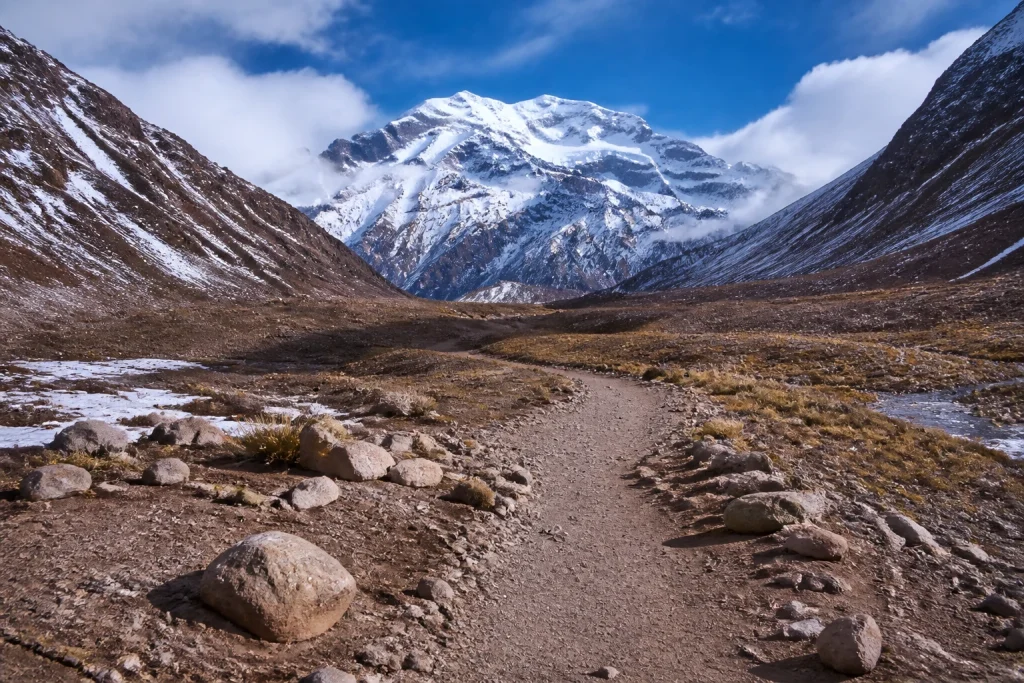
Build the itinerary around sightseeing rather than achievement. Use Day 1 to arrive and rest, avoid trying to turn a roadside view into a demanding trek, and follow any current park instructions. For travelers planning longer high-altitude journeys, the site’s Altitude in the Andes: A Plain-English Acclimatisation Guide is a useful companion to this short Central Andes route.
Transport, border decisions, and accessibility planning
The confirmed gateways for this itinerary are Francisco Gabrielli International Airport in Mendoza and Ruta Nacional 7 for the mountain journey. Since there is no dependable single transfer time for the 185 km trip to Aconcagua Provincial Park, avoid building the day around a precise arrival promise. Choose transport arrangements that can respond to the road conditions published on the day.
A tour can simplify the driving decision, while independent travelers need to make their own road-ready arrangements. Either way, leave your return plans open enough to respond to a closure, a change in weather, or a shorter route. Crossing into Chile is optional, and it adds border procedures and a stronger dependence on Cristo Redentor operations.
Do not assume this is a step-free itinerary. Verified accessibility details are not available for paths, restrooms, transport, or interpretation at Horcones, Puente del Inca, Las Cuevas, and the other high-mountain stops. Travelers who need wheelchair-accessible transport or facilities should confirm the current arrangements with their chosen transport provider and the park authority before finalizing the trip.
What to pack and book before leaving Mendoza
For a winter high-mountain day, bring warm layers, sport-appropriate outerwear, suitable footwear, sunglasses, and sun protection. The combination matters: temperatures and snow-season conditions call for warmth, while exposure at altitude makes eye and skin protection useful. Keep these items accessible rather than buried in luggage, especially if Day 2 begins soon after arrival.
Book Mendoza accommodation ahead during snow season, then keep your high-mountain arrangements as flexible as possible. Park fees and permit requirements vary by activity, season, and visitor category. Verify the current entry or permit cost before booking, rather than relying on an older tariff list, and check the specific inclusions of any transport or excursion arrangement.
What to leave out of a three-day Andes trip
Skip the summit fantasy, the mandatory Chile crossing, and the urge to assign every possible stop to one day. Aconcagua expeditions need far more preparation than this itinerary allows, while the border adds a layer of documents and operational uncertainty that is unnecessary for seeing the core Argentine highlands. Let Las Cuevas be a welcome extension, not the measure of a successful day.
The better trade is breadth for resilience. A day that reaches Horcones and Puente del Inca under good conditions is already a satisfying Central Andes experience. Keeping a second flexible day makes the trip stronger than an overfilled schedule that collapses at the first snow closure.
Who this three-day Central Andes plan suits
This itinerary suits travelers who want a short, scenic introduction to Argentina’s Central Andes without pretending that a major mountain expedition fits into a long weekend. Mendoza provides a practical base, Ruta Nacional 7 supplies the high-mountain drama, and the Day 3 buffer gives the plan its intelligence. Reserve your stay, pack for winter if traveling in August, and let the current road and park status determine how far west you go.
Frequently asked questions
Does this itinerary cover the whole Andes range in Argentina?
No. This is a Mendoza and Central Andes itinerary focused on the Ruta Nacional 7 corridor, Aconcagua Provincial Park, Puente del Inca, and the approach toward Cristo Redentor.
Can I climb Aconcagua in three days?
No. A three-day visit is suited to high-mountain sightseeing and, when authorized, a limited park visit rather than a summit attempt. Official guidance recommends two to five days for Aconcagua, with longer time needed for specific expeditions.
Is August a good time for this Andes itinerary?
August works for a winter-focused Central Andes trip, but road access and mountain activities must stay flexible. Snow season runs from June through September, while Aconcagua’s recommended season is November through March and winter park activity depends on current authorization and weather.
How far is Aconcagua Provincial Park from Mendoza?
Aconcagua Provincial Park is about 185 km from Mendoza city. Do not rely on a fixed driving duration, since mountain road conditions and operational restrictions can change the day’s timing.
Do I need to cross into Chile on this route?
No. The main Aconcagua and Puente del Inca itinerary remains entirely within Argentina. Travelers who choose to continue toward Chile need valid travel documents and should check current Cristo Redentor border operations before leaving Mendoza.
Do I need an Aconcagua permit?
Permit and entry requirements depend on the activity and season. Check the current park rules and applicable fees before booking, especially for any winter activity.
Aconcagua is the centerpiece of a high-mountain day from Mendoza by KMG.ca, CC BY 2.0.

More bookable experiences
Three tours to compare
Review current provider details before booking. Discover Andes may earn a commission at no extra cost to you.
Continue exploring
More practical guides selected from the Discover Andes library.
7 Days in The Andes Itinerary
Plan a week in Argentina’s Northern Andes with Salta, the Quebrada de Humahuaca, Purmamarca, Tilcara, and Salinas Grandes.…
Cusco Airport Layover Guide
Planning a layover at Cusco Airport? Learn when to stay at the terminal, how to approach a focused…

One Day in The Andes Itinerary
Plan a one-day trip from Mendoza along Ruta Nacional 7 to Potrerillos, Uspallata, the Aconcagua area, and Puente…
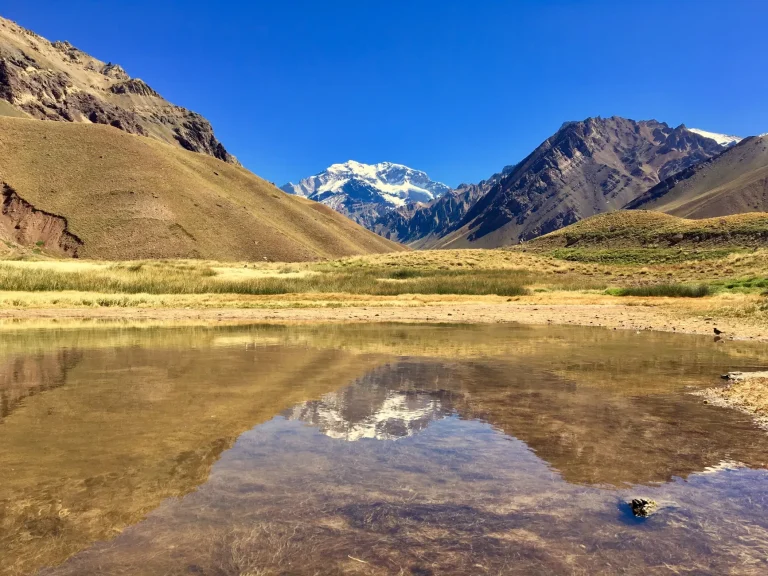
Best Mountains in the Andes
Compare four standout mountains in Argentina’s Andes, including Aconcagua, Fitz Roy, Cerro Tronador, and Lanín, with practical guidance…