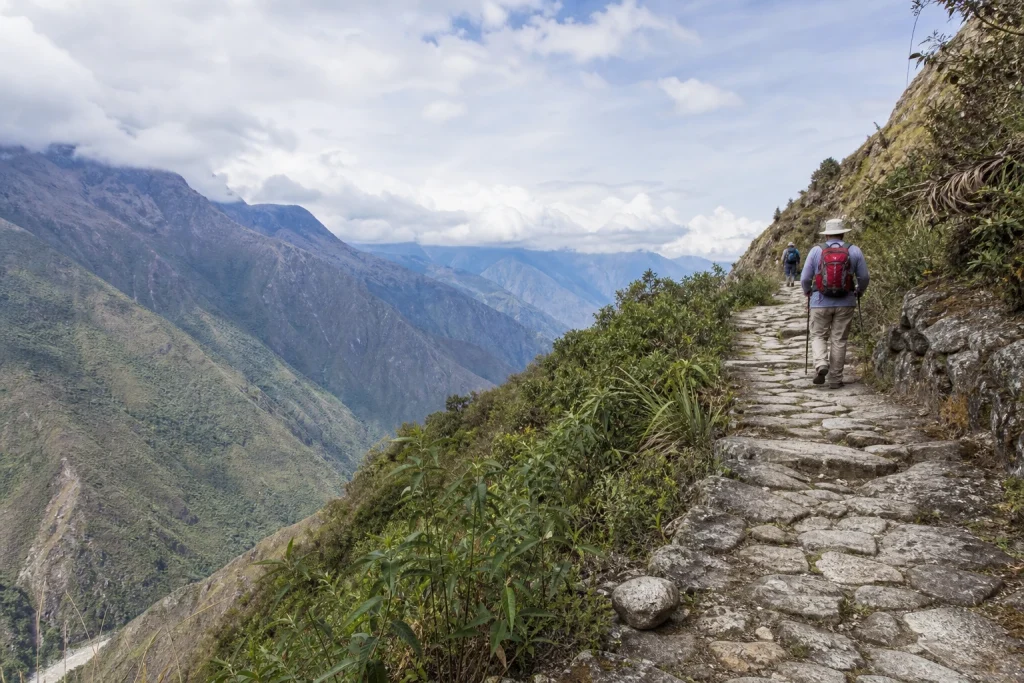
Inca Trail to Machu Picchu Guide
The Inca Trail to Machu Picchu is in Peru’s Cusco region, in the Machupicchu district of Urubamba province, not Argentina. It is a regulated trek rather than a route for independent hiking. The two principal official products are the traditional Km 82 itinerary, listed as 4 days and 3 nights, and the shorter Km 104 itinerary, listed as 2 days and 1 night.
Inca Trail at a glance
- Book through an authorized agency well in advance. Independent walking is not the standard entry option.
- Choose between the 4-day/3-night traditional Km 82 route and the 2-day/1-night Km 104 route.
- February is the annual closure month for conservation and maintenance.
- Government-listed general permit tariffs are S/300 for Km 82 and S/228 for Km 104, before any operator package costs.
- Reconfirm your exact route and departure date shortly before travel because restrictions can be imposed on all or part of the network.
This is a journey best planned as a specific, permitted program, not as a loose hiking day. Your route choice shapes the number of nights, the daily capacity limit, the entry tariff, and the agency arrangements you need to compare. Start by deciding how much time you can give the trek, then build the rest of your Peru plans around a confirmed reservation.
Choose between the traditional Km 82 and shorter Km 104 routes
The traditional and shorter routes are different regulated products, not identical experiences with different price tags. Km 82 is the 4-day/3-night option, while Km 104 is listed as 2 days/1 night. They also have separate entry tariffs and different daily limits, so compare each agency’s actual program rather than assuming a shorter itinerary will automatically suit every schedule or budget.
| Official route | Listed duration | Government-listed general permit tariff | Daily limit |
|---|---|---|---|
| Traditional Km 82 | 4 days / 3 nights | S/300 | 500 people, including visitors and support staff |
| Km 104 | 2 days / 1 night | S/228 | 120 people |
The government-listed tariffs also include reduced categories. The traditional route is listed at S/150 for eligible university or technical students and S/75 for minors. Km 104 is listed at S/114 for eligible students and S/57 for minors. Treat these as permit figures for planning, not as a complete trek price.
An agency’s total package can vary because itinerary design, staffing, rail or road arrangements, and inclusions differ by operator. Ask for a route-specific quote that clearly identifies what is included. A lower entry tariff alone does not establish that one complete trek package will cost less than another.
Reserve through an authorized agency
For the traditional Inca Trail, advance reservation through an authorized agency is required. The formal 2026 reservation process opened through public coordination between the relevant authorities and operators, reinforcing a practical rule for travelers: do not expect walk-up trail access on the day you want to hike.
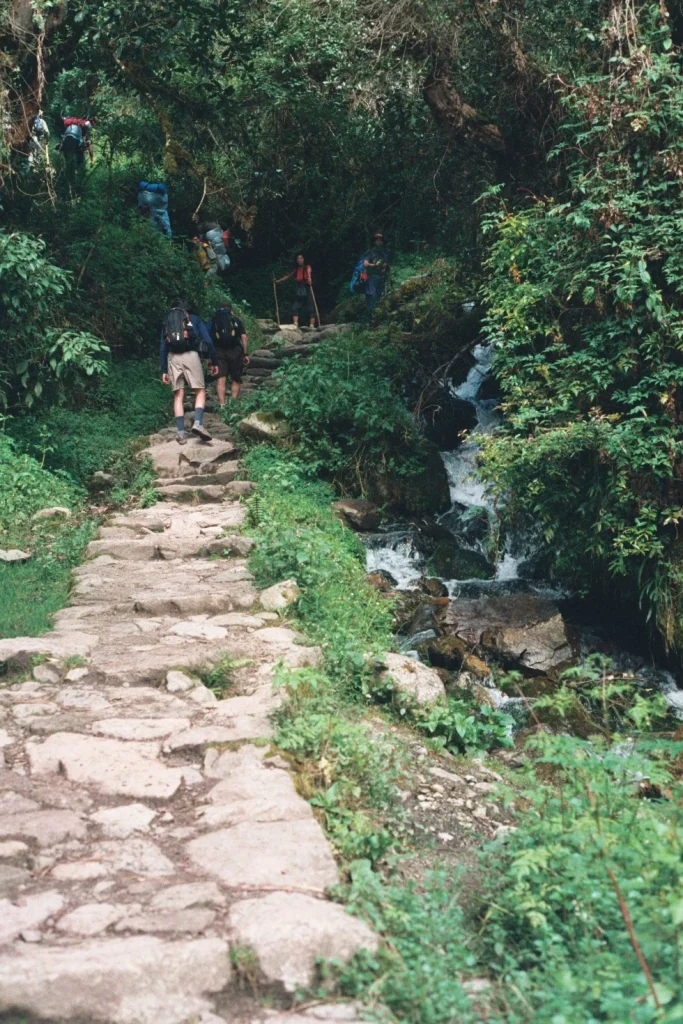

- Decide whether the 4-day/3-night Km 82 program or 2-day/1-night Km 104 program fits your available time.
- Ask an authorized agency to confirm the exact route, date, and reservation availability before fixing the rest of your itinerary.
- Compare route-specific inclusions, staffing, transport arrangements, and the full package cost.
- Keep your route and date flexible until the agency confirms your place on the permitted departure.
Daily capacity is finite, and the traditional route’s 500-person ceiling includes support staff as well as visitors. Km 104 has a 120-person daily limit. Those figures are useful context, but they are not live availability figures. Your agency reservation is the practical confirmation that matters for a particular departure.
Plan around the annual February closure
Take February out of your Inca Trail plan. The trail network closes annually for conservation and maintenance. In 2026, the closure ran from February 1 through February 28, with operations resuming on March 1. Outside February, plan around your confirmed route date rather than treating a past reopening notice as a guarantee for every later departure.
Authorities can restrict or close all or part of the network without prior notice. Reconfirm your precise route, entry date, and agency reservation shortly before travel. This simple check is more useful than relying on a broad statement that the whole trail is open, especially when your trip depends on one specific permitted departure.
Understand the trek’s physical and access demands
The Inca Trail network is characterized as a route of high operational complexity, with designated camps and multi-day trekking products. That puts the classic trek firmly in the category of a serious outdoor commitment, with sustained mobility and overnight-camping demands. Choose the route only if its duration and camping format fit your comfort level and preparation.
Do not assume the standard trek is generally accessible. No formal accessible-route specification, mobility-device policy, or assisted-access arrangement is set out in the available operating information. Travelers with access needs should obtain written confirmation from both the chosen operator and the relevant authorities before booking.
Build in time to arrive prepared rather than treating the trek as an immediate add-on to a packed itinerary. For the wider regional planning question, the site’s Altitude in the Andes: A Plain-English Acclimatisation Guide is a useful companion before committing to a multi-day Andean trek.
Prepare for the program you actually booked
Let the confirmed itinerary, rather than a generic packing checklist, drive your preparation. The traditional route has three nights, while Km 104 has one. Agency packages also vary in staffing, transport arrangements, and inclusions, so the operator’s route-specific briefing should guide the practical details of your equipment and overnight plan.
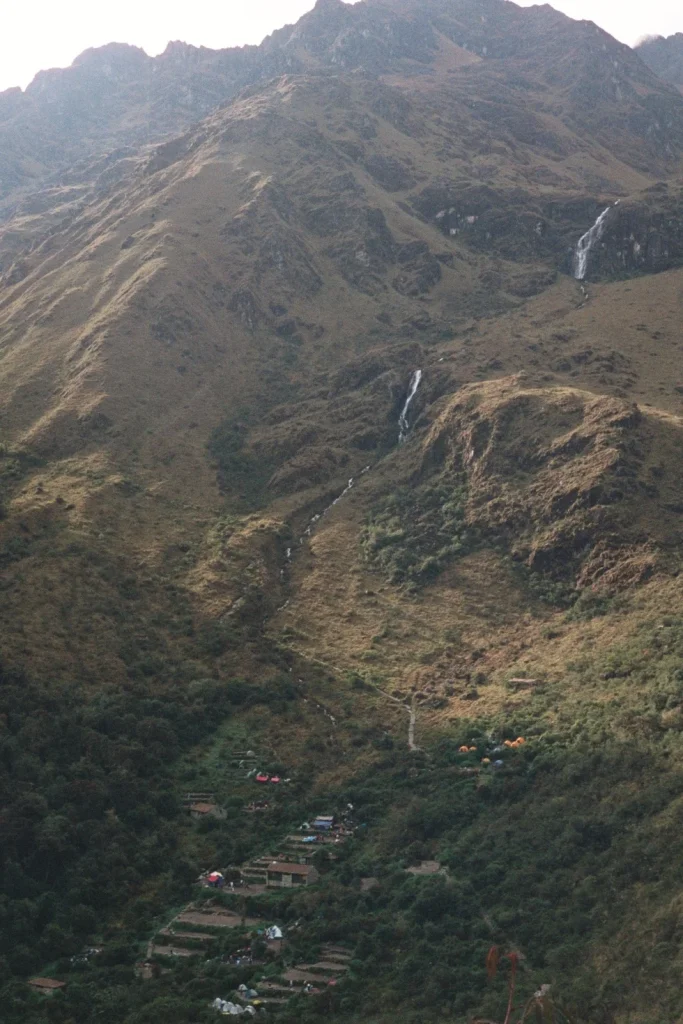

- Confirm the official route name and its listed duration.
- Review the agency’s equipment and overnight-camping instructions for that specific program.
- Check exactly which services and transport arrangements are included in the quoted package.
- Make accessibility requirements clear before paying for a trek that may not meet them.
- Recheck the permitted departure status shortly before travel.
This approach keeps the planning focused. A 4-day/3-night trek calls for a different level of overnight organization than a 2-day/1-night route, and neither package should be judged by permit tariff alone. Clear details from the agency help prevent last-minute surprises about the program you have actually reserved.
Coordinate the trek with your wider Machu Picchu plans
The Km 82 and Km 104 labels identify separate official itineraries, with different durations and capacity rules. Organize your arrival, onward plans, and accommodation only after your agency confirms the route and date. The differences in staffing, rail or road arrangements, and inclusions make it unwise to assume that every operator handles the same route in the same way.
A Practical Machu Picchu and Sacred Valley Itinerary is a helpful companion for placing the trek within a broader visit to this part of Peru. Use the confirmed Inca Trail program as the fixed point, then arrange the surrounding days around its actual duration and departure details.
Budget using permit tariffs, then compare complete packages
For a general adult, the listed permit tariff is S/300 on the traditional Km 82 route and S/228 on Km 104. The difference is useful when you first sketch a budget, but it is only one component of the trip. A trek’s retail price depends on the operator’s own package design and cannot be assumed from the government permit figure.
When comparing quotes, put like beside like: route, number of days and nights, staffing, transport arrangements, and stated inclusions. This is especially important because the two routes have different official capacity limits and different permit tariffs. A clear comparison beats a tempting headline price with unclear scope.
Decide which Inca Trail format suits your trip
Choose the traditional Km 82 route if the 4-day/3-night program is the experience and time commitment you want. Choose Km 104 if a 2-day/1-night regulated trek fits your schedule better. The shorter route has a lower listed general permit tariff, but that alone should not decide the trip because agency packages and arrangements are not standardized.
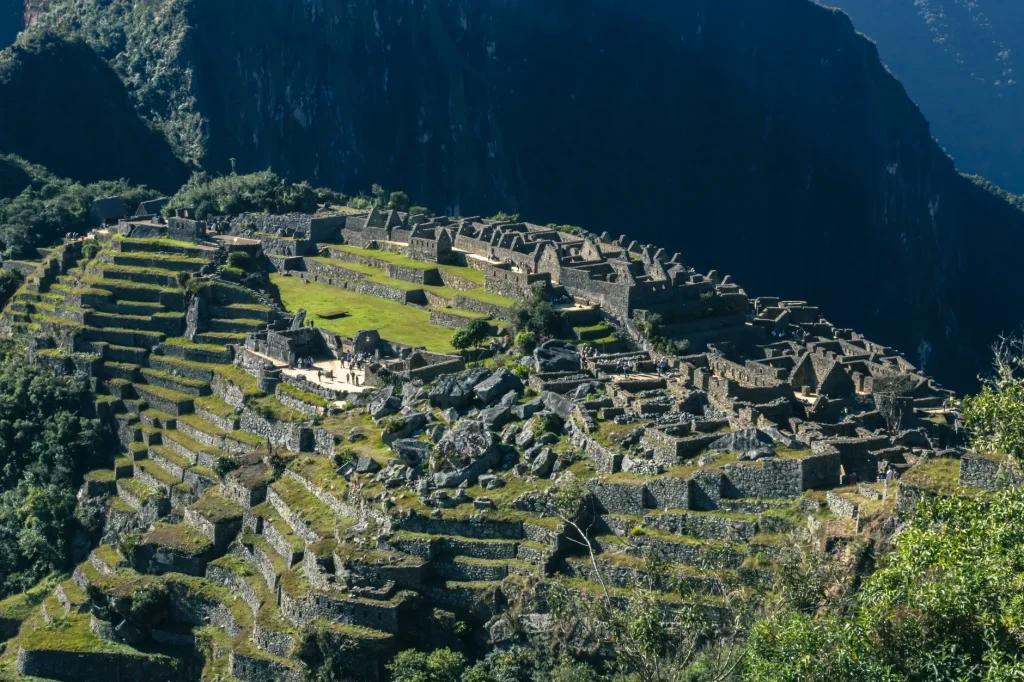
The main limitation is the structure that protects the route: independent access is not the normal option, capacity is controlled, February is closed, and conditions can change. For travelers who are comfortable with a guided, regulated, multi-day camping program, that structure is also the basis for a more deliberate journey to Machu Picchu.
Make the next planning move
Start with the route duration you can genuinely give the trip, then seek an authorized-agency reservation for a specific date. Compare the complete package rather than just the permit tariff, keep February off the calendar, and confirm the operational status before departure. Those steps turn the Inca Trail to Machu Picchu from a broad wish into a workable Peru itinerary.
Frequently asked questions
Can I hike the Inca Trail to Machu Picchu independently?
No. The traditional Inca Trail requires an advance reservation through an authorized agency, so independent walking is not the standard access option.
How long is the Inca Trail to Machu Picchu?
The traditional Km 82 route is listed as 4 days and 3 nights, while the Km 104 route is listed as 2 days and 1 night.
Is the Inca Trail closed in February?
Yes. The Inca Trail network closes annually in February for conservation and maintenance; in 2026, the closure ran from February 1 through February 28.
How much is an Inca Trail permit?
The government-listed general permit tariff is S/300 for the traditional Km 82 route and S/228 for Km 104. These figures are not all-in trek prices, since agency package costs and inclusions vary.
Is the Km 104 route simply a cheaper version of the classic Inca Trail?
No. Km 104 is a separate 2-day/1-night regulated product with its own 120-person daily limit, while the traditional Km 82 route is a 4-day/3-night program with a 500-person limit that includes support staff.
Is the classic Inca Trail accessible for travelers with mobility needs?
The standard trek should not be treated as generally accessible because it is a high-complexity, multi-day camping route. Confirm any possible arrangements in writing with the operator and relevant authorities before booking.
Should I reconfirm the trail before my departure?
Yes. Authorities can restrict or close all or part of the trail network without prior notice, so reconfirm your exact route, date, and agency reservation shortly before travel.