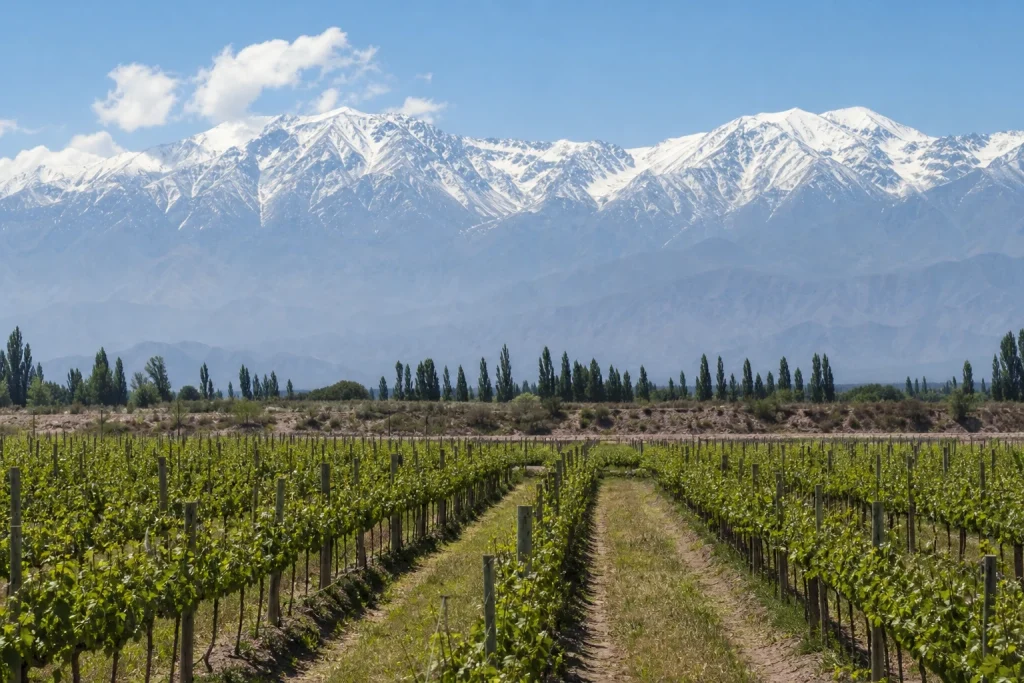
The Andes Digital Nomad Guide
This Andes digital nomad guide focuses on Argentina, where Mendoza and Salta make practical gateways to western wine country, high valleys, mountain roads, and the Puna. The central planning rule is simple: establish a dependable city base, protect working hours, and schedule remote landscapes as separate excursions. That approach gives the mountains room to be mountains without asking a rural lodge or high-altitude stop to perform like a city office.
- Choose Mendoza for an easier blend of city services, wine-country access, and nearby mountain outings.
- Choose Salta for northern valleys, gorges, Puna landscapes, and a more excursion-led itinerary.
- Do not assume ordinary tourist status permits remote work. Check eligibility for Argentina’s Digital Nomad temporary residence before traveling.
- Confirm internet performance directly with each accommodation, especially outside Mendoza and Salta cities.
- Keep costs flexible, reserve high-demand winter mountain stays early, and obtain live quotes for lodging and transport.
Mendoza is the lower-friction option for most first-time remote workers. It combines an international airport and urban amenities with access to the Andes and the vineyards of the Uco Valley. Salta offers a stronger northern-Andes identity, but its most compelling landscapes are spread across a broad province. In both cases, the city should carry the working week while rural and high-altitude areas carry the adventure.
Legal status, internet quality, seasonal weather, altitude, and transport deserve more attention than a picturesque desk view. Settle those practical questions first. Once the basics are secure, the reward is a working stay with access to snowbound mountain scenery, dry northern skies, vineyards, valleys, and long overland journeys into landscapes that feel far removed from an ordinary commute.
Build the trip around a city base, not a roaming workday
The most dependable structure is a city-based working stay with clearly separated excursion days. Book the main accommodation for the full work period, then add mountain trips on weekends or leave days. This reduces the risk of reaching a remote valley and discovering that the room, mobile signal, transport schedule, or power setup cannot support an important call.
Treat every move as a productivity cost. Packing, checking out, crossing a province, and locating a new workspace can consume much of a day even when the scenery is spectacular. A longer stay in one city also creates room to adjust plans around weather, altitude, or changing transport arrangements without sacrificing deadlines.
Before booking, divide the calendar into workdays, flexible local days, and full excursion days. Keep demanding calls away from arrival days and high-altitude outings. Place a buffer between a remote trip and any presentation or deadline that cannot move. This is less spontaneous than working from a different valley every morning, but far more realistic.
Choose Mendoza for the easiest work-and-mountains balance
Mendoza is the strongest all-round base for an Andes-focused working stay. Its international airport and urban amenities support the practical side of the trip, while wine country and mountain excursions provide clear options for days off. It suits travelers who want one main base rather than a journey built around frequent transfers.
The Uco Valley makes a compelling side trip rather than an automatic replacement for the city. It is reached from Mendoza via National Route 40 and sits at about 1,700 meters above sea level. Large temperature swings are part of the setting, and winery visits should be booked in advance. Plan the valley as a deliberate break unless a specific property has confirmed everything required for work.
Official guidance recommends three to five days for the Uco Valley and identifies January through April and October through December as favorable travel periods. A shorter visit can still fit around a city stay, but the listed range makes sense for travelers who want several winery or countryside days without rushing between reservations.
Mendoza also works well for a modular itinerary. Spend the core work period in the city, reserve a separate block for the Uco Valley, and add mountain outings according to season. This arrangement avoids forcing every destination to meet the same connectivity and workspace standards.
Choose Salta for a northern-Andes expedition between work blocks
Salta is the better fit for travelers drawn to northern valleys, gorges, cultural experiences, high-altitude scenery, and the Puna. The city is served by Martín Miguel de Güemes International Airport, buses, and roads. Official destination guidance recommends five to eight days for the province, which reflects how much ground an ambitious itinerary can cover.
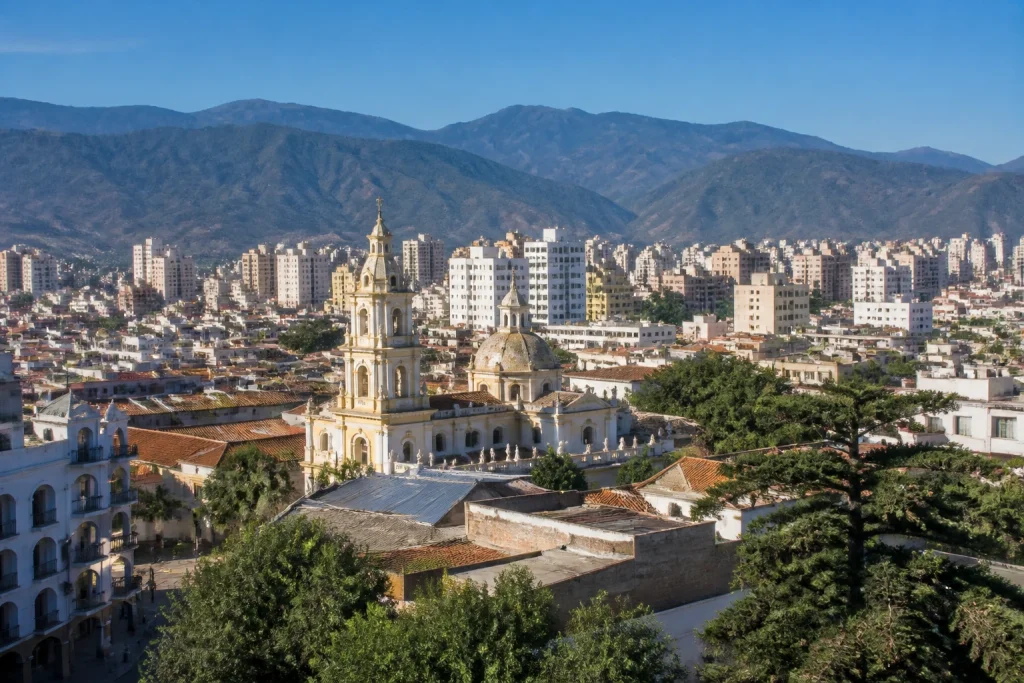
Use Salta city as the operational center. Cachi, the Calchaquí Valleys, and the western Puna belong on planned excursion days rather than between routine video meetings. Distances, altitude, and sudden temperature changes make a loose mountain workday a poor substitute for a properly organized trip.
Salta rewards travelers who can separate work and travel into distinct blocks. One approach is to complete several concentrated city workdays, then reserve a longer stretch for the province. Avoid placing a critical deadline immediately after a highland journey. A delayed return should remain an inconvenience rather than a professional crisis.
The province’s broad elevation range also changes the packing calculation. Warm layers, sun protection, and adaptable clothing belong in the plan even when conditions in Salta city feel comfortable. Check the requirements of each route rather than packing for the city alone.
Mendoza and Salta compared for remote workers
| Planning question | Mendoza | Salta |
|---|---|---|
| Best suited to | A first Argentine Andes base with wine-country and mountain access | A northern-Andes journey centered on valleys, gorges, culture, and the Puna |
| Working strategy | Base in Mendoza city and reserve rural days separately | Base in Salta city and build dedicated excursion blocks |
| Major rural extension | Uco Valley | Cachi, Calchaquí Valleys, and the western Puna |
| Arrival options noted in official guidance | International airport | International airport, buses, and roads |
| Main planning pressure | Winter mountain demand, seasonal wind, and rural connectivity checks | Longer provincial routes, high elevations, and seasonal rain |
| Better choice for | Travelers seeking the lower-friction base | Travelers prioritizing northern landscapes and multi-day exploration |
Mendoza is the safer default when work reliability is the first priority. Salta becomes more attractive when the trip can include several uninterrupted excursion days. Travelers with enough time can combine both, but each deserves its own city base and planning window rather than a hurried transfer schedule.
Understand Argentina’s Digital Nomad residence before departure
Argentina’s Digital Nomad temporary residence is intended for foreign nationals who do not need a tourist visa to enter Argentina and who remotely serve people or entities based outside the country. It can be issued for up to 180 days and extended once for an equal period. Eligibility depends on the traveler’s circumstances and passport, so check the current nationality-specific rules before departure.
The application is made in person. Listed requirements include a valid passport, proof of legal entry and local address, a curriculum vitae, and evidence of remote work and income. Applicants older than 16 must also provide an Argentine criminal-record certificate. Review the current document instructions and fee directly with Migraciones before applying, since administrative details can change.
Do not treat ordinary tourist entry as a substitute without checking the rules. Argentina’s migration authority states that a tourist can stay for up to three months, with a possible extension for a similar period, and cannot undertake paid work. The Digital Nomad residence is the official category described for eligible remote workers serving clients or organizations abroad.
- Confirm that your passport nationality meets the current entry condition for the residence.
- Check that your clients, employer, or service recipients are based outside Argentina.
- Prepare the listed identity, entry, address, professional, and income documentation.
- Allow time for the in-person process rather than building the application around an immediate mountain departure.
- Verify current fees and procedures directly with Migraciones before fixing the budget.
Verify internet and workspace details room by room
Internet performance should be confirmed with the exact accommodation, not assumed from the destination name or a general property description. Ask for a recent speed test from the room or workspace you will use. Confirm whether the connection is private or shared, whether video calls are realistic, and where the router is located relative to the room.
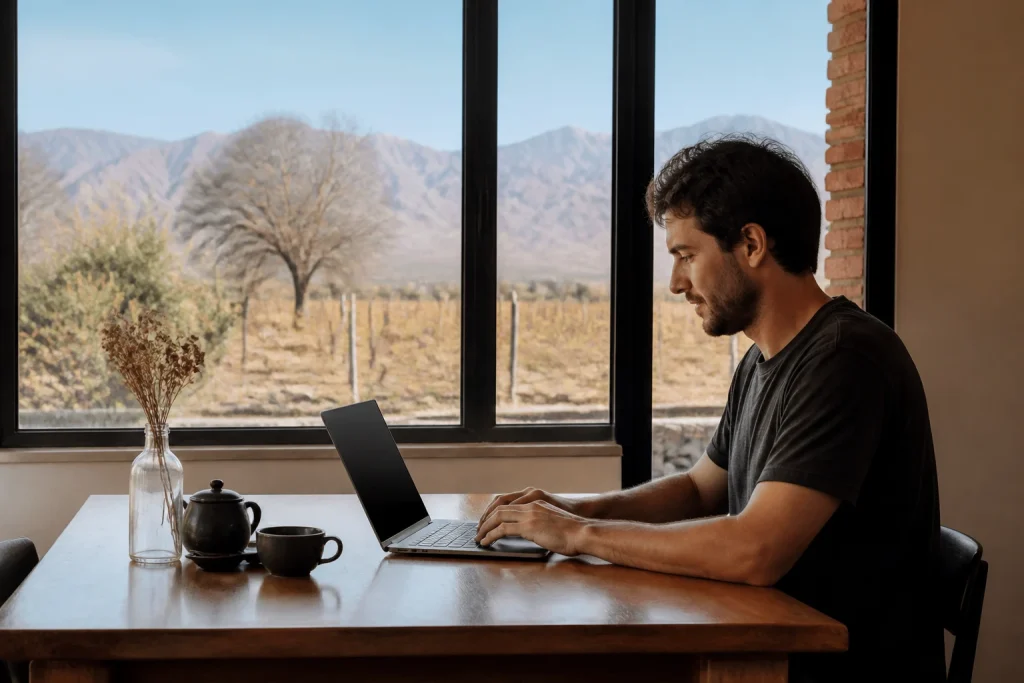
Also ask what happens during a service or power interruption. A useful answer should identify an alternative workspace, backup connection, or nearby option. If your work depends on uninterrupted meetings, arrange your own secondary connection and test it before the first important call.
Outside Mendoza and Salta cities, verify every work-critical detail again. Do not carry a city-based assumption into the Uco Valley, the Puna, or another rural stop. Download documents before departure, tell colleagues when you will be unavailable, and schedule remote days for exploration rather than improvised work.
- Recent download and upload test from the intended room
- A desk or table suitable for several hours of work
- A chair that is appropriate for your needs
- Access to electrical outlets without blocking shared spaces
- A backup connection or alternative workspace
- Clear check-in timing if a call is scheduled on arrival day
Match the working calendar to snow, wind, rain, and dry-season travel
For travelers planning in August 2026, Argentina is in winter. The official snow season in Mendoza’s Andes runs from June through September, and mountain accommodation can be in high demand. Reserve early and leave room for weather-related adjustments. Mendoza tourism also notes that the Zonda wind is more intense during August and September.
Winter is also a recommended period for Salta because rainfall is low and skies are often clear. More broadly, April through November is identified as the dry season. These conditions can favor sightseeing, but clear skies do not remove the need to prepare for temperature changes at elevation.
Salta’s rainy season runs from December through March, while the western Puna can experience sudden temperature swings. During wetter months, keep multi-day highland plans flexible and avoid building a rigid chain of transfers around immovable work commitments.
| Period | Mendoza planning focus | Salta planning focus |
|---|---|---|
| June to September | Snow season in the Andes; book mountain accommodation early | Winter brings low rainfall and generally clear skies |
| August to September | Allow flexibility for stronger Zonda conditions | Prepare for cold and elevation on highland routes |
| December to March | Check heat and destination-specific conditions | Rainy season; keep remote itineraries flexible |
| January to April and October to December | Preferred windows listed for the Uco Valley | Plan according to the specific route and elevation |
Create a budget with live quotes instead of fixed daily figures
A fixed daily budget would be misleading because accommodation, transport, flights, tours, and rural stays vary by date and itinerary. Build the budget from current quotes for the actual travel window. Keep city accommodation separate from mountain excursions so one expensive side trip does not distort the full monthly estimate.
- Price the main city accommodation for the complete work period.
- Add any rural or mountain nights as a separate category.
- Obtain current flight, bus, private transfer, tour, and vehicle-rental quotes as relevant.
- Include a workspace or backup-connectivity allowance if the lodging setup is uncertain.
- Set aside a flexible reserve for weather-driven schedule changes.
- Review cancellation terms before paying for plans tied to a narrow seasonal window.
Winter mountain demand around Mendoza makes advance reservations especially important. Compare the cost of keeping the city room during a short excursion with the inconvenience of checking out, storing equipment, and rebuilding the workspace after returning. Paying for a stable base can be worthwhile when the work schedule is demanding.
Plan high-altitude days conservatively
Altitude is a central part of an Andes itinerary. Mendoza’s Andes tourism information lists an average elevation of 2,900 meters. Salta’s landscapes rise much higher, with provincial elevations reaching 6,739 meters and the Train to the Clouds reaching 4,220 meters. A comfortable city workday does not predict how someone will feel during a high-altitude excursion.
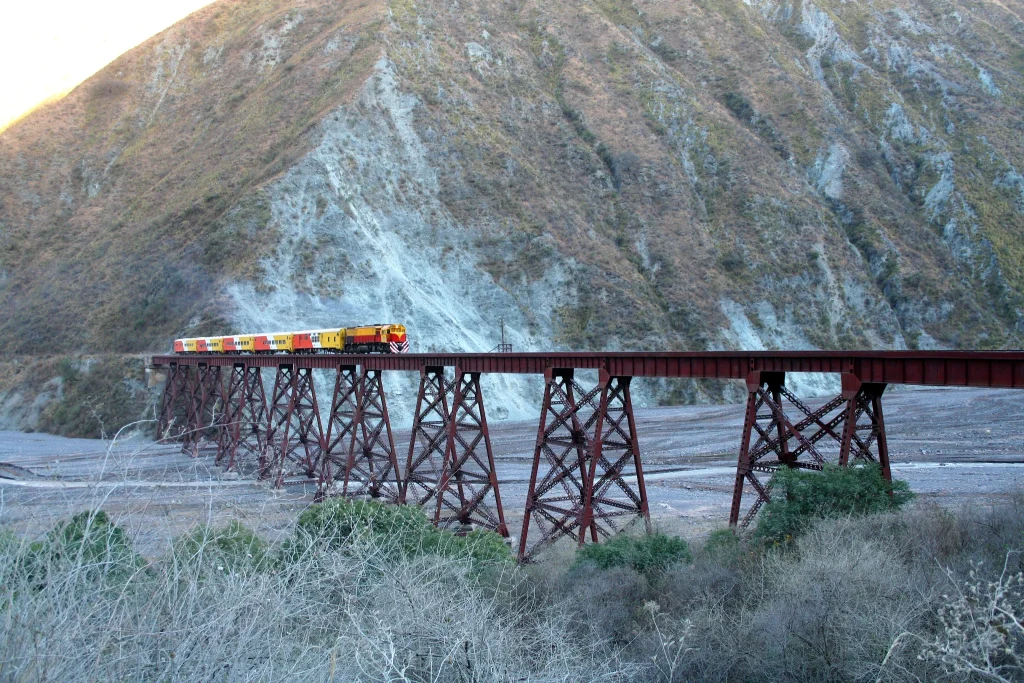

Keep the first highland days conservative. Avoid scheduling a demanding work session immediately after reaching elevation, and do not make an important call dependent on returning from a remote route at a precise hour. Travelers with relevant health concerns should seek individualized medical advice before high-altitude travel.
The plain-English altitude acclimatisation guide offers broader context for planning gradual exposure in the Andes. For this Argentina itinerary, the practical goal is to protect time. Leave space to rest, change plans, or descend without losing a client deadline or onward reservation.
Design a realistic week around calls and excursions
A productive week needs fewer moving parts than a holiday itinerary. Put complex meetings and deep work on stable city days. Use local days for flexible activities that can be shortened if work runs late. Reserve full days for wineries, mountain routes, the Puna, and journeys that depend on road or weather conditions.
| Day type | Best use | Planning rule |
|---|---|---|
| Core workday | Meetings, deadlines, and focused work | Remain at the verified city workspace |
| Flexible city day | Lighter work and nearby exploration | Keep plans easy to cancel or shorten |
| Excursion day | Wine country, valleys, mountains, or Puna routes | Do not promise dependable working hours |
| Transfer day | Airport, bus, road journey, or accommodation change | Avoid critical calls and deadlines |
| Buffer day | Recovery, weather changes, or delayed return | Place before major work commitments when possible |
This structure also makes longer stays easier to enjoy. A mountain day remains a genuine break rather than a frantic attempt to answer messages beside a road. Work receives a stable setting, and the destination receives undivided attention.
Organize transport and accommodation around the work setup
Mendoza and Salta both have international airports, making either city a logical first base. Salta is also reached by buses and roads, while the Uco Valley is approached from Mendoza via National Route 40. Check live schedules and route conditions for the travel date rather than building the plan around a general estimate.
Choose accommodation in the order that work requires: verified connection, suitable workspace, backup plan, location, and then scenic appeal. A mountain view loses its charm quickly if every meeting requires moving furniture or searching for a signal. Confirm the room category because photographs of a shared lobby do not establish the setup inside a particular room.
Travelers who need step-free routes, accessible rooms, wheelchair transport, or adapted activities should confirm each element separately. Mountain roads, wineries, rail excursions, rural lodgings, and adventure activities do not share one accessibility standard. Ask the accommodation and operator about the exact entrance, bathroom, vehicle, route, and assistance required.
Who will enjoy an Argentine Andes working stay
This style of trip suits remote workers who can stay in one city for a meaningful stretch, separate working days from travel days, and tolerate some advance planning. Mendoza is the clearest starting point for an easier combination of work, wine country, and mountain outings. Salta is stronger for travelers who can dedicate larger blocks of time to the northern Andes.
It is less suitable for anyone expecting verified high-speed internet at every rural stop or hoping to work continuously while crossing remote terrain. The main limitation is not a lack of scenery. It is the need to confirm infrastructure property by property and protect the calendar from altitude, weather, and transfer days.
Start by checking immigration eligibility, then choose Mendoza or Salta and verify one reliable city workspace. Add mountain trips only after the work foundation is secure. For a wider regional perspective, the Chile and Argentina destination overview can help place this Argentine route within the southern Andes. With that order of planning, the landscape becomes the reward rather than a logistical obstacle.
Frequently asked questions
Can digital nomads work in Argentina while staying as tourists?
Do not assume ordinary tourist status permits remote work. Argentina’s migration authority states that tourists may stay for up to three months, with a possible similar extension, but may not undertake paid work. Eligible remote workers serving people or entities outside Argentina should review the Digital Nomad temporary residence rules.
How long does Argentina’s Digital Nomad temporary residence last?
It can be issued for up to 180 days and extended once for an equal period. The application is completed in person, and travelers should confirm current passport eligibility, documents, procedures, and fees before departure.
Is Mendoza or Salta better for digital nomads?
Mendoza is the stronger general-purpose base, while Salta is better for a northern-Andes itinerary with larger excursion blocks. Mendoza combines urban amenities with wine-country and mountain access. Salta city works as a base for valleys, gorges, Cachi, and the Puna.
Can I work remotely from the Uco Valley?
Only after a specific accommodation confirms that it can support your work. The Uco Valley is a rural wine-country destination rather than a documented full-service remote-work hub, so Mendoza city is the lower-friction base for important working days.
What is the best season for an Argentine Andes working stay?
The best period depends on the itinerary. Mendoza’s official snow season runs from June through September, while the Uco Valley’s highlighted windows are January through April and October through December. Salta’s dry season runs from April through November, with rain more common from December through March.
Is internet reliable in Mendoza and Salta?
Internet performance should be verified with the exact accommodation. Ask for a recent speed test from the intended room, confirm whether the connection is shared, and arrange a backup before relying on it for important meetings.
How high are the Andes excursions near Mendoza and Salta?
Many excursions reach significant elevations. Mendoza’s Andes tourism information lists an average elevation of 2,900 meters, while the Train to the Clouds in Salta reaches 4,220 meters. Plan conservative first days and seek individualized medical advice when relevant.
How much should a digital nomad budget for Argentina?
Build the budget from live quotes for the actual dates and itinerary. Price city lodging, rural stays, flights, local transport, tours, workspace needs, and flexible reserves separately rather than relying on a fixed daily cost estimate.