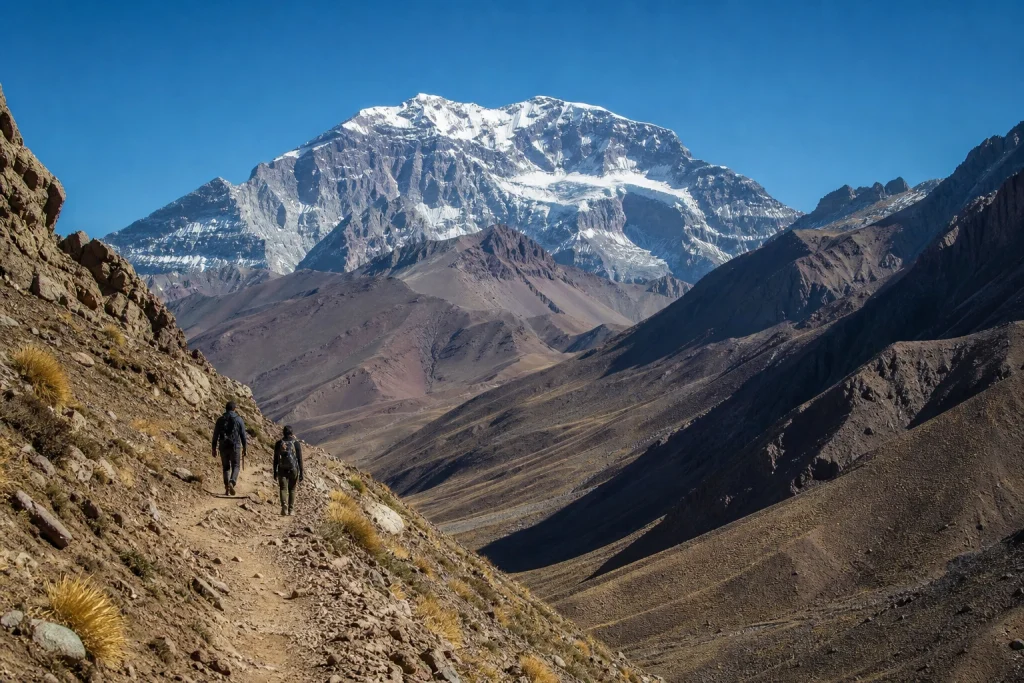
Andes Hiking Tours Guide
Argentina’s Andes hiking tours range from trailhead-based walks in Patagonian parks to high-altitude expeditions governed by separate permits and procedures. Choosing well begins with the route, not the tour label. El Chaltén suits walkers seeking an established trekking base, while Aconcagua requires closer attention to altitude, activity categories, operating conditions, and provincial park rules.
- Choose the region before comparing tour packages. El Chaltén and Aconcagua deliver very different mountain experiences.
- Use the austral summer as the practical starting point for most self-guided Patagonian plans, then confirm weather and trail status.
- Check the exact ticket, permit, registration, and guide rules for your chosen route.
- Budget park charges separately from transport, accommodation, food, equipment, guides, insurance, and tips.
- Carry safe drinking water, plan around daylight, and assume cellular service could disappear in mountain terrain.
Independent hiking can work well on open, marked networks if you can carry your own essentials and adjust to changing conditions. Guided or assisted travel becomes more valuable at altitude, on unfamiliar terrain, for off-trail objectives, or anywhere local rules require a guide. Current conditions should always decide the final plan.
Choose the Andes experience before choosing a tour
“Andes tour” is too broad to be a useful product category. One itinerary might begin beside a Patagonian town and follow an enabled trail for the day. Another could involve several days in Aconcagua Provincial Park, formal permits, altitude management, and an authorized assistance company. Define your terrain, expected exertion, and preferred level of support before comparing operators.
| Area | Best fit | Important planning point |
|---|---|---|
| El Chaltén and Los Glaciares | Trailhead-based trekking and independent walkers comfortable on marked routes | Obtain maps and current route information from the park visitor center or municipal tourism office. |
| Aconcagua Provincial Park | High-altitude trekking, assisted trips, and expedition-style objectives | Match the activity to the correct one-day ticket, multi-day permit, or ascent permit. |
| Quebrada del Condorito | Travelers considering a route with a regulated guiding requirement | The specified ascent requires an authorized trekking guide. |
| Tierra del Fuego National Park | Families and visitors looking for lower-barrier trail options | The park lists family-friendly trails and a short adapted segment for reduced mobility. |
This distinction also helps with wider itinerary planning. Travelers comparing several mountain regions can review the best places to visit in the Andes for first-time visitors before committing to one trekking base. Those combining both sides of Patagonia can also use the Chile and Argentina destination guide to place the hike within a broader journey.
El Chaltén works as a trailhead-based trekking base
El Chaltén is the clearest choice for travelers who want to stay in one mountain town and set out onto the surrounding trail network. It lies within the Los Glaciares area, and its visitor services include access to route maps and current condition advice through the park visitor center and municipal tourism office.
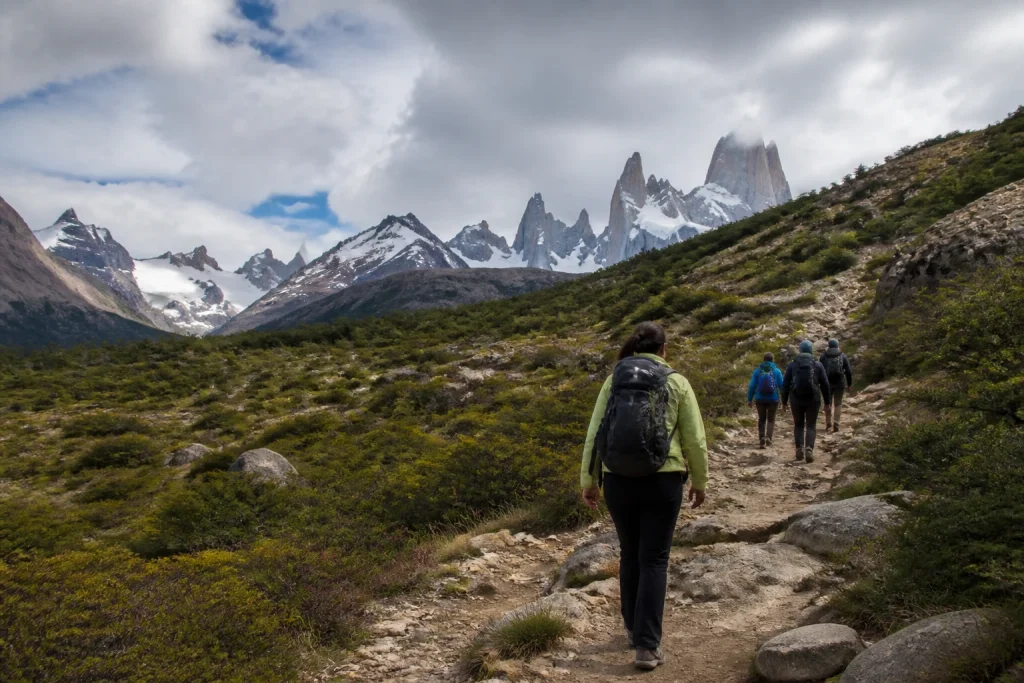
El Calafate is the closest airport access point identified for El Chaltén and is about 210 kilometers away. Treat that transfer as a separate logistical step when comparing packages. Check whether a quoted tour begins in El Chaltén, includes transport from El Calafate, or expects you to reach the trailhead independently.
The austral summer is generally the practical period for most self-guided walkers in Andean Patagonia. Winter snow and mud make trails harder, and conditions can still change quickly in warmer months. Confirm route status shortly before setting out rather than assuming a familiar trail is open because the calendar looks favorable.
A guide can add useful local judgment when weather is unstable or the terrain is unfamiliar, but guiding is not universally required across every Andes trail. Strong independent walkers should still use only open, authorized routes, complete required registration, carry water and layers, and leave enough daylight for the planned distance.
Aconcagua demands route-specific permits and altitude planning
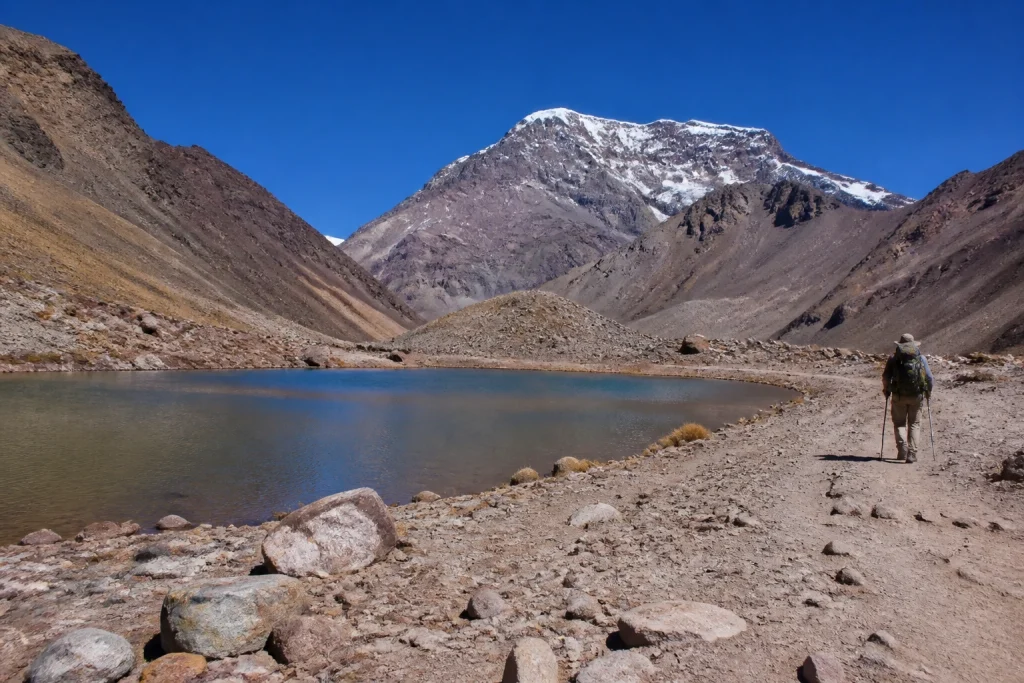
Aconcagua is a high-altitude provincial park rather than a simple extension of the Patagonian trail model. Its administrative system distinguishes one-day trekking from three-day trekking, seven-day trekking, and ascent activities. Booking the wrong category can disrupt a trip before the hiking begins, so match the permit to the exact objective.
Longer trekking and ascent permits can be processed with or without an authorized assistance company, subject to the park’s procedures. This creates several planning models, including independent arrangements for qualified hikers and supported trips that can incorporate local assistance. The availability of both models does not mean every route or traveler should approach the mountain independently.
The park information currently describes one-day trekking as operating from November 15 through April 10 when conditions allow. Those dates came from the 2025–26 operating framework and should be treated as planning guidance until the park publishes the confirmed 2026–27 season. Weather and operating conditions can still alter access within an announced window.
Altitude should influence the itinerary, support level, and pace. A plain-English acclimatisation guide to altitude in the Andes can help travelers understand why a high mountain objective needs different preparation from a town-based Patagonian hike. A tour description should clearly identify the activity category and the assistance provided.
Other Argentine Andes routes can have very different rules
Argentina’s Andes extend well beyond the two best-known trekking bases in this guide. Route rules do not transfer automatically between parks. Quebrada del Condorito, for example, states that its ascent requires an authorized trekking guide. A traveler who hiked independently elsewhere should not assume the same arrangement is permitted there.
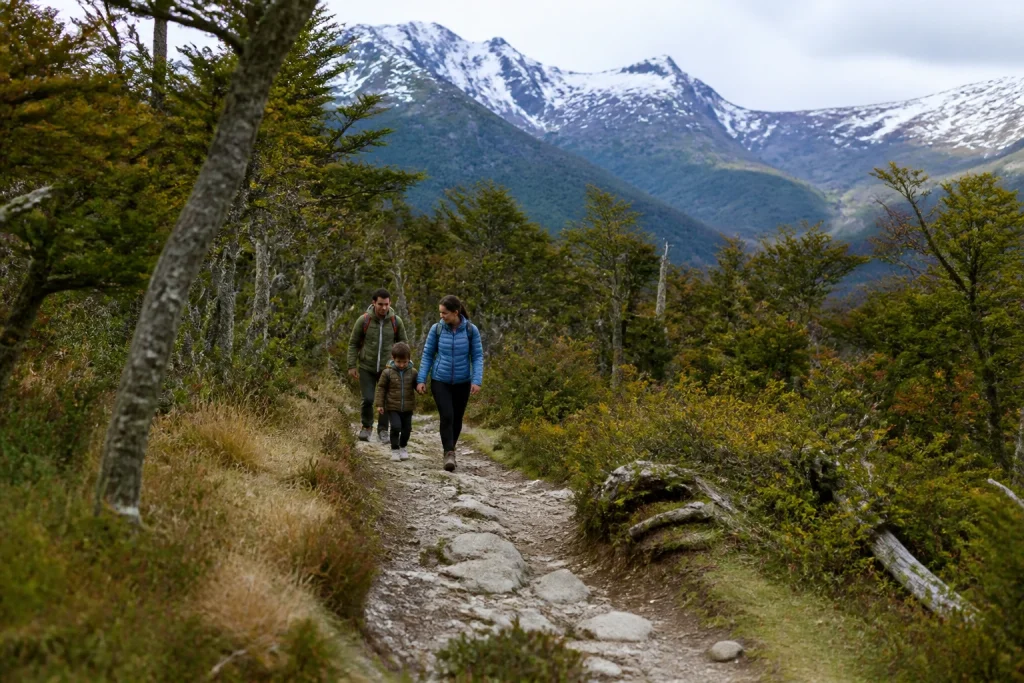
Tierra del Fuego National Park provides a contrasting option in the far south. It lists family-friendly trails and a 150-meter segment adapted for parking access and people with reduced mobility. These features can suit groups seeking a gentler outdoor experience, although they do not make every trail in the park accessible.
Travelers considering Chilean Patagonia as part of the same trip can compare the logistics with a properly planned W Trek in Torres del Paine. That comparison is useful because managed multi-day trekking and trailhead-based day hiking require different reservations, equipment, transport, and levels of commitment.
Decide between independent, guided, and assisted hiking
Choose independent hiking only when the route is open and enabled, local rules allow it, and everyone in the group can manage the difficulty. You should be prepared to carry water and weather layers, monitor daylight, and change plans when conditions deteriorate. Familiarity with mountain travel matters more than enthusiasm alone.
| Travel style | Usually suits | Main tradeoff |
|---|---|---|
| Independent hiking | Experienced walkers using open, marked networks and managing their own essentials | Lower support and greater responsibility for conditions, registration, water, and timing. |
| Guided day hiking | Travelers unfamiliar with the route, local weather, or required guiding rules | Additional cost in exchange for route guidance and local decision-making. |
| Assisted multi-day trekking | High-altitude or multi-day travelers who want logistical support | More services to price and compare, with inclusions varying by arrangement. |
| Expedition-style ascent | Travelers pursuing an activity governed by an ascent permit | Greater administrative, altitude, and support requirements than ordinary trekking. |
Guided travel is the better default when a route legally requires a guide, when the objective leaves enabled trails, or when high altitude and unfamiliar conditions exceed the group’s experience. Assistance also changes the budget, so determine exactly which logistics the quoted service handles before comparing the total cost.
The strongest tour match is not always the package with the largest list of features. It is the one that places the group on an appropriate route, uses the correct permit category, and describes the support clearly. A simple guided day walk and a supported Aconcagua trip should never be compared as interchangeable products.
Use seasons as a starting point, not a guarantee
For most self-guided walking in Andean Patagonia, the austral summer is the practical planning window. It does not remove mountain hazards. Rapid weather changes, trail closures, and high water can still reshape a day, so consult the relevant park, visitor center, and municipal updates close to departure.
Winter changes both trail and road planning. Snow and mud increase hiking difficulty, while mountain driving can require chains or studded tires. A winter trip therefore needs a more conservative route choice and current transport information rather than a summer itinerary with heavier clothing added at the last minute.
Daylight belongs in the route calculation in every season. National Parks guidance advises hikers to evaluate trail difficulty, weather, available water, communications, emergency contacts, and usable daylight. If those factors no longer support the original objective, shorten or postpone the hike.
Complete permits and trail checks before departure
Registration is mandatory on enabled trails under National Parks hiking guidance. Aconcagua then adds its own activity-specific ticket and permit system as a Mendoza provincial park. Complete the process required by the place you are actually visiting rather than relying on paperwork used for another park.
- Identify the exact park, route, trailhead, and intended activity.
- Check whether the route is open and authorized for the planned date.
- Confirm the required registration, ticket, or permit category.
- Verify whether an authorized guide or assistance company is required.
- Review difficulty, weather, water availability, daylight, and communications.
- Record the applicable emergency contacts before leaving reliable service.
El Chaltén visitors can use the park visitor center or municipal tourism office for maps and current route information. For Aconcagua, use the provincial park’s current operating instructions and tariff notice. Tour participants should also check their booking confirmation for the meeting point, transport arrangements, and the permit tasks handled by the provider.
Build a budget from separate cost lines
There is no useful single price for an Argentina Andes hiking tour because the products are fundamentally different. Build the budget with separate lines for admission or permits, transport, accommodation, food, equipment rental, guides, mule support, insurance, and tips. This makes a basic walking trip easier to compare with an assisted high-altitude itinerary.
National Parks rates effective June 1, 2026 list general daily admission at ARS 50,000 for Los Glaciares and El Chaltén. The listed general daily admission for Nahuel Huapi is ARS 35,000. These are federal National Park charges, not Aconcagua tickets, and they should not be used to estimate the cost of a provincial permit.
Aconcagua’s most recently displayed day-trek table is for the 2025–26 season. It listed ARS 55,000 for foreign visitors, ARS 45,000 for Latin American visitors, and ARS 25,000 for Argentine visitors. These figures are historical reference points only for a 2026–27 trip. Check the new provincial tariff before budgeting or booking.
When comparing guided offers, separate the fixed park charge from the provider’s service price. Check which transport, meals, accommodation, equipment, guiding, assistance, and permit processing are included. Two quotes can look similar while covering very different portions of the trip.
Prepare for water, weather, and limited communications
Carry sufficient safe drinking water for the planned route. Water from springs, rivers, and streams should not be assumed potable. Ask the park or guide about dependable water arrangements, especially before a long day or multi-day itinerary.
Pack layers that allow the group to respond to changing mountain weather, and use the route difficulty rather than the view from town to judge what is needed. Snow, mud, wind, and rapid shifts in conditions can turn a straightforward plan into a poor decision if the group is not ready to turn back.
Cellular coverage can be absent in the mountains. Record emergency contacts, share the plan before departure, and do not make mobile service the only communication assumption. Stay on open, authorized trails and use only authorized campsites where camping is part of the itinerary.
Fire is permitted only in signed, designated places. If there is no designated area, do not light one. These rules protect dry landscapes and reduce the risk of a preventable emergency far from reliable communications.
- Safe drinking water for the route
- Weather layers suitable for changing conditions
- A current route map and trail information
- Emergency contacts recorded before departure
- Enough time to complete the route in daylight
- Any condition-specific equipment identified by the park or tour provider
Treat accessibility as a route-level question
The Andes should not be described as broadly accessible. Accessibility varies by park, facility, trail surface, elevation, weather, and the assistance available. Ask about the exact route rather than accepting a general statement that a destination is suitable for everyone.
Aconcagua’s Laguna de Horcones interpretive circuit is described as suitable for the general public, but that does not make the park’s high-altitude treks accessible. The previous 2025–26 policy listed free entry there for a person with a disability and one companion. Check the current season’s concession and access arrangements before visiting.
Tierra del Fuego National Park offers a lower-barrier comparison through family-friendly routes and a 150-meter adapted segment serving parking access and people with reduced mobility. Confirm the condition and suitability of that specific segment, particularly when weather or mobility equipment affects the visit.
Questions to ask before booking an Andes hiking tour
A good booking description should identify the exact destination, intended route, permit category, and level of assistance. If those details are vague, ask focused questions before paying. This is especially important when a listing uses “Andes trekking” without distinguishing a marked day trail from a multi-day high-altitude objective.
- What exact trail, park, and activity category does the trip use?
- Does the provider handle registration, tickets, or permits?
- Is a guide required by the route, and is the named guide authorized where necessary?
- Where does the trip begin, and is transport from the accommodation or airport area included?
- Which meals, lodging, equipment, guiding, mule support, and assistance services are included?
- What happens if the park closes the trail or operating conditions prevent departure?
Match the answers to the group’s actual ability. Independent walkers need the skills and equipment to manage changing weather and limited communications. High-altitude travelers should place more weight on acclimatisation, route support, and the correct permit than on covering the greatest distance.
Plan the mountain, not just the photograph
El Chaltén is the stronger fit for travelers seeking a trekking base with access to route maps and condition updates. Aconcagua suits those prepared for altitude, distinct activity permits, and more involved logistics. Quebrada del Condorito and Tierra del Fuego show why route rules and accessibility must always be checked locally.
The main limitation of any Andes plan is that weather and operating conditions can overrule the itinerary. Choose the route first, decide how much support the group needs, separate park charges from tour costs, and complete a final condition check shortly before departure. That approach produces a safer and more realistic trip than booking by scenery alone.
Frequently asked questions
What is the best season for hiking in the Argentine Andes?
The austral summer is generally the practical choice for most self-guided walking in Andean Patagonia. Aconcagua uses its own operating calendar, while snow, mud, weather, and closures can affect routes in any stated season, so check current conditions before departure.
Do I need a guide for Andes hiking in Argentina?
A guide is required on some routes but not universally across the Argentine Andes. Independent hiking works best on open, marked networks for experienced walkers, while high altitude, unfamiliar terrain, off-trail objectives, and regulated routes favor guided or assisted travel.
Can I hike independently from El Chaltén?
Independent hiking can be appropriate on open, enabled routes for walkers able to manage weather, water, layers, daylight, and registration. Obtain a current map and route advice from the park visitor center or municipal tourism office before setting out.
How do I reach El Chaltén by air?
El Calafate is the closest airport access point identified for El Chaltén and is about 210 kilometers away. Check whether your selected tour includes the onward transfer or begins after you arrive in El Chaltén.
Do I need a permit to trek in Aconcagua Provincial Park?
Yes, you need the ticket or permit matching your activity. The park distinguishes one-day trekking, three-day trekking, seven-day trekking, and ascent, with separate procedures for longer and ascent activities.
How much does hiking at El Chaltén cost?
The general daily admission published for Los Glaciares and El Chaltén is ARS 50,000 under National Parks rates effective June 1, 2026. Transport, accommodation, food, equipment, guides, insurance, and other services are separate budget items.
Are Aconcagua’s 2026–27 prices available?
The displayed Aconcagua day-trek prices are still from the 2025–26 season, so they should not be treated as confirmed 2026–27 tariffs. Check the provincial park’s new tariff before booking or finalizing the budget.
Are there accessible hiking options in the Argentine Andes?
There are some lower-barrier options, but accessibility must be assessed route by route. Tierra del Fuego National Park lists family-friendly trails and a 150-meter adapted segment, while Aconcagua’s general-public Laguna de Horcones circuit should not be confused with its high-altitude treks.