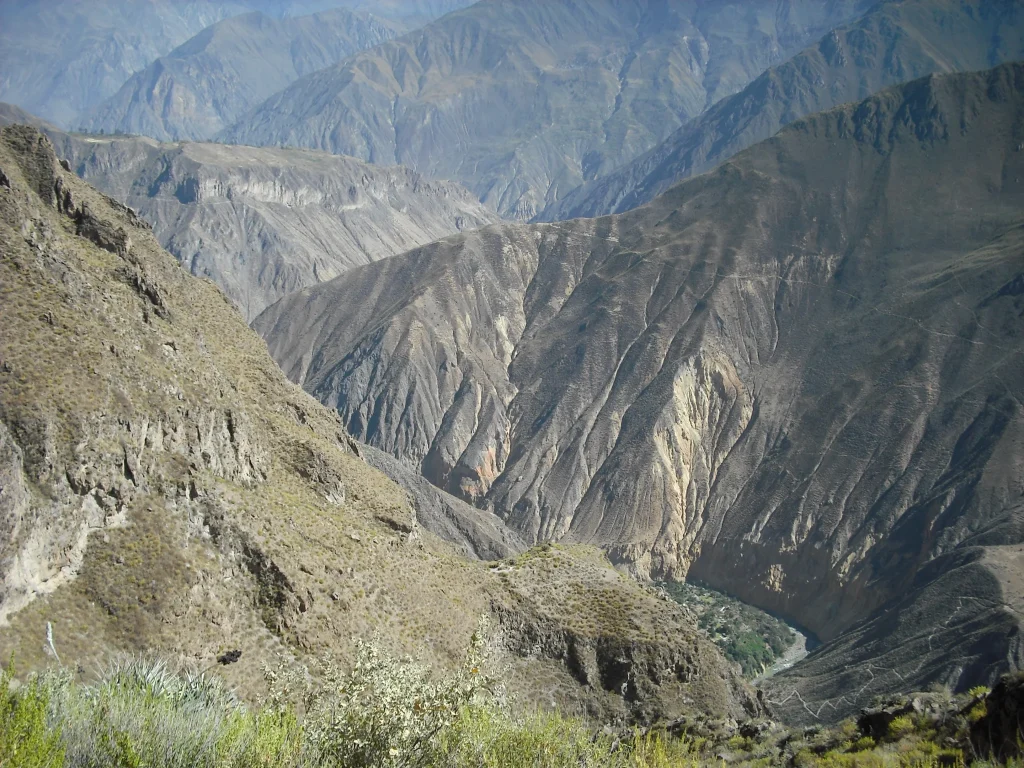
Colca Canyon Trip Guide
Colca Canyon is in southern Peru's Arequipa region, not Argentina, and Arequipa city is the main gateway. This is a high-altitude canyon-and-valley journey shaped by long road connections, early mornings at Cruz del Cóndor, and the need to pace yourself across an extensive mountain circuit.
- Start in Arequipa, then continue by bus to Chivay, a journey of roughly 3 to 4 hours.
- Plan Cruz del Cóndor for the morning, with the main condor-viewing period around 7:00 a.m. to noon.
- AUTOCOLCA lists the foreign adult tourist ticket at S/70; transport, guides, hot springs, and Uyo Uyo are extra.
- January through March is the rainy period. April through December generally brings easier access, colder temperatures, and sunnier conditions.
- The wider circuit ranges from about 2,400 to 5,000 metres above sea level, so altitude needs to shape the trip plan.
Set the map right: Colca is a Peru trip
Think of Colca as an Arequipa-region trip rather than a quick add-on to another country. The visitor circuit reaches across very different elevations and includes the Colca area alongside the Salinas-Aguada Blanca and Valley of the Volcanoes circuit covered by the tourist ticket. Chivay is the practical handoff point for onward travel within the valley.
The scale of the route is part of the experience and part of the planning challenge. Build in time for the journey, carry your identification and ticket, and avoid treating Colca as a simple roadside stop. A flexible plan leaves room for weather, road conditions, and the energy demands of high elevation.
Travel from Arequipa to Chivay
Arequipa is the starting point for most Colca journeys. Official visitor guidance suggests flying to Arequipa from Lima or Cusco, continuing to the city's bus terminal, and taking a bus to Chivay. The Arequipa-to-Chivay bus ride takes approximately 3 to 4 hours, so give this transfer enough space in your itinerary.
Once in Chivay, the practical choice is between an organized excursion and a taxi. A taxi gives you more flexibility over stops and timing. An organized tour or a local tourism and adventure operator can simplify navigation and is the recommended choice for travelers who want additional local support on a route with changing surfaces and conditions.
Avoid a tight transfer-day schedule
The bus connection alone makes an in-and-out plan demanding. Keep your most important commitments, especially a morning at Cruz del Cóndor, separate from tight onward connections where possible. Before committing to a tour or taxi, check the departure point, its expected return plan, and whether it includes tourist-ticket handling or leaves that purchase to you.
Plan Cruz del Cóndor for the morning
Cruz del Cóndor is the key wildlife stop for many visitors. Peru's tourism inventory identifies roughly 7:00 a.m. to noon as the period for condor watching, with later hours better used for other valley sights. Treat that window as the best time to look skyward above the canyon, not as a guarantee of sightings.
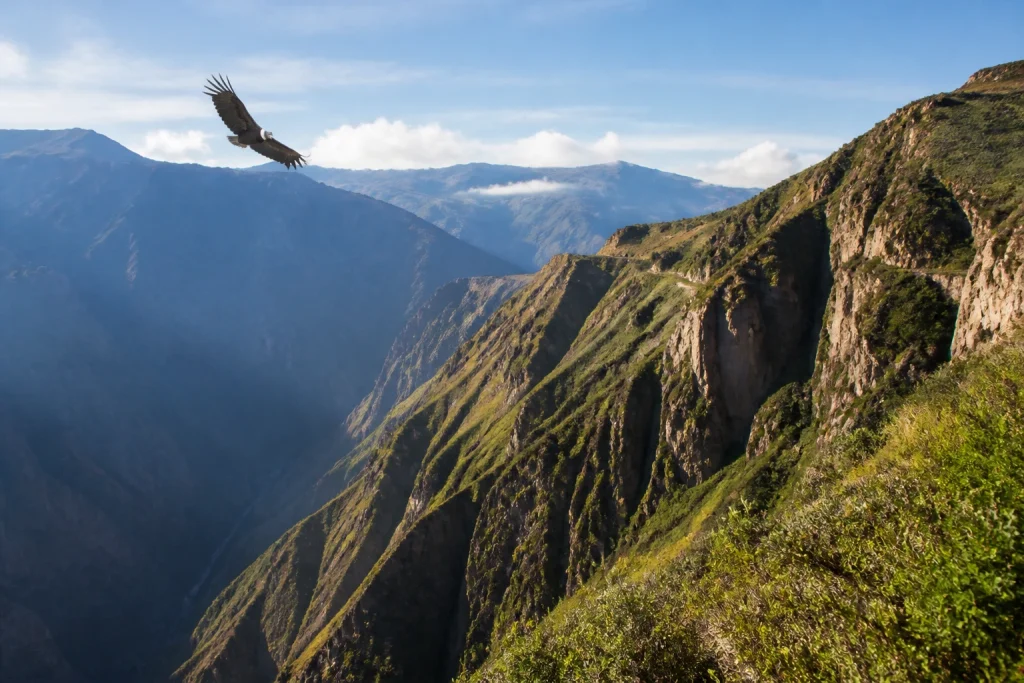
Season affects the feel of the journey. January through March is the rainy season, when weather and roads deserve extra attention. April through December is generally easier for access, with colder and sunnier conditions. Whatever month you choose, review the weather forecast and current road situation shortly before leaving Arequipa.
Bring patience as well as a camera
Condor viewing works best when the morning is not rushed. Arrive ready to watch rather than expecting a fixed showtime. Binoculars are useful if you have them, and a warm outer layer helps on the colder part of the year. Keep the remainder of the day open for the rest of the valley rather than compressing every stop into the morning.
Understand the Colca tourist ticket and its limits
Budget for the AUTOCOLCA tourist ticket separately from transport and any guided arrangements. The published visitor categories and prices are listed below. Eligibility for the Latin American category should be checked when purchasing.
| Visitor category | Listed tourist-ticket price | Notes |
|---|---|---|
| Foreign adult | S/70 | Adult foreign-visitor category |
| Latin American adult | S/40 | Check category eligibility when purchasing |
| Peruvian adult | S/20 | Adult Peruvian-visitor category |
| Children aged 6 to 15 | S/20 foreign or Latin American; S/5 Peruvian | Age and nationality categories apply |
The ticket grants temporary visiting rights for the Colca, Salinas-Aguada Blanca, and Valley of the Volcanoes circuit. It does not include transportation, a guide, La Calera hot springs, or entry to the Uyo Uyo archaeological complex. Treat those as separate parts of the budget and itinerary, rather than assuming one ticket covers the entire day.
Tickets are available online, at the AUTOCOLCA office in Arequipa, and at the Chivay control point. Online purchases require an entry date and can be made up to 15 calendar days ahead. The published Chivay control-point hours are 5:00 a.m. to 6:00 p.m. daily. Carry the ticket and an official identity document, and recheck current hours before departure.
Treat altitude and roads as central trip considerations
The wider Colca circuit spans approximately 2,400 to 5,000 metres above sea level. That range makes altitude a core planning issue, especially for visitors arriving from lower elevations. Set a conservative pace, allow time to adjust in Arequipa, and seek medical advice before travel if you have a health condition affected by high altitude.
For a deeper preparation check, read the plain-English guide to altitude acclimatisation in the Andes before finalizing the route. In Colca, acclimatisation matters as much as the transport plan because elevation can change significantly across the circuit.
Expect varied road surfaces beyond the main route
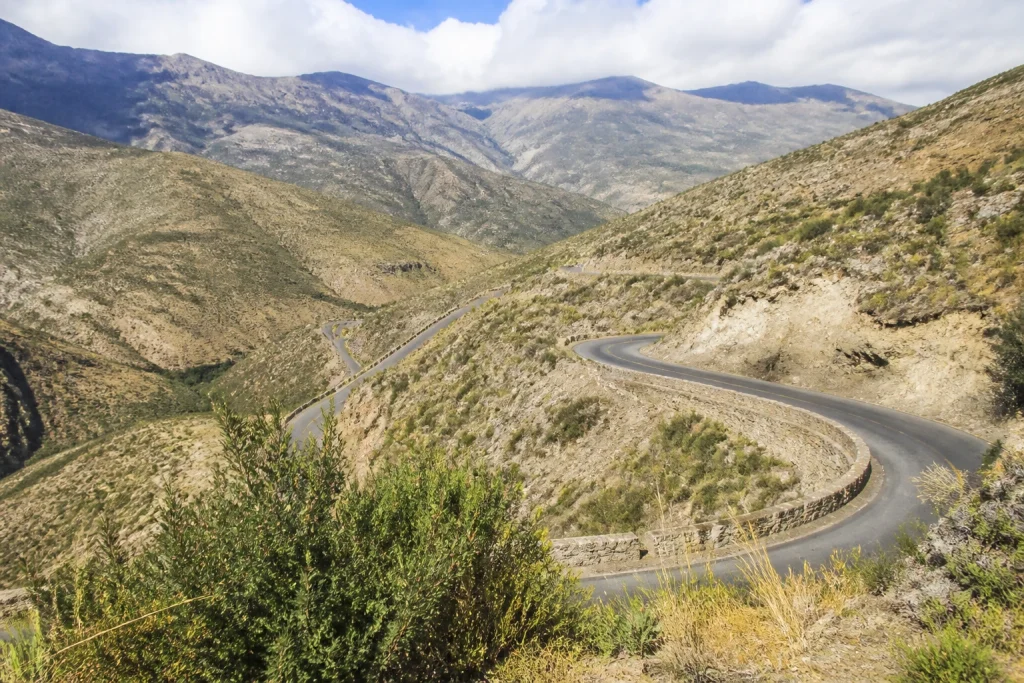
Roads around the circuit can be paved, graded, or unpaved, particularly toward more remote districts. This is where a local guide, an experienced operator, or a well-planned taxi arrangement has real value. Reconfirm road conditions and transport plans immediately before setting out, particularly during the January-to-March rainy period.
Do not assume the route is generally accessible. Visitors who need step-free viewpoints, adapted transport, accessible toilets, or assistance should obtain details in writing from their accommodation, transport provider, and AUTOCOLCA before booking. The combination of high elevation and mixed-surface roads requires a tailored plan.
Pack for an early, high-elevation day
Keep essentials simple and close at hand: your tourist ticket, official identification, water, sun protection, a charged phone, and warm layers for colder highland conditions. Add rain protection in the January-to-March season. If Cruz del Cóndor is a priority, binoculars can make the morning watch more rewarding without adding much weight to your bag.
Avoid packing around assumptions about facilities or easy last-minute stops in the more remote parts of the circuit. A small day bag and a little extra time work better than an overloaded schedule. Your key documents should remain accessible because the tourist ticket must be carried with identification.
Build a practical Colca Canyon itinerary
- Begin the route in Arequipa and account for altitude before committing to an early start.
- Travel from Arequipa's bus terminal to Chivay, allowing roughly 3 to 4 hours for the bus journey.
- Choose an organized tour or arrange a taxi from Chivay according to how much flexibility you want.
- Set aside a morning at Cruz del Cóndor, aiming for the 7:00 a.m. to noon condor-viewing period.
- Buy the tourist ticket online within its 15-day booking window or use an authorized Arequipa or Chivay purchase point.
- Recheck transport, road conditions, weather, and Chivay control-point hours immediately before departure.
This sequence keeps the trip focused on the decisions that matter: route time, altitude, wildlife timing, ticket coverage, and surface conditions. It also leaves room to adapt if rain, transport changes, or slower-than-expected travel affect the day. Colca rewards a measured plan more than a frantic checklist.
Is Colca Canyon worth adding to a Peru itinerary?
Colca Canyon suits travelers who are comfortable with high altitude, long mountain-road days, and an early start for the chance to see condors at Cruz del Cóndor. Its main limitation is the logistics: getting from Arequipa to Chivay takes time, and conditions can vary across the circuit. Start with a realistic route plan, then give the canyon morning the space it deserves.
For a broader Peru journey, pair this highland planning with a practical Machu Picchu and Sacred Valley itinerary, while keeping Colca's elevation and road time as a distinct part of the route. Start in Arequipa, choose your Chivay connection, and plan the Cruz del Cóndor morning before filling in the rest.
Frequently asked questions
Is Colca Canyon in Argentina or Peru?
Colca Canyon is in the Arequipa region of southern Peru, not Argentina. Arequipa city is the main gateway for reaching the Colca circuit.
How do you get to Colca Canyon from Arequipa?
Travel from Arequipa's bus terminal to Chivay, then continue with an organized tour or taxi. The bus journey from Arequipa to Chivay takes approximately 3 to 4 hours.
What does the Colca tourist ticket cost?
AUTOCOLCA lists the foreign adult tourist ticket at S/70, the Latin American adult category at S/40, and the Peruvian adult category at S/20. Prices and category eligibility should be checked when purchasing.
What does the Colca tourist ticket include?
The ticket covers temporary visiting rights for the Colca, Salinas-Aguada Blanca, and Valley of the Volcanoes circuit. It does not include transport, guides, La Calera hot springs, or the Uyo Uyo archaeological complex.
What is the best time to see condors at Cruz del Cóndor?
Plan to watch for condors from about 7:00 a.m. to noon. This is the recommended viewing period, though wildlife sightings can never be guaranteed.
Is Colca Canyon difficult because of altitude?
Altitude is a serious planning factor because the wider circuit ranges from roughly 2,400 to 5,000 metres above sea level. Allow time to acclimatise, plan conservatively, and get medical advice before travel if high altitude affects your health.
Colca Canyon is reached through Peru's Arequipa region by Charles Gadbois, CC BY 3.0.
