The Andes Hidden Gems Guide
Argentina’s Andean backcountry rewards travelers who give it time. Beyond the busiest mountain routes lie pumice fields, volcanic plateaus, observatories, desert canyons, and small bases separated by long stretches of road. This guide focuses on three contrasting choices: the high Puna around Antofagasta de la Sierra, Barreal and El Leoncito National Park, and the more structured experience at Talampaya National Park.
- Choose the high Puna for the most remote landscapes and the greatest logistical effort.
- Base yourself in Barreal for self-drive flexibility, hiking, camping, and reserved observatory visits at El Leoncito.
- Pick Talampaya for managed excursions, established visitor services, and the clearest accessibility information.
- Favor April to May or October to November for a Puna trip, and keep contingency time for weather and road changes.
- Carry water and warm layers, plan for altitude, and confirm reservations and payment arrangements before entering remote areas.
Here, “hidden gems” means comparatively remote or less mainstream places. It does not promise empty viewpoints. Conditions, transport limitations, and the effort required to reach them are part of their character. The right destination depends less on a checklist of sights and more on how much independence, altitude, and route uncertainty you are comfortable managing.
Choose the Andean experience that fits your trip
| Destination | Best suited to | Main reward | Main tradeoff |
|---|---|---|---|
| High Puna | Travelers comfortable with long, remote journeys | Volcanic terrain, salt flats, desert, and pumice formations | High elevation, sparse services, weather-sensitive roads |
| Barreal and El Leoncito | Independent travelers interested in astronomy and camping | Observatory visits, dry mountain scenery, and self-drive freedom | No public transportation between Barreal and the park |
| Talampaya | Visitors seeking a managed protected-area experience | Monumental canyon scenery and organized excursions | Set visitor schedules and limited-capacity departures |
The Puna is the strongest choice for expedition-style travel. El Leoncito offers a gentler logistical step into the Andes, provided you have a vehicle or private transfer. Talampaya is the simplest place to fit into a defined schedule. If this is your first Andean journey, compare these choices with the best places to visit in the Andes for first-time visitors before committing to the most remote route.
The high Puna: Argentina’s most demanding hidden landscape
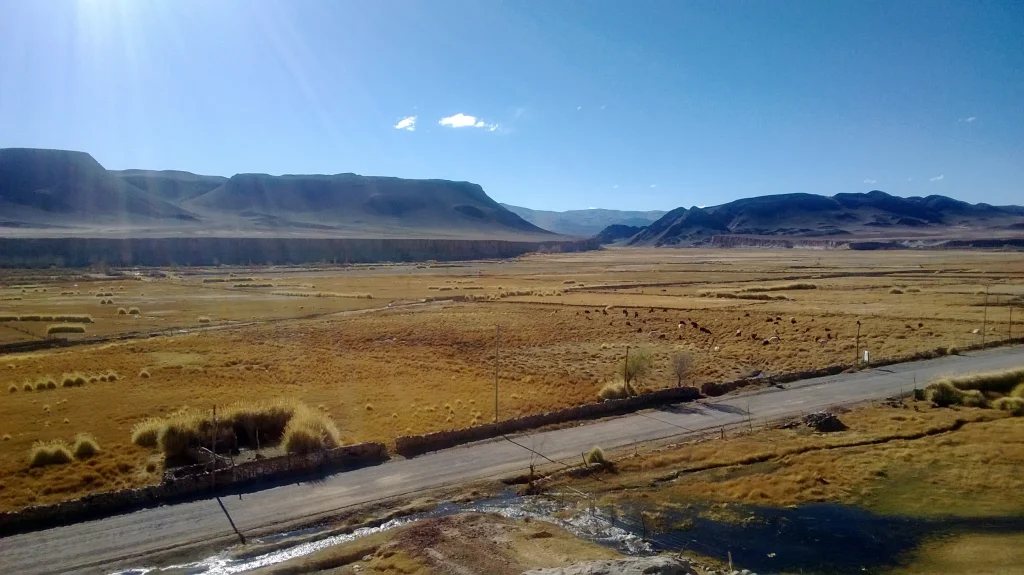
The high Puna delivers the guide’s most dramatic combination of volcanic, salt-flat, and desert scenery. Salta, San Salvador de Jujuy, and San Fernando del Valle de Catamarca serve as gateways. Guided trips can also begin in towns around the Quebrada de Humahuaca. The defining challenge is scale: destinations are widely separated, services are sparse, and elevation adds another layer of planning.
Antofagasta de la Sierra and Campo de Piedra Pómez
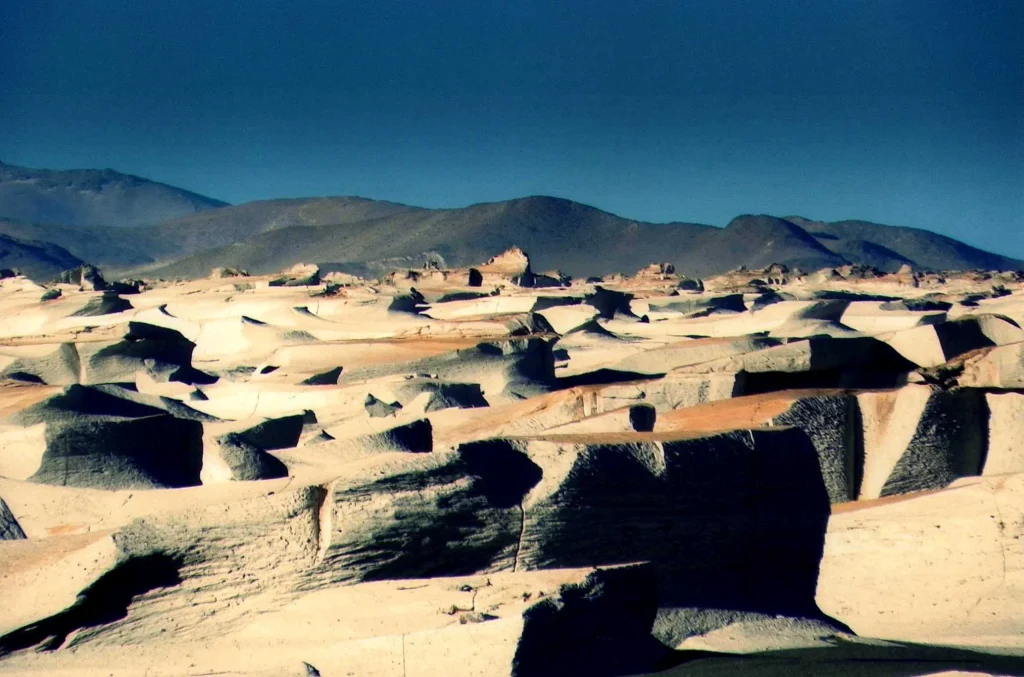
Antofagasta de la Sierra is a practical base for reaching Campo de Piedra Pómez, a landscape of pale volcanic formations set within the Catamarca Puna. The town is roughly 550 kilometers from San Fernando del Valle de Catamarca. That distance turns the journey into a road-trip commitment rather than a casual excursion from the provincial capital.
The appeal is the transition itself. The route leads away from urban services and into an austere environment shaped by volcanic terrain and broad desert spaces. Avoid building a tight onward schedule around your return. Weather or road conditions can slow travel, and the next dependable service may be a long way ahead.
Cusi Cusi and Tolar Grande as alternative Puna anchors
Cusi Cusi and Tolar Grande offer alternative ways to focus a Puna journey without treating Antofagasta de la Sierra as the only option. Select one geographic area and explore it properly instead of trying to connect every name on a single rushed loop. Guided arrangements are especially useful when current road conditions, navigation, and widely spaced services would complicate independent travel.
When to plan a Puna journey
April to May and October to November are the recommended dry-season windows. Rain generally affects the region between December and March, when some roads can become impassable. The Puna is described as a year-round destination, but that does not mean every road is dependable in every month. Build at least one flexible period into the plan rather than scheduling critical connections immediately after a remote excursion.
Cold is possible even during summer nights, while strong daytime sun and dry conditions increase the risks of heat stress and dehydration. Pack warm layers that can be added quickly, carry sufficient water, and protect yourself from the sun. Check the immediate route and weather situation before each remote departure.
Prepare for elevation before tackling distance
Altitude deserves its own place in the itinerary. Avoid treating a high Puna departure as an ordinary driving day after arriving from low elevation. Learn the warning signs, keep the opening part of the trip flexible, and use a plain-English Andes acclimatisation guide to shape a gradual plan. Headache, fatigue, and nausea should not be dismissed simply because the scenery is calling.
- Select one Puna base or geographic cluster rather than collecting distant stops.
- Allow time at elevation before the longest remote segment.
- Confirm the current route condition and the appropriate vehicle or guided arrangement.
- Carry water, food, sun protection, and layers for sharp temperature changes.
- Leave room for weather delays before flights or fixed reservations elsewhere.
Barreal and El Leoncito: astronomy with easier logistics
Barreal and El Leoncito National Park suit travelers who want Andean scenery without committing to the high Puna’s longest remote approaches. The park is about 35 kilometers from Barreal. There is no public transportation between the town and the park, so arrange a rental vehicle or private service before arrival.
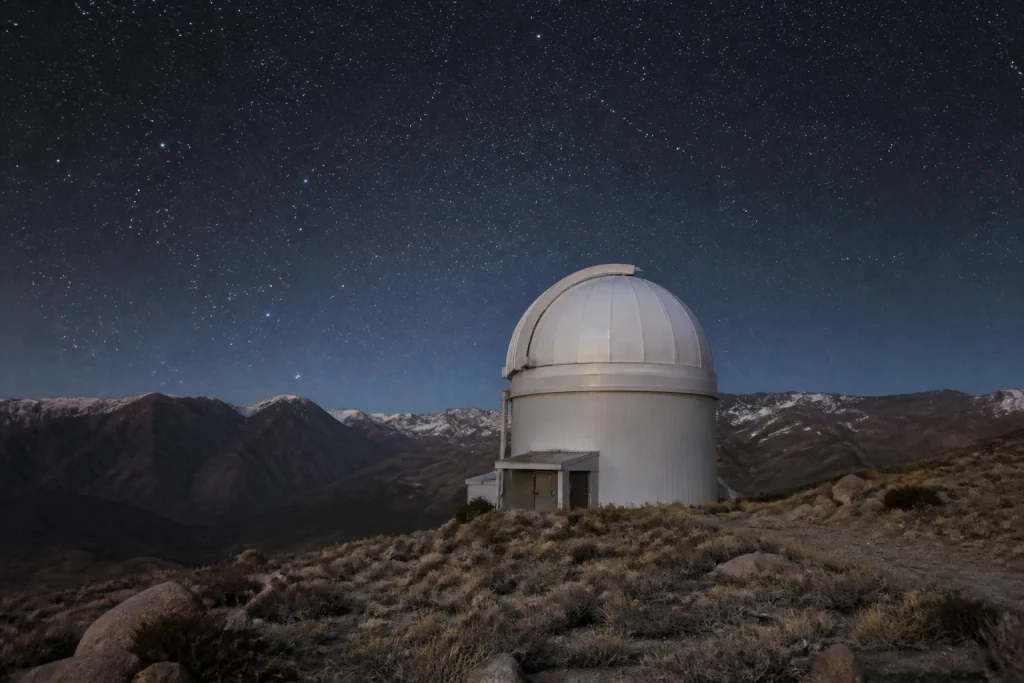
The park’s appeal centers on outdoor exploration, camping, observatory visits, and the night sky. Daytime and nighttime observatory experiences require reservations and are priced separately by the chosen observatory. Reserve a night visit in advance rather than assuming space will be available after reaching Barreal.
What El Leoncito costs
Entry to El Leoncito National Park and use of its campground are free. Observatory visits are separate paid activities, and the price depends on the observatory selected. Recheck these arrangements while reserving, particularly if the observatory experience is the main reason for your trip.
Weather and seasonal comfort at El Leoncito
El Leoncito can be visited throughout the year, but its dry climate brings substantial temperature swings. Summer averages are around 26°C, with highs near 35°C. Winter averages sit around 10°C, and lows can fall to about −6°C. Pack for the coolest part of your visit, especially when an observatory reservation will keep you outside after dark.
A useful but limited accessibility starting point
The campground includes an accessible grill and a ramped accessible bathroom. These facilities provide a useful starting point, but they do not establish that every trail or observatory experience is barrier-free. Travelers with mobility requirements should ask about the specific route, surfaces, entrances, seating, and toilet access involved in their chosen activity.
Talampaya: a structured canyon experience
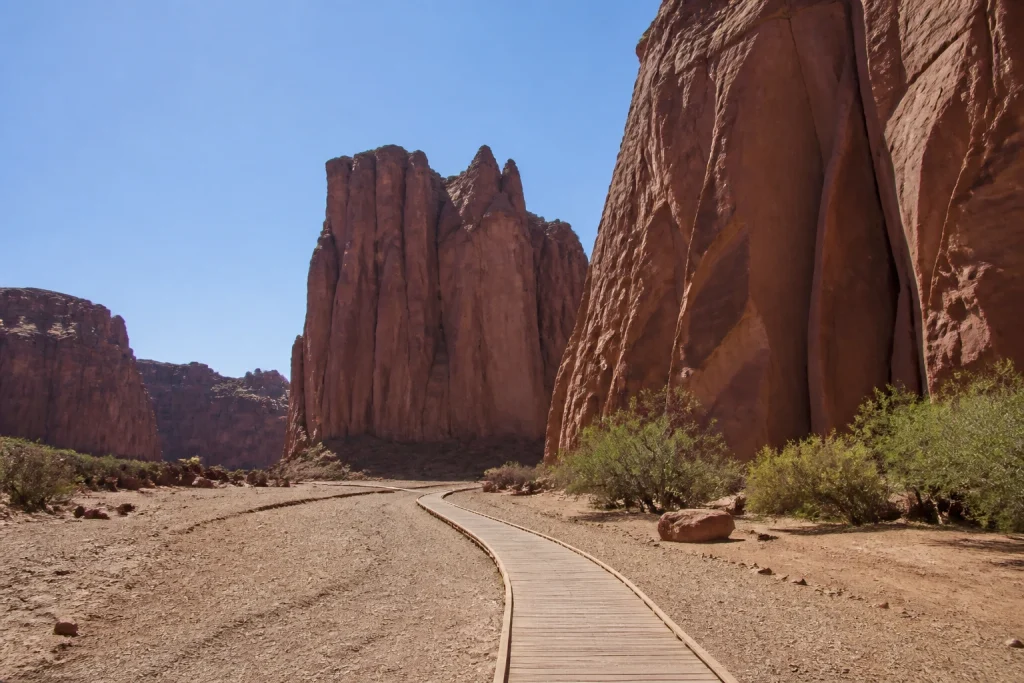
Talampaya National Park is the most structured option in this guide. It lies along National Route 76. Road approaches include National Route 150 and National Route 76 from Patquía, or National Route 40 through Villa Unión. Its managed services and scheduled excursions make the visit easier to organize than a remote Puna itinerary.
Current visitor hours and departure times
The park’s listed visitor hours are 8:30 a.m. to 7:30 p.m. between September 21 and April 30, and 9 a.m. to 6:30 p.m. between May 1 and September 20. The last excursion departs at 4 p.m. Schedules can change, so recheck the day’s timetable before driving to the park.
The Naturaleza y Cultura de Talampaya excursion has fixed departures at 9 a.m. and 4 p.m., with limited capacity. A late arrival can therefore remove a major part of the day’s plan even if the visitor area remains open. Reserve ahead when possible and arrive with enough time to complete check-in before the chosen departure.
Admission and accessibility at Talampaya
General admission is listed at ARS 25,000, effective June 1, 2026. Treat that figure as a current Argentine-peso reference rather than a permanent price. Check the latest fee before booking, and do not rely on a converted foreign-currency amount because exchange rates can move independently of the park tariff.
The main Huayra Huasi service complex and the Talampaya Canyon walkways are certified as practicable accessible trails with assistance. This makes Talampaya the clearest option here for travelers who need established visitor infrastructure. Assistance is still part of the classification, so discuss individual mobility needs when arranging the excursion.
Comparing remoteness, flexibility, and convenience
| Planning question | High Puna | El Leoncito | Talampaya |
|---|---|---|---|
| Can it work without driving yourself? | Yes, through guided arrangements from established gateways | Private transport is needed because there is no public service from Barreal | The park is reached by road, with activities managed on arrival |
| How much schedule flexibility is needed? | High, especially around weather and road conditions | Moderate, with observatory reservations fixed in advance | Lower, but excursion departure times must be respected |
| What should be reserved? | Guided transport or local logistical support when used | Day or night observatory visit | Limited-capacity excursion |
| What is the main planning challenge? | Elevation, distance, and sparse services | Transport between Barreal and the park | Arriving before the scheduled final departures |
Travelers with limited time should favor Talampaya or a Barreal base. The Puna works best when the journey itself is the priority and the calendar can absorb disruption. El Leoncito sits between those extremes. It offers independent movement and a remote atmosphere, but the short distance from Barreal is more manageable than the long approach to Antofagasta de la Sierra.
Practical checks before entering remote country
- Altitude: leave room to acclimatize before a high Puna departure and recognize the symptoms of altitude illness.
- Weather: inspect the immediate forecast and road situation, especially during the December to March rainy period.
- Water and food: carry enough for the planned journey and additional time caused by delays.
- Clothing: bring sun protection and warm layers, even when daytime temperatures are high.
- Payments: confirm accepted payment methods and settle remote transport arrangements before departure.
- Reservations: book El Leoncito observatory visits and limited-capacity Talampaya activities in advance.
Route checks matter most in the Puna, where seasonal rain can make roads impassable. Ask the tour provider, accommodation host, or appropriate local contact about the specific road you intend to use. A general regional forecast is less useful than current information about the actual segment ahead.

Keep payment planning simple. Confirm what can be paid in advance, what must be settled locally, and which payment methods are accepted. Current official prices are available for only a few items in this itinerary, so avoid building a full trip budget around assumed transport, fuel, lodging, or private-tour costs.
Build the journey as separate route modules
These destinations work best as distinct route modules rather than a race to complete all three. Start by choosing the experience that matters most: Puna landscapes, astronomy at El Leoncito, or Talampaya’s canyon. Add another region only when the connecting transport, reservation dates, and weather margin fit comfortably.
A high Puna expedition module
Use Salta, San Salvador de Jujuy, San Fernando del Valle de Catamarca, or a suitable Quebrada de Humahuaca town as the broader gateway. Choose the specific Puna area before arranging transport. Antofagasta de la Sierra and Campo de Piedra Pómez demand a major road commitment, while Cusi Cusi or Tolar Grande can anchor a different regional plan.
A Barreal and stargazing module
Stay in or organize around Barreal, secure transportation for the approximately 35-kilometer journey to El Leoncito, and reserve the observatory experience before finalizing the night’s schedule. This module suits travelers who want control over their own pace but prefer a defined base instead of a long Puna crossing.
A Talampaya module
Approach Talampaya with its excursion schedule at the center of the day. Work backward from the reserved departure, allow time for the road journey and check-in, and avoid depending on the final excursion if another option is available. This is the strongest module for visitors who value a defined program over open-ended backcountry travel.
Known costs and expenses to confirm locally
| Item | Planning reference | What to do |
|---|---|---|
| El Leoncito park entry | Free | Check for any current policy change before arrival |
| El Leoncito camping | Free | Confirm current campground conditions and availability |
| El Leoncito observatory visit | Separately priced by each observatory | Review the selected observatory’s reservation details |
| Talampaya general admission | ARS 25,000 from June 1, 2026 | Recheck the Argentine-peso tariff before booking |
| High Puna tour or transfer | Current quote needed | Compare the route, vehicle arrangement, and inclusions |
| Fuel and accommodation | Verify locally | Budget only after confirming the chosen route and dates |
The cost difference between these routes cannot be judged from admission alone. El Leoncito has free entry, but reaching it still requires a vehicle or private service. The Puna’s largest expenses are likely to be tied to transport and the route selected, while Talampaya combines a published entrance tariff with scheduled visitor activities. Obtain current quotes before deciding which option fits the budget.
What to pack for these Andean hidden gems
- Refillable water containers with enough capacity for remote travel
- Warm insulating layers for cold evenings and sudden temperature drops
- Sun-protective clothing, sunglasses, sunscreen, and a hat
- Food and snacks appropriate for long stretches between services
- Personal medication and a plan for managing altitude exposure
- Reservation details and offline copies of essential trip information
Pack for temperature range rather than the afternoon forecast. El Leoncito can move between hot summer days and cool nights, while the Puna can be cold after sunset even in summer. Keep the warmest layer and water accessible inside the vehicle instead of burying them beneath luggage.
Which hidden gem should you choose?
Choose the high Puna when remote volcanic landscapes are the main purpose of the trip and you can accommodate altitude, long distances, and changing road conditions. Choose Barreal and El Leoncito for an independent escape built around astronomy and camping. Choose Talampaya when established services, scheduled excursions, and clearer assisted accessibility are more important than backcountry freedom.
The strongest plan is not the one with the most pins on a map. It is the one that leaves enough time to experience a single landscape without turning every road delay into a crisis. Pick the route that matches your tolerance for remoteness, reserve its limited elements, and protect the schedule with a realistic weather margin.
Frequently asked questions
What are the best hidden gems in the Argentine Andes?
Three strong choices are the high Puna around Antofagasta de la Sierra and Campo de Piedra Pómez, Barreal and El Leoncito National Park, and Talampaya National Park. The Puna is the most remote, El Leoncito is well suited to astronomy and independent travel, and Talampaya provides the most structured visitor experience.
What is the best time to visit the Argentine Puna?
April to May and October to November are the recommended dry-season periods. Rain is more common between December and March, when some roads can become impassable. Cold nights, high elevation, strong sun, and dehydration remain considerations in every season.
Can you visit these destinations without a car?
Guided Puna trips can depart from major regional gateways, but independent transport options are limited. El Leoncito has no public transportation from Barreal, so a rental vehicle or private service is necessary. Talampaya is reached by road and uses managed excursions within the park.
Which destination is easiest to organize?
Talampaya is the easiest of the three to organize because it has defined access routes, seasonal visitor hours, a service complex, and scheduled excursions. Its fixed departures still require punctual arrival and advance planning during busy periods.
How much does it cost to visit El Leoncito and Talampaya?
El Leoncito National Park entry and camping are free, while observatory visits are priced separately. Talampaya general admission is listed at ARS 25,000 from June 1, 2026. Recheck current tariffs before traveling because Argentine-peso prices and activity charges can change.
Are El Leoncito and Talampaya accessible to travelers with limited mobility?
Both provide some documented accessible facilities, but the scope differs. El Leoncito’s campground has an accessible grill and a ramped accessible bathroom. At Talampaya, the Huayra Huasi complex and canyon walkways are classified as practicable accessible trails with assistance. Confirm the exact activity arrangements for individual needs.
Wind-shaped pumice formations rise above the high desert at Campo de Piedra Pómez by Rodolfo Pace, CC BY 2.0.
