Best Day Trips From The Andes
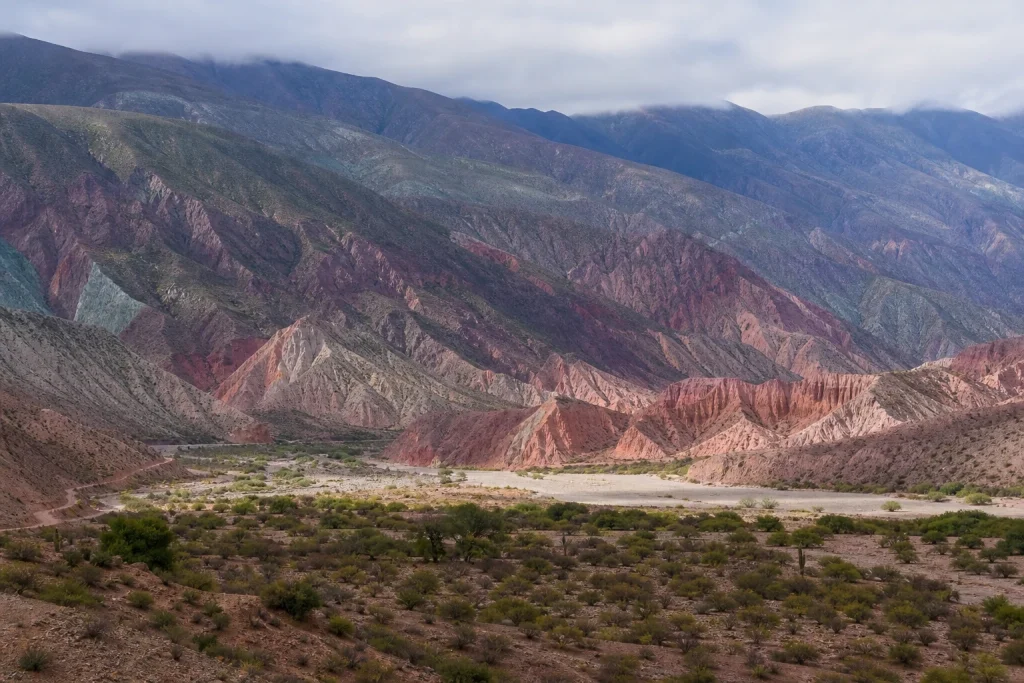
Argentina’s Andes stretch across several distinct travel regions, so the best day trip depends on where you are staying. Salta and Jujuy open onto high desert valleys, Mendoza provides access to Aconcagua country, and Bariloche sits among the forests and lakes of northern Patagonia. These gateways are far apart and should be treated as separate bases, not interchangeable starting points.
- Choose your gateway before choosing the excursion. Salta, Jujuy, Mendoza, and Bariloche serve different sections of the Andes.
- Cafayate is a long but rewarding road day from Salta, with wine country and the rock formations of Quebrada de las Conchas.
- Humahuaca combines cultural landscapes and high-altitude scenery, but its elevation and wider valley deserve more than a rushed visit when time allows.
- Circuito Chico is the compact Bariloche choice. The complete Seven Lakes route requires a much larger share of the day.
- Aconcagua Provincial Park requires date-specific planning for access, permits, transport, and seasonal conditions.
This guide compares the strongest options by gateway rather than forcing them into a misleading national ranking. If you have not selected a region yet, a broader look at the best places to visit in the Andes for first-time visitors can help you decide which landscape belongs in your itinerary.
Choose the right Argentine Andes gateway first
Base yourself in Salta for Cafayate and the southern valleys. San Salvador de Jujuy is the more logical gateway for Quebrada de Humahuaca. Mendoza suits travelers interested in Aconcagua and managed mountain access, while Bariloche is the starting point for compact lake scenery or a much longer Lakes District road day.
Trying to combine these regions within a short stay creates more transit than sightseeing. Pick one gateway, allow an extra day for weather or transport changes, and use the comparison below to match the excursion to your available time and comfort with long road journeys.
Quick comparison of the best Andes day trips
| Day trip | Best gateway | Main appeal | Important tradeoff |
|---|---|---|---|
| Cafayate | Salta | High-altitude wineries, wine museum, and Quebrada de las Conchas | A long outing for a destination that rewards several nights |
| Quebrada de Humahuaca | San Salvador de Jujuy | World Heritage valley, high desert towns, and mountain scenery | Humahuaca reaches 3,012 meters and a fuller visit needs several days |
| Circuito Chico | Bariloche | A compact scenic drive in the Lakes District | Less extensive than the complete Seven Lakes route |
| Seven Lakes route | Bariloche or Villa La Angostura | A chain of named lakes between Villa La Angostura and San Martín de los Andes | A major road day, especially when starting in Bariloche |
| Aconcagua Provincial Park | Mendoza region | Managed access to the landscape surrounding Aconcagua | Routes, permits, transport, and seasonal access require advance checking |
The best all-round choice is not necessarily the grandest destination. Circuito Chico suits a lighter sightseeing day, while Cafayate and the Seven Lakes route favor travelers who genuinely enjoy road trips. Humahuaca and Aconcagua demand more attention to altitude and access conditions.
Cafayate: wine country and sculpted red rock from Salta
Cafayate is the standout long day trip from Salta for travelers who want scenery and wine culture in one journey. The town lies 183 kilometers from Salta via RN 68 and is reachable by car or bus. Highlights include high-altitude wineries, the Vine and Wine Museum, and the eroded landscapes of Quebrada de las Conchas.
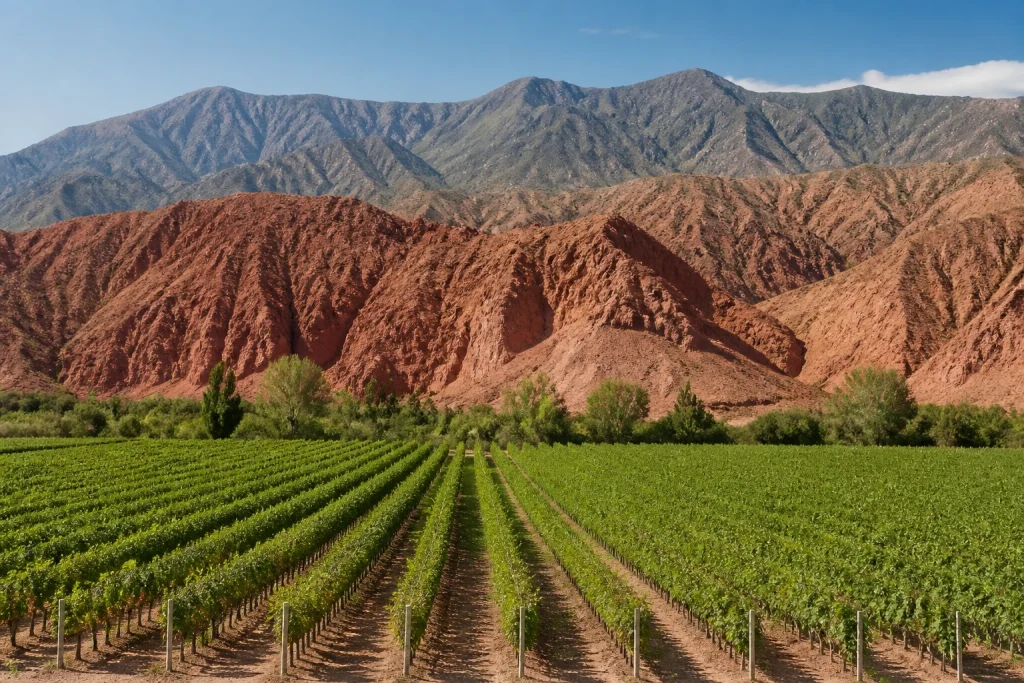
Devil’s Throat and the Amphitheater are among the best-known formations in Quebrada de las Conchas. Their inclusion makes the road part of the experience rather than dead time between Salta and Cafayate. Avoid filling the day with too many tastings or museum stops. A focused plan leaves room for the valley scenery without turning the return journey into an afterthought.
One day is a compromise. Cafayate is better suited to a stay of two to four nights when wine, food, and the surrounding landscape are central to the trip. For a day excursion, leave early and choose one main town activity alongside selected canyon stops. April through November is identified as the ideal period for visiting.
A practical shape for the Cafayate day
- Depart Salta with enough daylight for stops along RN 68.
- Prioritize a small number of formations in Quebrada de las Conchas.
- Choose either a winery-focused visit or a slower museum and town stop.
- Review the return plan before adding another tasting or attraction.
- Carry layers, water, and sun protection for the semi-arid climate.
Cafayate’s semi-arid conditions bring noticeable differences between daytime and nighttime temperatures. Sun protection matters even when the air feels cool, and a light insulating layer is useful for the return. If traveling by bus, check the current timetable before committing to winery reservations or timed activities.
Quebrada de Humahuaca: culture and altitude from Jujuy
Quebrada de Humahuaca is a World Heritage cultural landscape and one of northern Argentina’s defining Andes journeys. Tilcara, Maimará, and Humahuaca are among the valley’s notable stops. The wider region also supports horse or mule outings and 4×4 access to more remote terrain, although those activities need more planning than a simple sightseeing drive.
Humahuaca town stands at 3,012 meters, so this is a more demanding excursion than its road-based format suggests. The climate is dry and cold, and altitude can slow the pace. Travelers arriving directly from low elevation should keep the schedule flexible, eat lightly, drink water, and avoid stacking strenuous activities onto an already long day.
Buses reach Humahuaca’s terminal from San Salvador de Jujuy via RN 9, but schedules and fares should be checked for the intended date. An organized excursion can simplify the sequence of valley stops, while independent travelers gain more control over how long they spend in each town.
Plan two to four days when Humahuaca is a central reason for visiting northern Argentina. With only one day, concentrate on a coherent section of the valley. Salinas Grandes also appears among the region’s major attractions, but adding every headline landscape to a single outing can leave little time to experience any of them properly.
Anyone concerned about sleeping, exertion, or headaches at elevation should review a plain-English acclimatisation guide to altitude in the Andes before departure. Sensible pacing is more useful than trying to win an imaginary race through the valley.
Circuito Chico: the compact Bariloche scenery day
Circuito Chico is the practical Bariloche choice when you want a scenic outing without attempting the complete Seven Lakes route. It provides a compact introduction to the Lakes District and leaves more flexibility for meals, changing conditions, or another activity later in the day.
The crucial planning point is scale. Circuito Chico and the Seven Lakes route are not equivalent excursions with different names. The first is the shorter scenic-drive option. The second continues through a much larger corridor between Villa La Angostura and San Martín de los Andes.
Choose Circuito Chico if your priority is an easier sightseeing day based in Bariloche. It is also the better fit when your itinerary has limited spare time. Travelers who want the full chain of lakes should reserve their energy and daylight for the longer route instead of trying to merge both plans.
The Seven Lakes route: a full commitment to the Lakes District
The complete Seven Lakes route runs between Villa La Angostura and San Martín de los Andes. Its named lakes are Espejo, Correntoso, Villarino, Escondido, Falkner, Machónico, and Lácar. The sequence creates a varied road journey through Argentina’s northern Patagonian lake country.
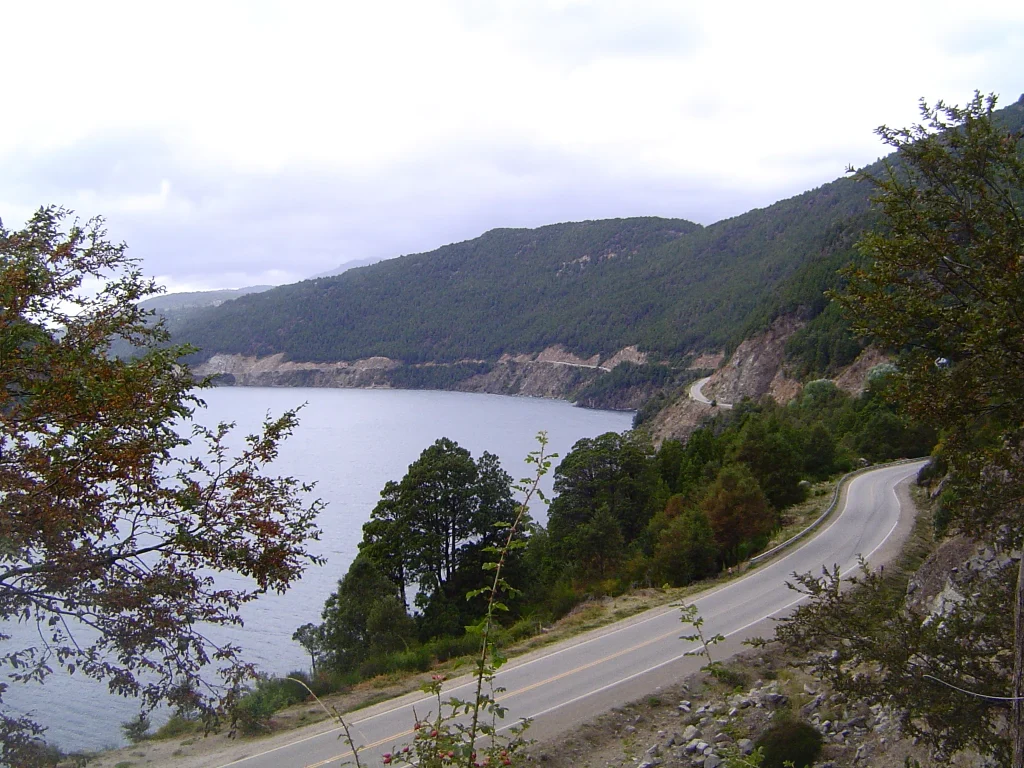
Bariloche works as a regional gateway, but the named route itself begins beyond the city. Starting there adds travel before and after the central lake corridor. Treat the excursion as a major road day and resist the temptation to measure success by the number of brief photo stops.
This trip suits travelers who enjoy the journey as much as the destination. Circuito Chico is the stronger choice for a relaxed Bariloche day, while the Seven Lakes route fits an itinerary built around scenic driving. A one-way arrangement or an overnight outside Bariloche can reduce the pressure, but transport availability must be confirmed for the travel date.
Some Bariloche-area itineraries enter Nahuel Huapi National Park, where admission is separate from fuel, transport, guides, meals, and other activities. Check the exact route and ticket requirements before departure rather than assuming every lake excursion has the same cost structure.
Aconcagua Provincial Park: a carefully planned Mendoza mountain day
Aconcagua Provincial Park is the strongest Mendoza-region choice for travelers seeking a high-mountain setting. It is also the option in this guide that requires the most careful distinction between a sightseeing visit and deeper mountain access. Do not book a generic “Aconcagua day” without identifying the exact sector, route, transport plan, and permitted activity.
Park information covers managed access associated with Confluencia, Plaza de Mulas, and Plaza Argentina, including seasonal medical-prevention and assistance procedures. These are not interchangeable day-trip destinations. The correct permit and preparation depend on the route being attempted, so use the park’s current access terms for your intended date.
Aconcagua works best for travelers willing to plan around mountain rules rather than improvise after arrival. Confirm seasonal operations, road conditions, trail access, required permits, and return transport before leaving Mendoza. A current all-in price should include each relevant component instead of relying on an old permit figure.
What these Andes day trips cost
Total costs vary with transport, group size, fuel, guides, meals, tastings, and activities. Compare the complete day rather than a headline ticket. For self-guided plans, include parking and fuel. For tours, check the pickup area, included admissions, meals, and the exact return point.
| Nahuel Huapi National Park category | Daily admission listed from June 1, 2026 |
|---|---|
| General category | ARS 35,000 |
| Argentine nationals | ARS 15,000 |
| Provincial residents | ARS 8,000 |
| Students | ARS 12,000 |
These figures are park admission only. They do not include a vehicle, fuel, bus fare, a guide, food, or tour services, and admission rates can change. Cafayate, Humahuaca, Circuito Chico, the Seven Lakes route, and Aconcagua do not share one standard all-in price, so compare like-for-like inclusions before booking.
How to plan a safer, smoother Andes day trip
Match transport to the scale of the route
Public transport can work for Cafayate and Humahuaca, but a bus to the destination does not automatically create a flexible sightseeing itinerary. A car or organized excursion provides more control over intermediate stops. For any booked service, review the confirmation for the meeting point, pickup window, included admissions, and return location.
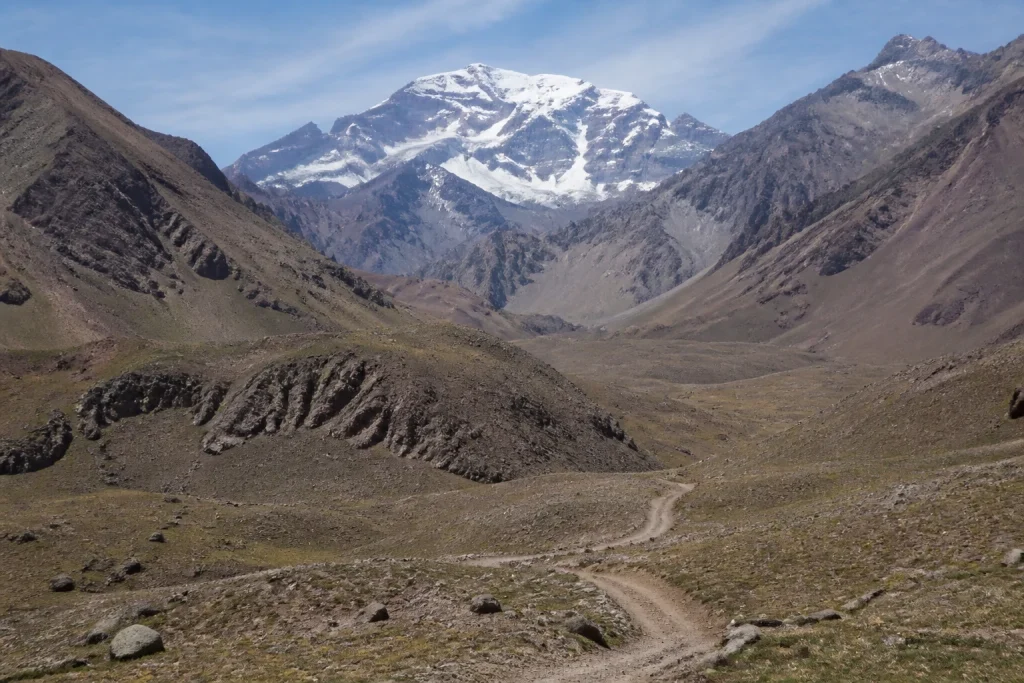
Long scenic drives also require restraint. Choose a few meaningful stops and leave room for delays. This is especially important for Cafayate, the complete Seven Lakes route, and any Bariloche plan that extends beyond the compact Circuito Chico outing.
Take altitude and temperature seriously
Humahuaca’s elevation of 3,012 meters deserves attention, particularly after arriving from low altitude. Cafayate has a semi-arid climate with marked temperature changes between day and night. Pack so that you can add or remove layers without unpacking your entire bag at every stop.
For Aconcagua, use the requirements for the exact route and season rather than general advice intended for casual sightseeing. Managed mountain access can involve medical-prevention procedures and assistance protocols. A simple viewpoint-oriented outing and a route toward a mountain camp should never be treated as the same activity.
Confirm accessibility before committing
Travelers who need step-free transport, accessible toilets, firm trail surfaces, limited gradients, or adaptive equipment should confirm those details with the operator or park before booking. Conditions differ among vehicles, museums, wineries, roadside viewpoints, and mountain routes, so a general destination label is not enough to judge suitability.
Pack for the route, not just the destination
- Water and food appropriate for the length of the journey
- Sun protection, including sunscreen, sunglasses, and a hat
- Warm layers for dry high-altitude areas and cooler return journeys
- A charged phone plus offline trip details
- Any medication or personal mobility equipment needed for a long day
- Booking details, identification, and required park or activity documents
Match the excursion to your travel style
- Choose Cafayate for wine culture paired with a dramatic road journey.
- Choose Quebrada de Humahuaca for high desert heritage and mountain towns, provided altitude is manageable.
- Choose Circuito Chico for the most compact Bariloche sightseeing plan in this guide.
- Choose the Seven Lakes route when a long scenic drive is the main event.
- Choose Aconcagua Provincial Park when you are prepared to plan around managed mountain access.
Travelers with more than one day should resist forcing Cafayate or Humahuaca into a rapid return journey. Both places reward a two-to-four-day stay. Extra time improves the pace and makes it easier to separate cultural stops, landscapes, and activities rather than collecting them through a vehicle window.
Make one region the focus of the day
The best Andes day trip is the one that fits your gateway and leaves enough time to experience the landscape. Cafayate offers the richest blend of road scenery and wine culture from Salta. Humahuaca delivers northern heritage at a demanding elevation. Circuito Chico keeps a Bariloche day manageable, while Seven Lakes rewards road-trip enthusiasts.
Aconcagua is the specialist choice because access conditions and route requirements matter more. Whichever region you select, confirm current transport and entry terms, pack for temperature changes, and protect the return journey from an overloaded schedule. The Andes are more memorable when the day includes time to look around.
Frequently asked questions
Can all of these Andes day trips be taken from one city?
No. Salta, San Salvador de Jujuy, Mendoza, and Bariloche serve widely separated parts of the Argentine Andes. Choose a regional base first and compare excursions available within that area.
Is Cafayate possible as a day trip from Salta?
Yes, but it is a long day rather than a short excursion. Cafayate is 183 kilometers from Salta via RN 68, and travelers with more time should consider staying two to four nights.
Is Humahuaca suitable for travelers who have just arrived at altitude?
Humahuaca requires a cautious pace because the town stands at 3,012 meters. Travelers arriving from low elevation should keep exertion modest and avoid an overloaded schedule.
Should I choose Circuito Chico or the Seven Lakes route from Bariloche?
Choose Circuito Chico for a compact scenic outing and the Seven Lakes route for a much larger road day. The complete route runs between Villa La Angostura and San Martín de los Andes, so a Bariloche start adds extra travel.
Do I need a permit for an Aconcagua day trip?
Permit and access requirements depend on the exact sector, route, activity, and season. Check the current park conditions for your intended date before arranging transport from the Mendoza region.
How much should I budget for an Andes day trip?
Budget for transport, admissions, fuel, food, guides, and optional activities as separate items. Nahuel Huapi National Park publishes daily admission categories, but those charges do not represent the total cost of a Bariloche excursion.
Are these Andes day trips wheelchair accessible?
Accessibility depends on the vehicle, attraction, viewpoint, and route. Confirm step-free access, toilet facilities, trail surfaces, gradients, and any adaptive equipment directly with the relevant operator or park before booking.
More bookable experiences
Three tours to compare
Review current provider details before booking. Discover Andes may earn a commission at no extra cost to you.
Continue exploring
More practical guides selected from the Discover Andes library.
Rainy Day Things to Do in The Andes
Build a rewarding bad-weather day in Argentina’s Andes with winery tastings, thermal baths, museums, regional food, markets, and…
4 Days in The Andes Itinerary
Spend four days exploring Argentina’s Andes through Mendoza and the RN 7 high-mountain corridor, with stops at Potrerillos,…
The Andes Souvenir Shopping Guide
Shop the Argentine Andes with confidence, using Salta as a base for regional textiles, ceramics, woodwork, basketry, gaucho…
The Andes Summer Travel Guide
Plan an Argentine Andes summer trip with practical advice on choosing Mendoza, Bariloche, or the high-altitude northwest, plus…