
The Andes Souvenir Shopping Guide
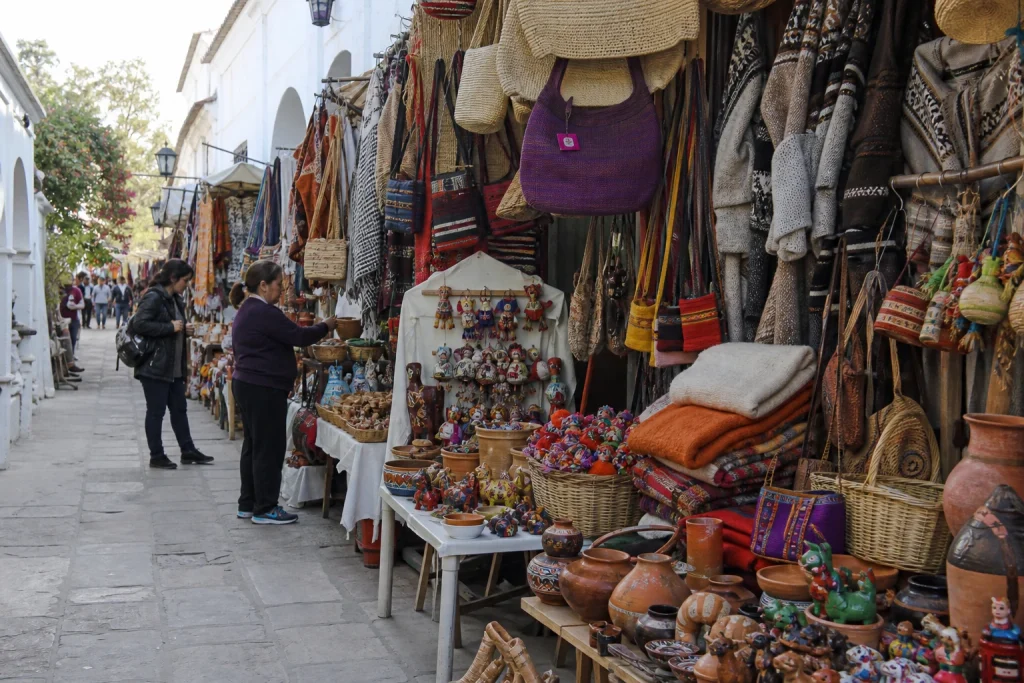
Souvenir shopping in the Argentine Andes becomes more rewarding when you understand the materials in front of you. Salta is the most practical base for exploring regional craft traditions, including woven textiles, chaguar fiber, basketry, ceramics, carved wood, Chané masks, and gaucho goods made with leather, antler, or silver. The goal is not to find one object that represents the entire Andes. It is to choose something whose material, maker, and place of origin have a clear story.
- Begin at Salta's Mercado Artesanal for a concentrated introduction to regional crafts and artisan associations.
- Ask what an item is made from, where it was produced, and whether the seller or a named workshop made it.
- Treat fair schedules as planning cues rather than fixed promises, especially on weekends and holidays.
- Choose small textiles, baskets, or ceramics when luggage space matters; ponchos, blankets, masks, and carvings require more room.
- Do not assume payment methods or market-wide price ranges. Confirm both before making a purchase.
- Check customs rules before buying archaeological-looking objects or goods containing wood, plants, hides, antler, feathers, seeds, or food.
Why Salta Is the Best Starting Point
Salta works well for a short shopping itinerary because several craft venues are listed within the city, while nearby villages add weekend fairs and stronger geographic context. Start with the Mercado Artesanal, then compare what you see with the stalls at Plaza Güemes, Balcarce, or the summit of Cerro San Bernardo when those fairs are operating. This approach lets you learn the vocabulary of regional crafts before making a larger or harder-to-pack purchase.
Travelers building a longer itinerary can use the Chile and Argentina destination guide to place Salta within a broader Andes journey. If shopping is a priority, leave some luggage space at the beginning of the trip rather than trying to fit a rolled blanket or rigid carving into a bag already full of mountain gear.
What to Buy in the Argentine Andes
The strongest purchase is usually one you can describe accurately. Look beyond a general “Andean” label and identify the material and tradition. A woven belt and a chaguar-fiber bag are not interchangeable, just as a Chané mask should not be reduced to generic wooden decor. The following overview helps separate the main craft categories associated with Salta.
| Craft type | Regional examples | Useful question | Packing consideration |
|---|---|---|---|
| Textiles | Ponchos, blankets, bags, belts, picote, and barracán | What fiber and weaving method were used? | Small bags and belts are easier to carry than blankets or ponchos. |
| Chaguar work | Objects woven or constructed with chaguar fiber | Where was the fiber work made? | Check destination-country rules for plant-origin material. |
| Ceramics | Regional and pre-Hispanic-style pottery | Was this made as a modern craft object? | Choose a shape that can be padded inside your luggage. |
| Woodwork | Wichí carving and other carved objects | Who carved it, and what type of wood was used? | Wood can be rigid, heavy, and subject to border controls. |
| Chané masks | Distinctive carved wooden masks | Was it made by a Chané artisan or workshop? | Protect projecting edges and confirm wood-import rules. |
| Gaucho goods | Leather, antler, and silver objects | Which materials are present in the piece? | Animal-origin components can require additional checks. |
| Basketry | Handmade woven baskets | Where was the basket made, and from what material? | Compact forms are easier to protect than broad open baskets. |
How to Choose a Regional Textile
Textiles offer the broadest range of practical souvenirs. Salta's traditions include ponchos, blankets, bags, belts, picote, and barracán. Instead of choosing by color alone, ask the seller to identify the fiber, weaving method, production location, and maker. The answers help distinguish a locally connected piece from an object sold under a broad regional label.
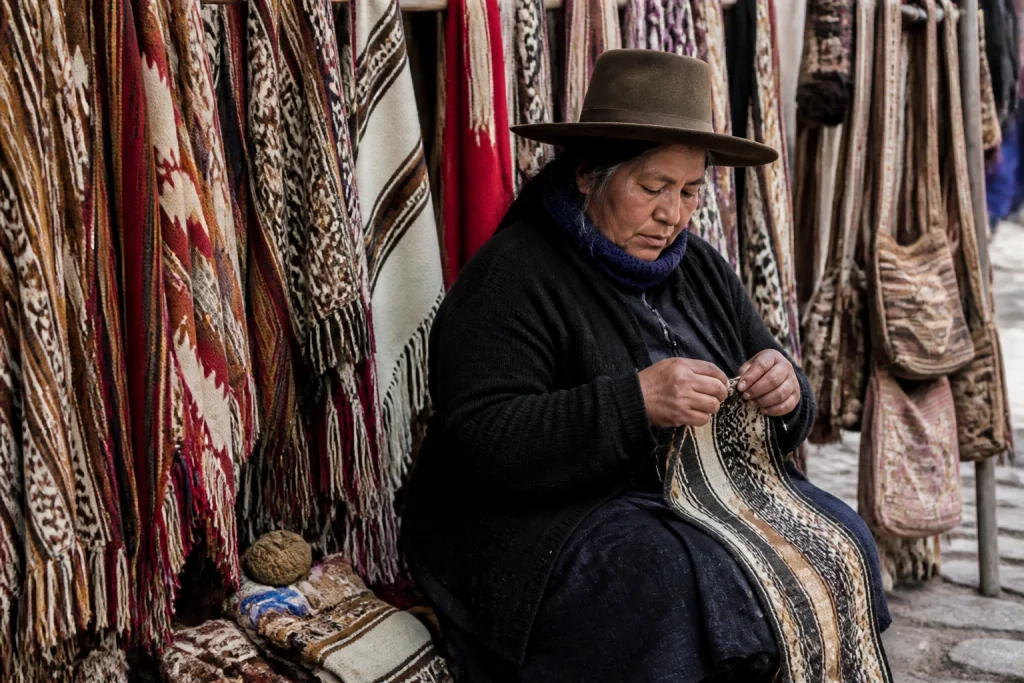
Consider how you will use and transport the textile. A belt or small bag slips easily into a daypack. A blanket or poncho occupies more space and can add noticeable bulk. Inspect edges, seams, fastenings, and the consistency of the weave. If care instructions matter, ask before buying rather than assuming every fiber can be washed or stored in the same way.
Chaguar, Basketry, and Ceramics Need a Closer Look
Chaguar work belongs to a distinct regional fiber tradition and deserves to be identified by name. Ask where the material came from and where the object was made. Because chaguar is plant-derived, international travelers should also check sanitary and import rules before committing to a purchase. Permission to leave Argentina does not guarantee permission to enter another country with untreated plant material.
Basketry is appealing when the construction suits your luggage. Check the rim, base, handles, and any loose ends before deciding. A smaller basket can hold socks or other soft items in transit, while a broad or delicate form needs more protection. Ask which plant material was used because that detail can affect both care and border requirements.
Ceramics are associated with Cachi, Cafayate, and San Carlos, making these towns useful stops for travelers already exploring Salta's valleys. Regional pottery can include pre-Hispanic-style designs, but a modern craft object must not be confused with archaeological material. Ask directly whether the piece is newly made, and do not purchase anything represented as an excavated artifact.
Woodcarving, Chané Masks, and Gaucho Goods
Salta's craft landscape includes Wichí woodcarving and Chané wooden masks. These traditions should be named precisely rather than grouped into a vague category of tribal or Andean art. Ask who made the object, which community or workshop it came from, and what wood was used. A seller's answer provides context, but it is not the same as a formal certification of authorship.
Leather, antler, and silver also appear in goods connected with gaucho traditions. Confirm every material in a mixed object, especially when leather wraps a metal component or antler forms a handle. This matters at the border because animal-origin materials can face sanitary or wildlife-related controls in the country where your journey ends.
Rigid carvings and masks need a realistic packing plan. Inspect projecting edges, estimate the protected size rather than the bare dimensions, and avoid placing pressure on a carved face. If the seller can provide basic maker and material information, keep it with the object. Such information is useful context, although it does not replace customs clearance.
Where to Shop in Salta City
The Mercado Artesanal is the most useful first stop for a concentrated selection. It is a long-running venue associated with artisan groups, which makes it easier to compare several regional craft categories in one place. This does not certify every individual item or vendor, so continue asking about the maker, material, and production location.
| Shopping stop | Location or planning cue | Best use in an itinerary |
|---|---|---|
| Mercado Artesanal | Fixed craft venue in Salta City | Start here to compare regional materials and artisan associations. |
| Plaza Güemes fair | Leguizamón between Balcarce and Mitre | Add it when the fair schedule matches your city plans. |
| Balcarce fair | Balcarce and Ameghino | Treat it as a Sunday-oriented outing and confirm the date. |
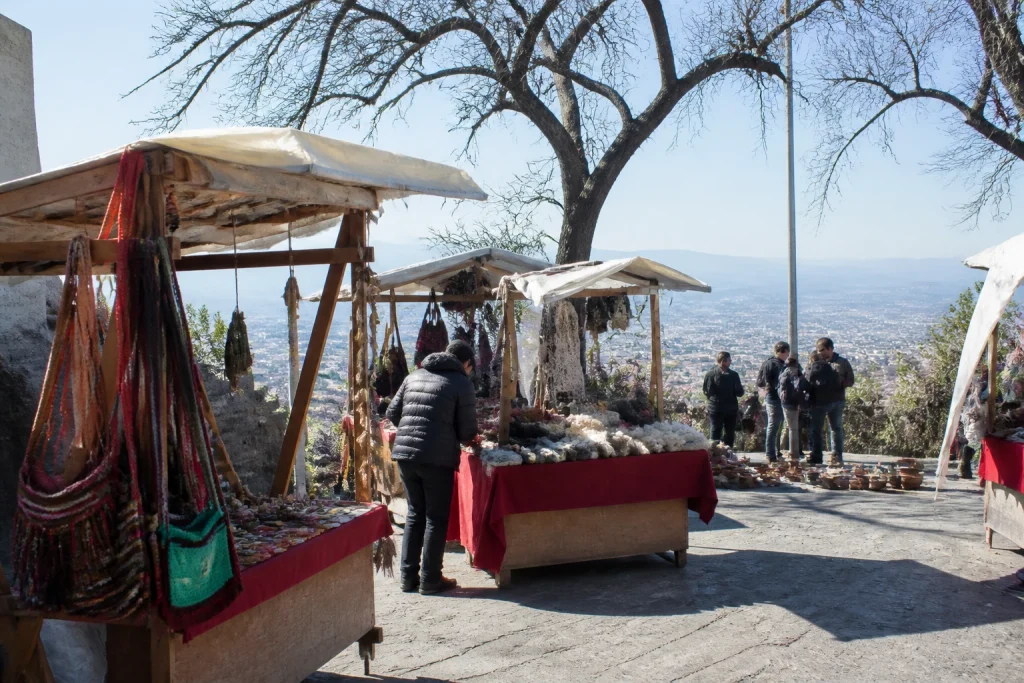
| Cerro San Bernardo fair | At the summit of Cerro San Bernardo | Combine craft browsing with a summit visit when the fair is operating. |
Do not build a tight itinerary around assumed daily hours. Fair activity can be tied to particular days, seasons, holidays, or individual events. Check Salta's current event calendar shortly before visiting, especially if the fair is the main reason for crossing the city or going to the Cerro San Bernardo summit.
Village Fairs Add Context to the Purchase
Beyond Salta City, Vaqueros has a Saturday morning fair, while Campo Quijano's artisan fair is associated with Saturdays and Sundays in Plaza Martín Fierro. These recurring days are useful planning cues, not universal opening-hour guarantees. Recheck the schedule before making a special journey, particularly around holidays or seasonal events.
Village shopping makes the most sense when the destination already belongs in your route. Cachi, Cafayate, and San Carlos have links to regional ceramics, while weaving traditions are associated with valley towns. Seeing a craft near its production landscape can add context, but city markets remain easier for travelers with limited time or no rural transport plan.
Avoid assuming that a village setting automatically proves local authorship. Use the same questions everywhere: who made the object, where was it produced, and what materials were used? A named workshop or artisan association can provide clearer provenance than an unlabelled stall, although neither setting guarantees that every object was made by the person selling it.
A Practical Shopping Strategy for One or Two Days
- Visit the Mercado Artesanal first and learn the names of the materials that interest you.
- Photograph or note dimensions only with the seller's permission, then check the space available in your luggage.
- Compare construction, maker information, and materials rather than relying on a generic Andean label.
- Add Plaza Güemes, Balcarce, or Cerro San Bernardo only when the current fair schedule fits your route.
- If you are already visiting the valleys, compare city selections with ceramics or textiles offered in regional towns.
- Before paying for wood, plant, animal-origin, food, or archaeological-looking goods, check the rules for every border on your journey.
This sequence reduces rushed decisions. The first stop becomes a lesson in vocabulary and materials, while later visits provide comparison. It also gives you time to investigate customs restrictions before buying a large mask, wooden carving, antler-handled object, or untreated plant-fiber piece that could be difficult to carry onward.
Ask Questions That Reveal Provenance
Good souvenir shopping begins with a short, respectful conversation. Salta's craft traditions are specific enough that a knowledgeable seller should be able to discuss the material and production location. Keep the exchange practical rather than turning it into an interrogation. You are trying to understand the object, not collect a perfect certificate for every small purchase.
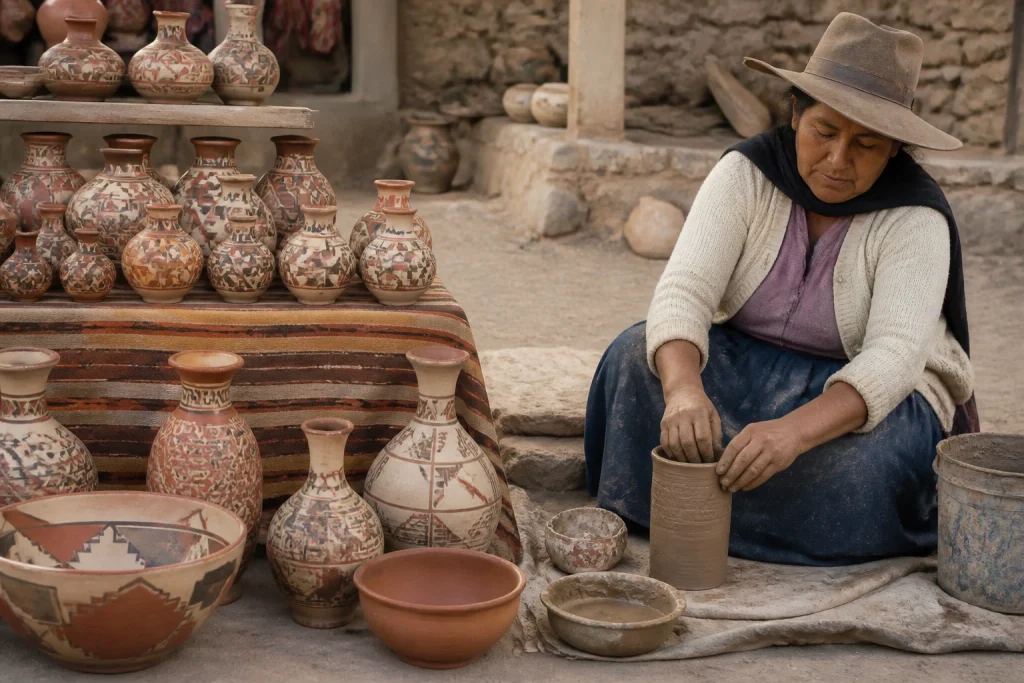
Useful questions include: What is this made from? Where was it made? Did you or your workshop make it? Is there a named artisan or association connected with the piece?
Listen for concrete answers. A place name, material, workshop, or maker gives you more useful context than a broad claim that something is simply local or Andean. At the same time, do not treat a market location as proof that every item has the same origin. The Mercado Artesanal's artisan associations can support provenance, but they do not provide a blanket certification for all vendors.
Prices, Payment, and Comparing Value
There is no useful current market-wide price list for these souvenirs. Costs depend on the object, materials, size, workmanship, and seller, so fixed online expectations can mislead. Compare similar pieces in person and decide what matters most to you: clear provenance, fine construction, easy packing, or a direct connection to a place on your route.
Payment methods are not established across the listed venues. Ask what is accepted before settling on an item, particularly if the purchase is large. Do not assume bargaining is expected. A simple question about whether the displayed amount is firm is more respectful than beginning with an aggressive counteroffer.
Small textile accessories, compact ceramics, and baskets are generally easier to fit into luggage than large blankets, ponchos, carvings, or masks. That is a packing advantage, not a claim about price or quality. A modest object with a clear maker and material can carry more personal meaning than a bulky purchase chosen in a hurry.
Pack Crafts for Pressure, Moisture, and Border Checks
Pack according to structure. Roll sturdy textiles without crushing decorative elements. Place ceramics inside layers of soft clothing and keep them away from the outer wall of a suitcase. Protect baskets from flattening, and prevent hard carvings from pressing against fragile pottery. Masks with projecting features need an empty buffer around the carved surface.
Keep maker notes, material descriptions, and receipts together when available. They can help you remember the object's origin and explain what you purchased, but they do not override border restrictions. Place anything likely to require inspection where it can be reached without emptying your entire bag at a checkpoint.
The site's Andes planning tips are a useful companion when organizing luggage, documents, and onward travel. Check restrictions before the shopping day rather than at the airport, since a beautiful object becomes a poor souvenir if it cannot legally complete the journey.
Understand Customs Rules Before You Buy
Argentina lists archaeological and cultural material among goods travelers cannot simply carry out of the country. Do not buy an object described as excavated, ancient, archaeological, or protected cultural material without confirming its legal status. Pre-Hispanic-style decoration on newly produced ceramics is different from an actual artifact, so ask the seller to state clearly that the piece is a modern craft object.
Argentina's traveler guidance allows Argentine goods valued up to USD 2,000 to be taken out, but that allowance does not cancel restrictions on protected material or the import laws at your destination. Thresholds and procedures can change, so consult current customs guidance before departure if you are making a valuable purchase.
Wood, untreated natural fiber, seeds, food, hides, feathers, antler, and other plant- or animal-origin materials can trigger sanitary controls. Check both Argentine departure rules and the rules of every country where you will enter or transit with the item. Approval on one side of the border is not proof that another country will admit it.
Plan Ahead for Mobility and Accessibility Needs
Detailed step-free access, accessible toilets, tactile guidance, hearing assistance, and transport access are not specified for the listed markets and fairs. Travelers with mobility or sensory access requirements should contact the venue or a local tourism office before setting out. Ask about the complete route, including entrances, internal circulation, toilets, and the distance from the nearest practical drop-off point.
A fixed city venue is usually the more sensible starting point when predictable access is important. Treat summit shopping at Cerro San Bernardo with greater caution until the full journey and fair layout have been confirmed. Do not rely on the presence of a location listing as evidence that the venue is step-free.
Include Jujuy Without Assuming a Year-Round Market
Jujuy is a worthwhile complementary shopping area, but its artisan events require date-specific planning. The provincial tourism calendar has documented a winter artisan-market fair in the capital with direct sales by textile and plant producers. That event does not establish a permanent venue, year-round schedule, price range, or accessibility standard.
Check Jujuy's current events calendar before shaping travel around a market. If this is your first regional journey, the guide to the best places in the Andes for first-time visitors can help you decide how Jujuy and Salta fit into the wider itinerary. Avoid transferring Salta's fair days or shopping infrastructure to Jujuy, since each province publishes its own events.
Build Your Shopping Plan Around the Craft, Not the Checklist
Use Salta City to learn, compare, and ask questions, then add village fairs or valley workshops when they fit naturally into your route. Textiles are versatile, ceramics connect well with Cachi, Cafayate, and San Carlos, and woodwork or gaucho goods reward careful questions about materials. The main limitation is changing fair schedules, so confirm the event date shortly before going.
The best Andes souvenir is one you can carry legally, protect in transit, and describe with confidence. Begin with the maker, material, and place. Then consider size, border rules, and how the object will live at home. That order turns shopping into a closer reading of northern Argentina's regional craft traditions rather than a race to fill spare luggage.
Frequently asked questions
What are the best souvenirs to buy in Salta?
Regional textiles, chaguar work, basketry, ceramics, carved wood, Chané masks, and leather, antler, or silver gaucho goods are the main craft categories to consider. The best choice depends on provenance, materials, luggage space, and border restrictions.
Where should I start souvenir shopping in Salta City?
Start at the Mercado Artesanal because it offers a concentrated introduction to regional crafts and artisan associations. You can then compare its selection with fairs at Plaza Güemes, Balcarce, or Cerro San Bernardo when they are operating.
When are the artisan fairs in Salta?
Schedules depend on the location and current event calendar. Vaqueros is associated with Saturday mornings, Campo Quijano with Saturdays and Sundays, and Balcarce with a Sunday-oriented outing, but confirm the specific date shortly before visiting.
How can I tell whether a souvenir is locally made?
Ask what the item is made from, where it was produced, and whether the seller, a named artisan, or a workshop made it. Concrete information about the maker and material offers better provenance, although no market location certifies every object automatically.
Can I take wooden masks, plant fibers, or animal materials out of Argentina?
Check both Argentine customs rules and the import rules of your destination before buying. Wood, untreated plant fibers, hides, feathers, antler, seeds, food, and similar goods can face sanitary or other border controls.
Can I buy pre-Hispanic-style pottery as a souvenir?
You can consider newly made pottery decorated in a pre-Hispanic style, but do not buy anything represented as an archaeological artifact or protected cultural object. Ask the seller to identify the piece clearly as a modern craft.
Is Jujuy good for artisan shopping?
Jujuy can complement a Salta shopping itinerary when a provincial artisan event matches your dates. Check the current calendar rather than assuming the documented winter fair operates year-round or at a permanent venue.
Are Salta's craft markets accessible?
Accessibility varies and should be confirmed directly before visiting. Detailed information about step-free routes, accessible toilets, hearing assistance, and transport access is not specified for the listed venues, so a fixed city market is a more practical starting point than summit shopping when access is a priority.
More bookable experiences
Three tours to compare
Review current provider details before booking. Discover Andes may earn a commission at no extra cost to you.
Continue exploring
More practical guides selected from the Discover Andes library.

The Andes Summer Travel Guide
Plan an Argentine Andes summer trip with practical advice on choosing Mendoza, Bariloche, or the high-altitude northwest, plus…
5 Days in The Andes Itinerary
Spend five focused days exploring Mendoza wine country, the RN 7 mountain corridor, Puente del Inca, Horcones, and…
The Andes Shopping Guide
Plan a Mendoza-led shopping trip through the Argentine Andes, with practical advice on artisan markets, regional crafts, wine…
The Andes Markets Guide
Plan a market-focused trip through Salta and San Salvador de Jujuy, with practical guidance on regional food, artisan…