The Andes on a Budget Travel Guide
Argentina’s Andes reward travelers who spend selectively rather than trying to cover the entire mountain chain. The northern landscapes of Jujuy, the Quebrada de Humahuaca, and the high Puna form one natural journey. Mendoza belongs to a separate central-Andes plan with different transport decisions. Choose one region, protect enough time for altitude and long transfers, and reserve your largest expenses for the places that are hardest to reach independently.
- Treat northern Jujuy and central Mendoza as separate trips unless you have enough time and money for a major transfer.
- Compare the full cost of flying, taking a long-distance bus, and driving, including the vacation time each option consumes.
- Use San Salvador de Jujuy as the main northern gateway, then choose a limited number of Quebrada and Puna experiences.
- Keep the first high-altitude day light because much of the Puna sits above 3,000 metres.
- Price accommodation, transport, excursions, and park admission close to booking instead of relying on a fixed daily-budget estimate.
- Check current park conditions, tariffs, route rules, and transport schedules shortly before departure.
This guide focuses on the Argentine Andes and uses a flexible budgeting method rather than promising a universal daily figure. Prices for rooms, food, flights, buses, rentals, and tours depend heavily on dates and itinerary. A useful budget begins with the route, not an arbitrary amount of money per day.
Choose one Andean region before comparing prices
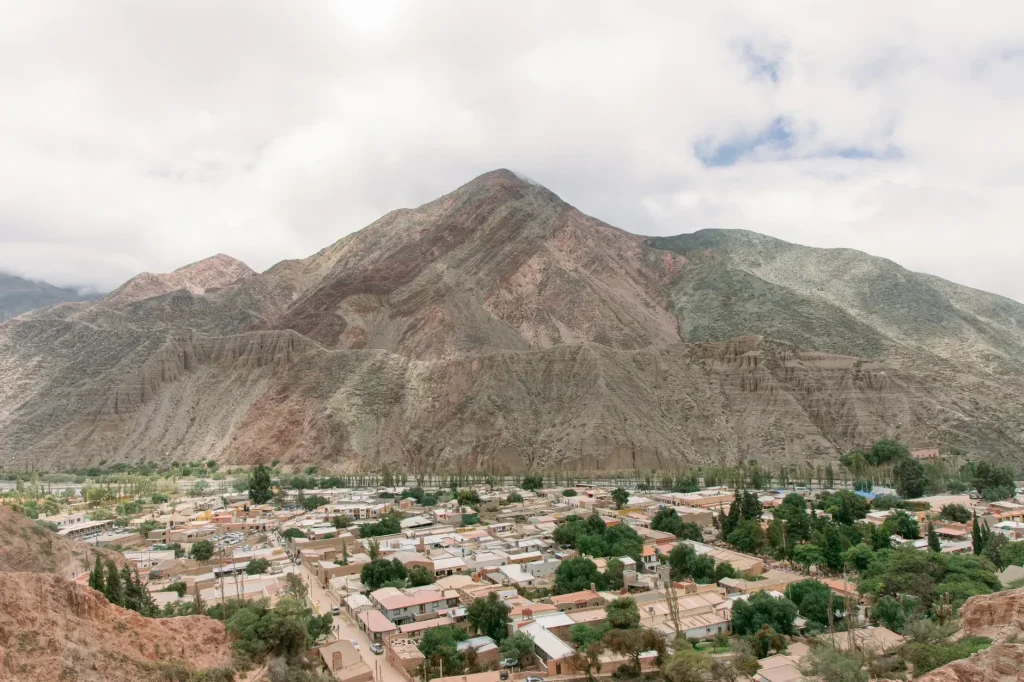
Northern Argentina is the stronger fit when your priorities include the Quebrada de Humahuaca, mountain towns, salt flats, and the high desert of the Puna. San Salvador de Jujuy is the practical gateway in the official northern itinerary, while Puna departures are also available through Salta, Catamarca, and towns within the Quebrada.
Mendoza serves a different section of the range and has its own road and transport approaches. Combining it with Jujuy can turn a focused budget trip into a much larger cross-country itinerary. Before paying for any ticket, compare two complete plans: a northern route built around Jujuy or Salta, and a central-Andes route built around Mendoza.
| Planning choice | Northern high Andes | Central Andes |
|---|---|---|
| Primary base decision | San Salvador de Jujuy, Salta, Catamarca, or a Quebrada town, depending on the Puna plan | Mendoza and its separate road or transport network |
| Core landscape focus | Quebrada de Humahuaca, mountain towns, salt flats, and the Puna | A central-Andes journey planned independently of the northern circuit |
| Main budget question | How many Puna excursions and gateway transfers can the budget support? | What will local road transport, organized travel, or a rental cost for the chosen dates? |
| Best use of limited time | Concentrate on Jujuy and one carefully chosen Puna experience | Keep the itinerary centered on Mendoza rather than adding the far north |
Travelers still deciding where to begin can compare these regions with our guide to the best places to visit in the Andes for first-time visitors. The important budget lesson is simple: fewer distant regions usually mean fewer major tickets and fewer days lost to repositioning.
Build a real budget from four major cost groups
A useful Andes budget has four large groups: transport to the gateway, accommodation and meals, local movement, and paid experiences. Park admission belongs in the final group but should remain a separate line so it is not forgotten. Add a contingency for schedule changes and unexpected transport rather than spending every peso before arrival.
- Price the journey to your gateway city, including any airport or bus-terminal connection you expect to need.
- Multiply your selected accommodation rate by the actual number of nights, including an arrival night or buffer night if the schedule requires one.
- List local transfers individually instead of hiding them inside a general spending allowance.
- Add only the guided Puna experiences or mountain activities that matter most to you.
- Check admission fees for every national park on the proposed route.
- Keep a separate reserve for changing conditions, replacement transport, or an extra night.
Do not assume that every mountain landscape is free to enter. For example, the National Parks Administration lists a General daily pass for Los Cardones National Park at ARS 25,000 under tariffs effective June 1, 2026. The annual pass is listed at ARS 300,000. These figures are useful planning references, but check the current tariff again before traveling.
| Budget line | What to compare | Common planning mistake |
|---|---|---|
| Gateway transport | Flight, long-distance bus, or driving cost plus journey time | Choosing the lowest fare without valuing the time it consumes |
| Accommodation | Total stay cost for the selected dates | Using an old nightly estimate for a future trip |
| Local movement | Transfers, day trips, rental, fuel, or organized transport | Assuming remote Puna transport will work like urban transport |
| Activities | Puna excursions, park admission, and specialist mountain objectives | Treating all outdoor experiences as free or suitable for independent travel |
| Contingency | An extra night or replacement transport | Building a plan with no flexibility for changing conditions |
The right total depends on what you choose to include. A traveler spending several days in one gateway with a single guided excursion has a different cost structure from someone renting a vehicle, changing bases repeatedly, or pursuing technical mountain routes. Compare complete itineraries on the same dates rather than isolated headline prices.
Compare time and money when reaching northern Argentina
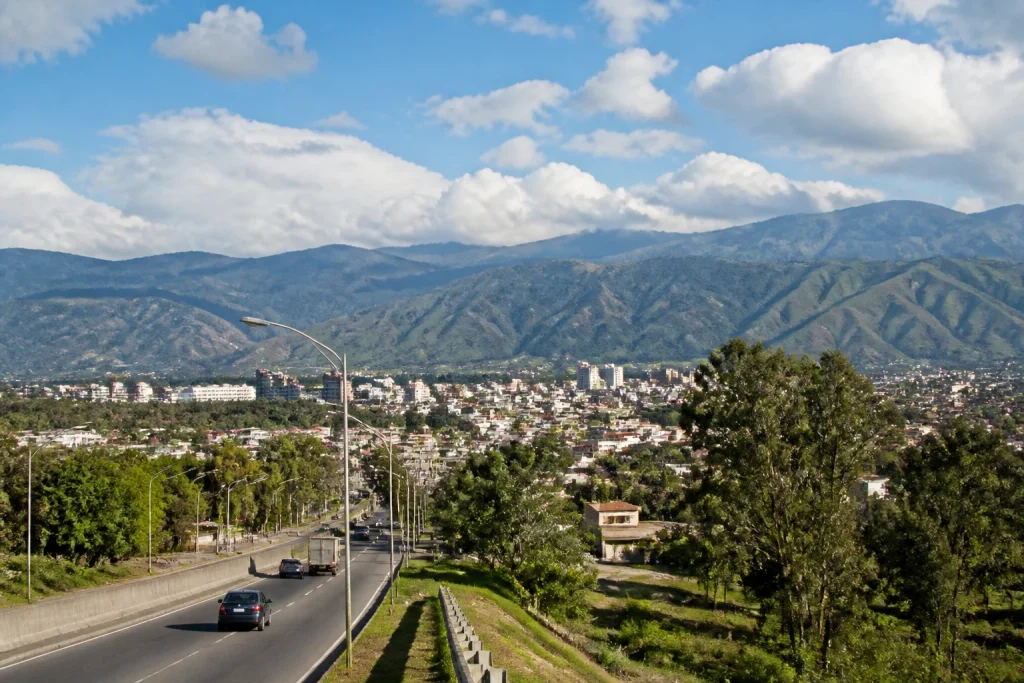
For travel between Buenos Aires and San Salvador de Jujuy, official tourism guidance gives approximate journey times of 2 hours 15 minutes by direct flight, 23 hours by bus, and 18.3 hours by car. These times provide a useful comparison, but current schedules and actual road journeys should be checked for your dates.
A bus can reduce airfare spending, especially when the journey replaces a night in accommodation. Its real price includes almost a full day in transit, however. A flight costs more only if the fare difference outweighs the value of the time saved. On a short holiday, paying for speed can protect more usable days in the mountains.
Driving offers control over the route, but it should not be treated as automatically cheaper. Compare rental costs if applicable, fuel, overnight stops, parking arrangements, and the hours required. A vehicle becomes more attractive when its total cost is shared, yet the final calculation depends on the rental terms and route selected.
For the Puna, documented guided departures operate from Salta, San Salvador de Jujuy, San Fernando del Valle de Catamarca, and towns in the Quebrada de Humahuaca. A gateway-based day trip or multi-day excursion is the clearest option for travelers without a car. It offers convenience and planned transport, although it will not necessarily be the least expensive choice.
Use practical Andes planning tips to compare gateway transport before reserving nonrefundable accommodation. The cheapest room is not a bargain if reaching it requires an expensive private transfer or forces an unnecessary travel day.
Protect the first high-altitude days from an overloaded schedule
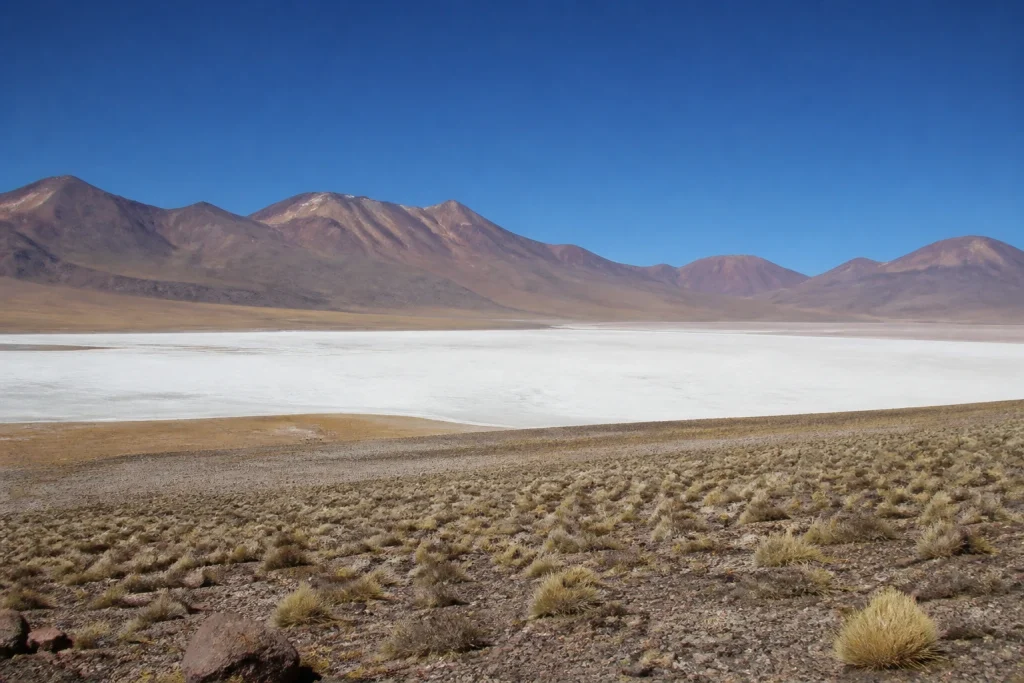
Much of the Puna lies above 3,000 metres. Travelers arriving directly from low elevation should treat altitude as a core scheduling issue, not an afterthought. Keep the first high-altitude day light, avoid stacking several demanding activities together, and leave room to slow down if the elevation affects your comfort or energy.
A rushed itinerary can also become an expensive one. If an overfilled first day has to be abandoned, prepaid transport or activities can be lost. A slower opening protects both the traveler and the trip budget. Our plain-English Andes altitude acclimatisation guide explains how to shape those early days with more care.
- Use the gateway or a lower-demand day as the beginning of the itinerary.
- Schedule the most important high-elevation experience after the initial arrival period rather than immediately after a long transfer.
- Do not place a technical mountain objective and a long road journey on the same tightly timed day.
- Keep one flexible period that can absorb slower travel or changed operating conditions.
- Discuss health concerns and the demands of a specific tour with an appropriate professional before booking.
Ordinary sightseeing does not prepare someone automatically for an independent alpine route. National Parks rules distinguish between guide qualifications for trekking in the mountains and trekking in the cordillera, with the latter covering more difficult terrain. Check route permits, guide requirements, closures, and current access with the managing authority or an authorized operator.
Match the season to the elevation, not the country label
Jujuy is promoted as a year-round destination, although summer can be hot. The higher Puna has a more specific recommendation: April to May and October to November are favored dry-season windows. These statements refer to different landscapes and activities, so they are best used together rather than treated as conflicting advice.
| Area or activity | Timing guidance | Budget implication |
|---|---|---|
| Jujuy towns and valleys | Travel is promoted throughout the year, with hot conditions possible in summer | Compare date-specific rooms and transport instead of assuming one season is always cheapest |
| High Puna touring | April to May and October to November are recommended dry-season windows | Price guided departures early enough to compare options for the preferred window |
| National park visits | Conditions and visitor planning can change seasonally | Check live park information before committing to transport or accommodation |
Weather, wildfire prevention measures, road access, and visitor rules can alter a carefully priced plan. Check live information from the relevant park, transport provider, or operator shortly before departure. One targeted check is more useful than filling the itinerary with repeated warnings and unnecessary backup bookings.
A six-day northern itinerary that limits costly transfers
This six-day framework is a planning template rather than a fixed tour. It concentrates on one northern corridor and avoids adding Mendoza. Confirm current connections before assigning a particular town or excursion to each day.
- Day 1: Arrive in San Salvador de Jujuy. Keep the schedule simple after the flight, bus ride, or drive.
- Day 2: Move into the Quebrada de Humahuaca and settle into one selected mountain-town base. Avoid changing accommodation again that evening.
- Day 3: Use the same base for a locally planned day in the Quebrada. Choose activities that fit your energy and confirmed transport.
- Day 4: Take the principal Puna excursion from the most practical documented gateway for your route. Keep the evening free after the high-elevation day.
- Day 5: Add a second Quebrada day, a flexible period, or a carefully selected excursion. Do not add a distant region simply to fill the schedule.
- Day 6: Return to the departure gateway with enough time for the onward connection.
The largest discretionary expense in this framework is likely to be the Puna outing. Compare a day tour with a multi-day guided trip, but judge both by what transport and access they solve. A lower advertised price has little value if the departure point creates another costly transfer or an extra accommodation night.
Staying in one Quebrada base also reduces repeated packing and makes the local budget easier to understand. Before choosing that base, confirm how it connects to your selected excursion and final departure. Do not assume every mountain town offers identical transport options.
Choose Mendoza when the central Andes are the main goal
Choose Mendoza instead of the northern route when the central Andes are the trip’s main purpose. Price its road and transport arrangements as a complete journey. Do not use northern Argentina’s gateway assumptions, Puna timing, or excursion structure as substitutes for Mendoza-specific planning.
Adding Mendoza to a short Jujuy itinerary introduces another major transfer and a new set of local transport decisions. Travelers who want to compare both sides of the southern Andes can consult the Chile and Argentina destination guide, then decide which section deserves the available time. The budget-friendly answer is often a deeper trip in one region.
Save money without turning every day into a transit day
- Choose one gateway and one mountain corridor before shopping for transport.
- Compare total itinerary cost, not just the first flight or bus fare displayed.
- Use fewer accommodation bases and confirm each base works with the planned excursion departure.
- Spend on guided transport where remote access is the main obstacle, then keep other days flexible.
- Check park admission separately instead of assuming outdoor sightseeing has no entry cost.
- Avoid treating difficult mountain routes as a cheap do-it-yourself alternative to an organized outing.
The most effective cut is usually geographic. Removing one distant region can eliminate a large ticket, a transfer day, and another set of local transport costs. By contrast, saving a small amount on a room while keeping an overextended route rarely changes the overall budget enough to justify the added strain.
Protect one or two signature experiences instead of trimming every part of the trip equally. In the north, that could mean paying for one well-planned Puna departure while keeping the Quebrada portion concentrated around a single base. This preserves the landscape that motivated the journey without paying for repeated long transfers.
Confirm access, conditions, and technical route rules
Do not assume that a general statement about accessible transport guarantees step-free vehicles, adapted rooms, accessible trails, or suitable facilities on a particular Andean route. Confirm the exact arrangements with the accommodation, transport company, tour operator, and relevant park or attraction before booking.

This route-specific check matters in a journey involving high elevation, mountain towns, long transfers, and guided departures. Ask only about the features you need, such as vehicle boarding, room access, trail surfaces, or assistance at a meeting point. Specific answers are more useful than broad destination-wide assurances.
National park conditions and rules can change with the season. Review current access information, wildfire prevention guidance, tariffs, and closures shortly before the visit. For a technical objective, also confirm whether a permit or appropriately qualified guide is required and whether transport to the route is operating.
Book the trip in an order that protects the budget
- Select northern Jujuy and the Puna, or central Mendoza, as the main region.
- Compare the complete cost and duration of reaching the chosen gateway.
- Choose accommodation only after checking its connection to the planned excursion or onward route.
- Price the essential guided experience and any national park admission.
- Review cancellation conditions and current operating information before final payment.
- Recheck schedules, park conditions, access rules, and tariffs shortly before departure.
A budget trip through Argentina’s Andes works best for travelers willing to trade geographic breadth for time in the landscape. Focus on one region, allow a gentle start at elevation, and pay for remote access only where it adds real value. The main limitation is distance: Jujuy, the Puna, and Mendoza should not be treated as one compact destination.
Begin by pricing two complete alternatives for the same dates, one northern and one Mendoza-based. Include every major transfer, accommodation night, excursion, and park fee. The clearer plan usually becomes obvious once time and transport are counted alongside money.
Frequently asked questions
Is the Argentine Andes a cheap destination?
Costs depend on the route, dates, transport, accommodation, and number of guided excursions. There is no dependable universal daily budget, so price a complete itinerary close to booking instead of assuming Argentina or the Andes will always be cheap.
Is it cheaper to fly or take a bus from Buenos Aires to Jujuy?
The cheaper choice depends on current fares and how you value travel time. Official tourism guidance gives approximate journey times of 2 hours 15 minutes by direct flight and 23 hours by bus, so the bus can reduce airfare spending but consumes much more of the trip.
When is the best time to visit the Puna?
April to May and October to November are the recommended dry-season windows for the high Puna. Jujuy more broadly is promoted as a year-round destination, although summer can be hot, so match the timing to the elevation and activity.
How high is the Argentine Puna?
The Puna landscapes described by Argentina’s national tourism board sit above 3,000 metres. Keep the first high-elevation day light, particularly when arriving directly from a low-altitude location.
Do independent travelers need a tour for the Puna?
A tour is not presented as a universal requirement, but guided departures are the clearest documented option for visitors without a car. They leave from Salta, San Salvador de Jujuy, San Fernando del Valle de Catamarca, and towns in the Quebrada de Humahuaca.
Does Los Cardones National Park charge admission?
Yes. The General daily pass is listed at ARS 25,000 under tariffs effective June 1, 2026, while the annual pass is ARS 300,000. Check the current National Parks tariff before traveling because fees can change.
Can Jujuy and Mendoza fit into one budget trip?
They can fit into a longer itinerary, but they should be treated as separate Andean regions with different transport plans. Travelers with limited time or money will usually create a more manageable trip by concentrating on either northern Argentina or Mendoza.
Are Andean transport, lodging, and trails wheelchair accessible?
Accessibility varies by route and provider. Confirm the specific vehicle, room, trail, attraction, and assistance arrangements you require before booking, since broad national guidance does not establish the features available at individual Andean locations.
Can I hike technical mountain routes without a guide?
Guide and permit requirements depend on the route and managing authority. National Parks rules distinguish mountain trekking from more difficult cordillera trekking, so confirm qualifications, permits, closures, and access before attempting a technical objective.
The Quebrada de Humahuaca forms the heart of a focused northern Argentina itinerary by Ton Souza, Pexels.