The Andes Architecture Guide
For travelers exploring Argentina’s high north, this Andes architecture guide begins in the Quebrada de Humahuaca. Here, the most rewarding way to look at architecture is as a long cultural story written across villages, archaeological places, cultivated slopes, and mountain routes. The goal is not to rush between isolated monuments, but to notice how each layer of settlement belongs to the valley around it.
Read the Quebrada as a cultural landscape, not a monument trail
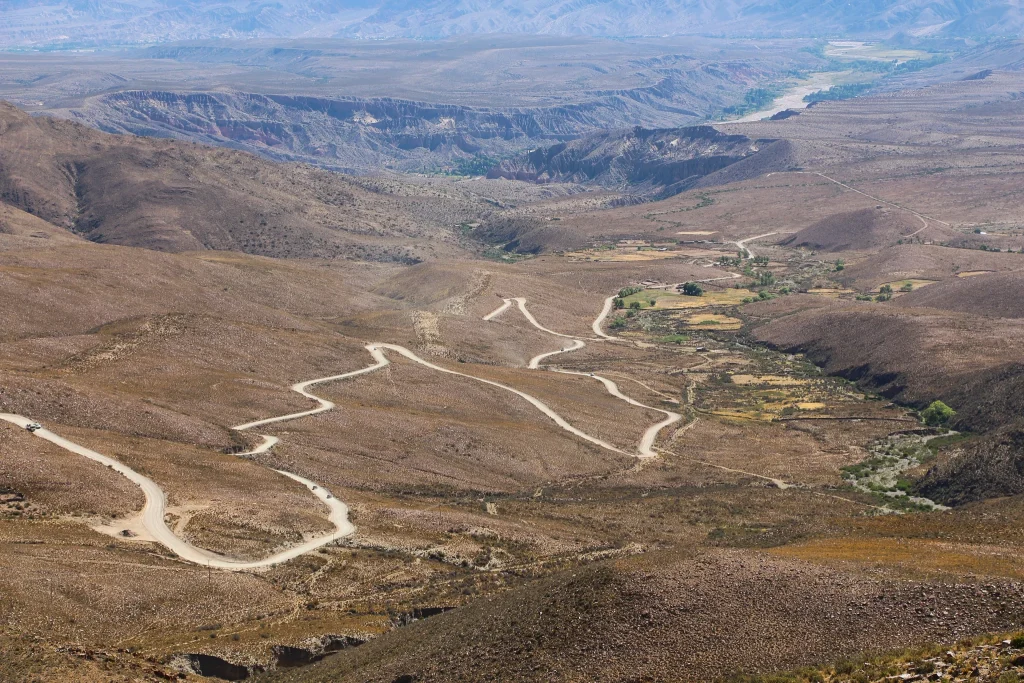
The Quebrada de Humahuaca is a 155-kilometer cultural landscape in Jujuy recognized by UNESCO. Its architectural interest stretches from pre-Hispanic settlements and pucaras to the Coctaca agricultural terraces, Inca-era routes, Spanish-era towns and churches, and enduring vernacular traditions. That broad frame makes the valley far more compelling than a checklist of photogenic stops.
- Use Purmamarca, Tilcara, and Humahuaca as the main northbound sequence through the valley.
- Allow five to seven days to study the broader Quebrada at an unhurried pace.
- Add Coctaca and the high Puna as extensions after the core village route.
- Choose a Quebrada base for early and late walks, or Salta for wider accommodation and transport connections.
- Build in time to acclimatize before heading to Salinas Grandes, Cuesta de Lipán, or other high-altitude stops.
Follow the architectural layers across time
A strong visit moves between scales. Start with the wide valley, then focus on a settlement, a route, or a terraced slope. This approach helps reveal the relationship between construction, farming, movement, and community life instead of separating “architecture” from the landscape that supports it.
Pre-Hispanic settlement and agricultural infrastructure
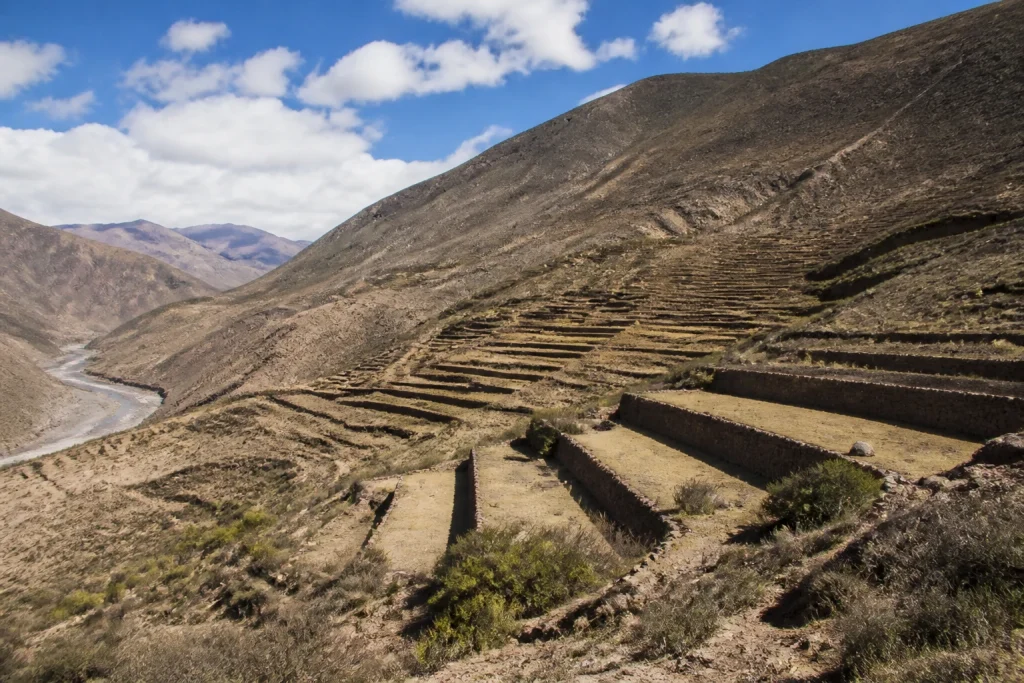
Pre-Hispanic settlements, pucaras, and agricultural terraces are foundational parts of the Quebrada’s built heritage. They show that the valley’s architecture includes designed terrain as well as structures. At Coctaca, the terrace system is a defining feature of the cultural landscape and deserves the same close attention as a village street or church exterior.
Inca-era routes as part of the built environment
The Inca-era routes in the Quebrada add another dimension: architecture here also concerns movement through a mountain corridor. When planning stops, think beyond what stands in one place. The routes, settlements, and cultivated ground form a connected system that explains why this narrow valley has long been a place of exchange and passage.
Spanish-era towns, churches, and vernacular traditions
Spanish-era towns and churches bring a later chapter to the valley, while vernacular building traditions keep the story rooted in everyday life. Take time to compare public spaces, religious buildings, homes, and the agricultural ground beyond town edges. The richest observations often come from seeing these elements together, rather than treating any one of them as a standalone attraction.
In the Quebrada, the most useful question is not “What is the landmark?” but “How does this place fit into the valley?”
Use Purmamarca, Tilcara, and Humahuaca as your architectural spine
The clearest route structure runs north through Purmamarca, Tilcara, and Humahuaca, with Coctaca and the high Puna added afterward. This sequence follows the main valley corridor and reduces needless backtracking. It also gives the journey a useful rhythm: settle into the landscape first, then move toward the archaeological and agricultural components that broaden the picture.
Purmamarca: begin by looking at the village in context
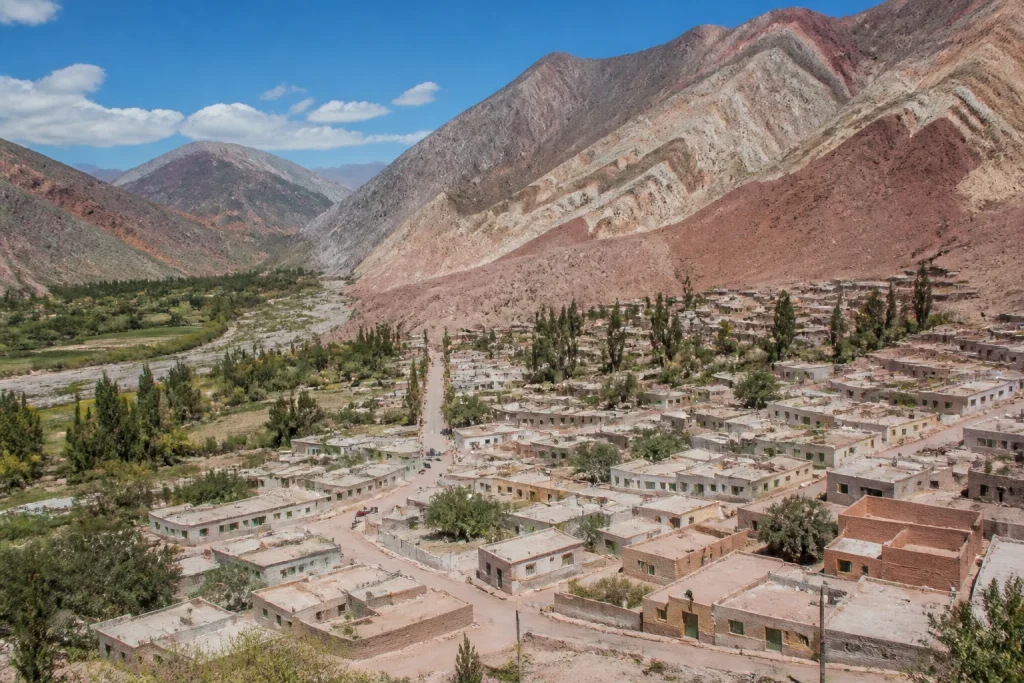
Purmamarca is an effective southern starting point for an architecture-focused route. Use it to establish a slower way of seeing: look at how the settlement relates to the enclosing valley, then carry that attention north. A first evening or morning on foot is more useful than trying to absorb the wider region from a vehicle window.
Tilcara: place the Pucará within the larger landscape
Tilcara is associated with the Pucará, one of the key archaeological references in the Quebrada. Give this stop enough time to consider it as part of the valley’s longer settlement history. Pair it with attention to the town and surrounding terrain, rather than reducing the visit to a single viewpoint or a fast photo stop.
Humahuaca: complete the valley sequence slowly
Humahuaca completes the core village sequence and is a sensible point to pause before continuing into more dispersed territory. By this stage, patterns become easier to read: the relationship between towns, churches, routes, and agricultural systems is no longer abstract. It is visible as a sequence of places encountered over several days.
Make time for Coctaca and the high-Puna extensions
Coctaca is the essential extension for travelers who want the guide’s architectural argument to widen beyond town streets. UNESCO identifies its terrace system as a defining component of the Quebrada landscape. It shifts attention toward agricultural design, where the shaped ground itself becomes central to understanding how people lived and worked in this mountain environment.
- View terraces as infrastructure as well as scenery.
- Study the relationship between cultivated slopes and nearby settlement patterns.
- Follow site rules and keep clear of restricted areas.
- Treat community spaces and vernacular buildings as living heritage, not as open-access backdrops.
Build a five-to-seven-day architecture itinerary
Five to seven days gives the broader Quebrada enough breathing room for village walks, archaeological landscapes, weather adjustments, and acclimatization. A single day can introduce the scenery, but it rarely allows the architecture to register as a connected cultural landscape. Keep the schedule light enough to revisit a town on foot rather than constantly changing bases.
- Day 1: Arrive in the region and stay at a lower elevation before planning a high-Puna excursion.
- Day 2: Begin in Purmamarca and use the day to establish the valley’s village-and-landscape relationship.
- Day 3: Continue to Tilcara and give the Pucará proper context within the larger settlement story.
- Day 4: Travel north to Humahuaca, keeping time for a slower look at the town within the valley corridor.
- Day 5: Add Coctaca and its terrace system as the agricultural chapter of the route.
- Days 6 and 7: Reserve these for high-Puna extensions, return visits, or weather flexibility after acclimatization.
Choose Salta or a Quebrada town according to your priorities
Salta city suits travelers who value stronger flight connections, a broader supply of accommodation, museums, and organized excursions. A base inside the Quebrada is more efficient for early light, evening walks, and on-foot study of the villages. For travelers shaping a wider first trip, Best Places to Visit in the Andes for First-Time Visitors adds useful destination-planning context beyond this one valley.
Choose transport for flexibility, not speed
National Route 9 is the principal approach named for reaching the Quebrada from San Salvador de Jujuy or Salta city. A rental car gives the greatest freedom to pause at dispersed churches, terraces, viewpoints, and smaller settlements, but it demands confidence on winding mountain roads. Guided excursions are the lower-stress option for high-Puna extensions, especially when you prefer to concentrate on the landscape rather than the driving.
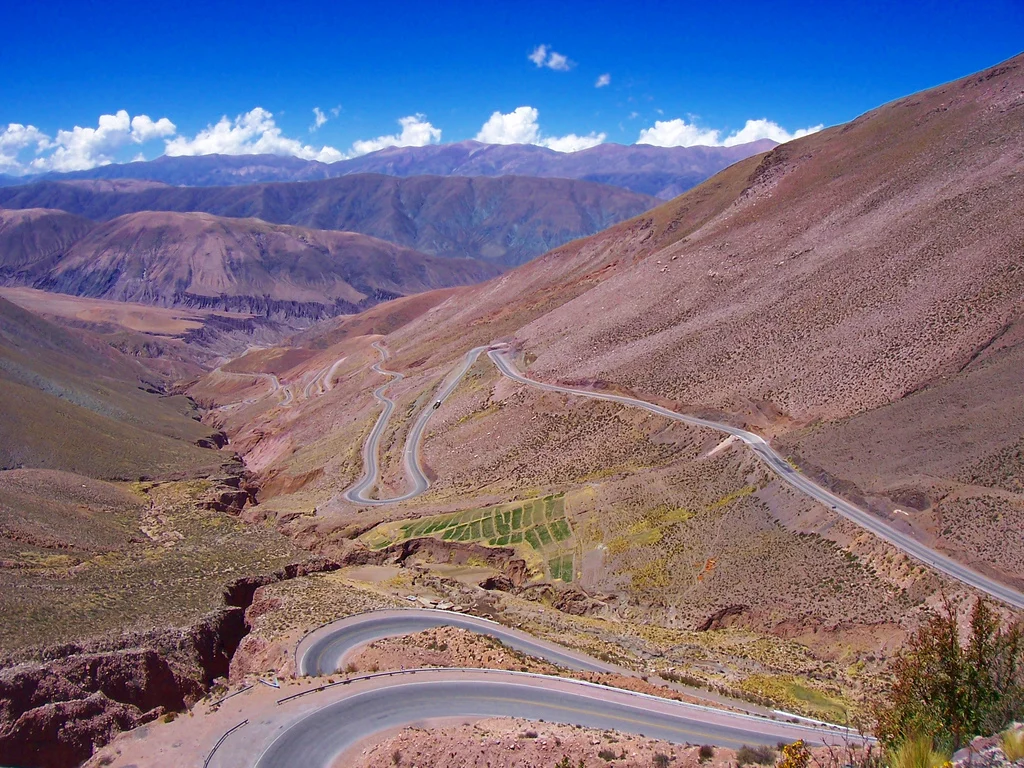

Avoid planning a tightly timed architectural route around an unconfirmed transport connection. Check current schedules if you intend to use public transport, and verify road conditions before driving toward the high Puna. Route 52 and Cuesta de Lipán deserve particular attention during the December-to-March rainy period, when some high-Puna roads can become impassable.
Match your visit to the dry season and the altitude
April through November is the Quebrada’s general dry season. For the high Puna, April to May and October to November are particularly favorable windows. Winter often brings clear skies and generally more passable roads, but the cold becomes more pronounced with elevation. Rainy-season trips need a more flexible approach, especially for remote extensions.
| Travel period | What to expect | Best planning approach |
|---|---|---|
| April to May | Dry-season conditions and a favorable window for the high Puna. | Combine the core Quebrada route with Puna extensions after acclimatizing. |
| June to September | Clear skies and generally more passable roads, with colder conditions at altitude. | Pack for cold highland weather and leave room for a slower pace. |
| October to November | Another favorable period for the high Puna within the broader dry season. | A good time for a multi-town itinerary with terrace and landscape stops. |
| December to March | Rainy conditions; some high-Puna roads can become impassable. | Keep the itinerary flexible and check current road access before setting out. |
Treat altitude and accessibility as core planning details
Altitude shapes this journey. The Quebrada ranges roughly from 1,600 to 4,500 meters, while Salinas Grandes sits above 3,400 meters and Cuesta de Lipán rises above 4,170 meters. Do not go straight to the highest stops on your first day. Acclimatize at a lower elevation, drink water, eat lightly, and avoid alcohol at the start of the trip. Altitude in the Andes: A Plain-English Acclimatisation Guide is a useful companion before adding a high-Puna day.
Plan accessibility stop by stop
Do not assume archaeological landscapes, steep village streets, or high-Puna viewpoints are step-free. Confirm gradients, entrances, restrooms, and accessible transport for individual Quebrada stops before booking. In Salta city, Museo Güemes and the Museo de Arqueología de Alta Montaña, known as MAAM, have received accessibility-related distinctions, making them useful cultural options for an itinerary that needs a more accessible indoor complement.
Visit living heritage with care
The Quebrada’s appeal depends on its status as a lived-in cultural landscape. Flooding, urban expansion, rebuilding, infrastructure pressure, and rising visitor numbers all affect the World Heritage property. Travel with the same care you would bring to an inhabited neighborhood: choose locally guided interpretation when it adds context, follow access restrictions, and never treat a vernacular building or ritual space as a stage set.
- Respect restricted areas and community spaces.
- Ask before making people the subject of a photograph.
- Keep visits focused on observation rather than access to every building or site.
- Give local guides room to explain the places that carry cultural meaning beyond their visual appeal.
Let the landscape set the pace
The Quebrada de Humahuaca rewards travelers who slow down. It suits architecture lovers, history-minded road trippers, and anyone willing to see terraces, routes, villages, and churches as chapters of one long mountain story. Base yourself close to the valley if close observation matters most, acclimatize before the high Puna, and give the route enough days to become more than a drive-through.
Frequently asked questions
How long should I allow for an Andes architecture trip in the Quebrada de Humahuaca?
Allow five to seven days for the broader Quebrada. That gives you time for Purmamarca, Tilcara, Humahuaca, Coctaca, and possible high-Puna extensions without reducing the route to a series of quick roadside stops.
Where is the best base for exploring Quebrada de Humahuaca architecture?
Stay in a Quebrada town for the most immersive architecture-focused experience, especially if you want early and late walks in the villages. Choose Salta city if you value broader accommodation, stronger connectivity, museums, and organized excursions.
Do I need a rental car for this architecture route?
A rental car is the most flexible choice for reaching dispersed villages, terraces, and viewpoints. Guided excursions are a less stressful alternative for high-Puna outings, while drivers should be comfortable on winding mountain roads.
When is the best time to visit the Quebrada de Humahuaca?
April through November is the general dry season, while April to May and October to November are especially favorable for the high Puna. Winter brings clear skies and generally more passable roads, but temperatures are much colder at altitude.
Is altitude a serious concern in the Quebrada de Humahuaca?
Yes, especially when adding Salinas Grandes, Cuesta de Lipán, or other high-Puna stops. Acclimatize before going high, hydrate, eat lightly, and avoid alcohol at the start of your trip.
Are the Quebrada’s architectural and archaeological sites accessible?
Accessibility varies widely, and many archaeological landscapes, steep streets, and high-altitude stops should not be assumed to be step-free. Confirm practical access details for each Quebrada site; Salta’s Museo Güemes and MAAM are useful cultural alternatives with accessibility-related recognition.
The Quebrada de Humahuaca is best understood as a cultural landscape of settlements, routes, terraces, and mountain terrain by Bernard Gagnon, CC BY-SA 4.0.
