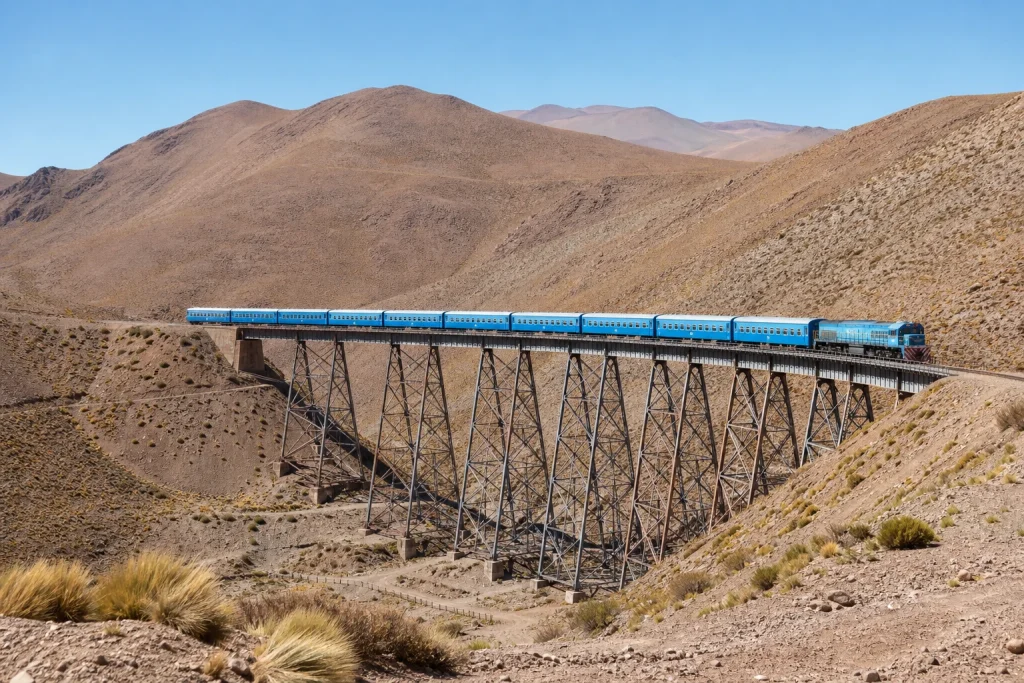
Andes Train Travel Guide
Argentina’s defining Andes rail experience is Salta’s Tren a las Nubes, or Train to the Clouds. The excursion begins in Salta at 1,187 metres and reaches 4,220 metres at the La Polvorilla Viaduct. It is best approached as a high-altitude sightseeing circuit, not as ordinary transport between two towns: the published format combines road travel, a rail segment in the Puna, and a bus return to Salta.
- Make Tren a las Nubes the priority if you want Argentina’s best-known high-altitude rail outing, starting and ending in Salta.
- Plan for the April through November operating window. The train does not operate during the rainy-season closure from December through March.
- Choose between the fuller BUS-TRAIN-BUS circuit and the lower-fare SOLO TREN product, then check the live description for exact inclusions.
- Treat 4,220 metres seriously: rest well beforehand, eat lightly the previous evening, dress warmly, and move slowly at altitude.
- Reserve ahead and keep the day clear. The published itinerary starts early in Salta and returns by bus at about 9 p.m.
Why Tren a las Nubes is the essential Argentina Andes train trip
This is a journey built around scale. The route links Salta with the high Puna, placing the rail experience within a longer day that passes through the Quebrada del Toro and includes Santa Rosa de Tastil in the official tourism description. The destination is the La Polvorilla Viaduct, where the circuit reaches its maximum elevation. That combination of road and rail is central to the experience rather than a side detail.
Expect an early departure from Salta, followed by the high-altitude train section and a bus journey back to the city at around 9 p.m. The exact sequence and practical details belong to the ticket you select, so leave the rest of the day open. This is a substantial excursion, with the broad landscapes and altitude forming as much of the story as the train itself.
Choose between the full circuit and the rail-only ticket
The key booking decision is simple. BUS-TRAIN-BUS suits travellers who want the full overland context of the Salta-to-Puna circuit. SOLO TREN has a lower published fare and focuses on the rail component. Do not treat those labels as a complete list of inclusions: confirm the current product description before paying, especially if a particular transfer, stop, or service matters to your plan.
| Ticket product | Foreign adult listed fare | Argentine resident adult listed fare | Planning fit |
|---|---|---|---|
| BUS-TRAIN-BUS | $233,000 | $210,000 | The fuller circuit, combining road and rail elements. |
| SOLO TREN | $180,000 | $149,500 | The lower-fare rail-only product. |
These fares are the operator’s listed amounts for July through September 2026. The tariff displays a dollar sign without naming the currency, so check the currency and final checkout total before booking. The same tariff lists child fares for ages 3 through 12 and free travel for children under 2. Passenger categories and fare conditions should be reviewed in the live booking flow.
Plan your Salta stay around the operating season
April through November is the published ideal period for Tren a las Nubes. December through March is the rainy-season closure, which makes the trip a poor fit for a midsummer Salta itinerary. Seasonal timing is only the first filter: departure dates can change, so check the operator’s live booking channel before committing to nonrefundable flights, hotels, or onward transport.
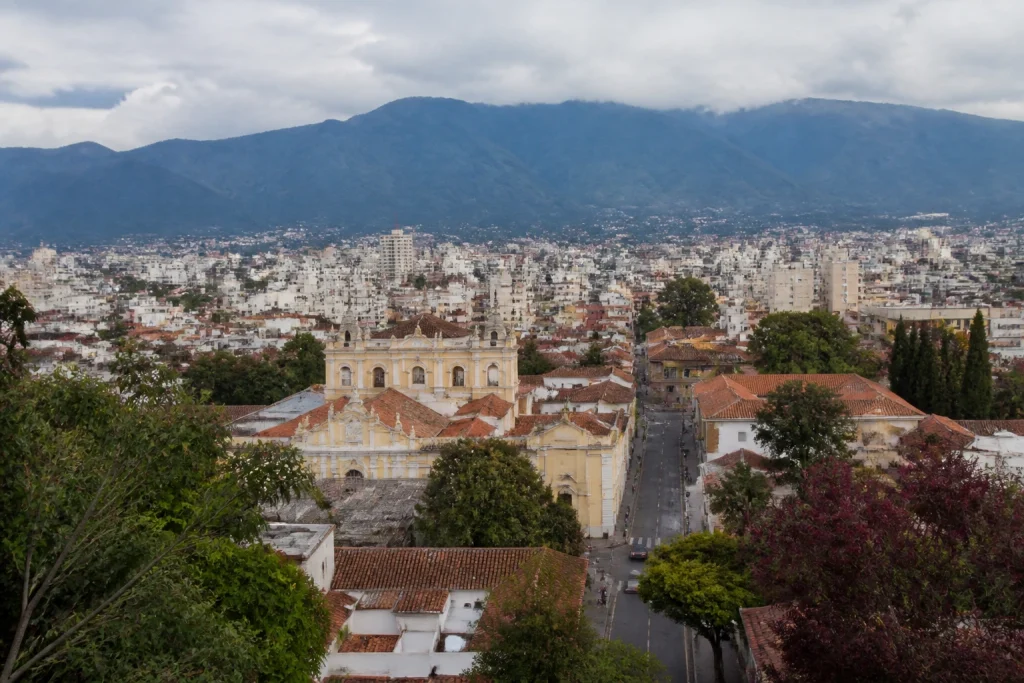
Give Salta one or two days of breathing room
Official guidance recommends allowing one to two days in Salta. That buffer makes the long excursion easier to fit into a larger itinerary and avoids treating the city as a same-day transit stop. Travellers building a wider route can also use the site’s Best Places to Visit in the Andes for First-Time Visitors to place Salta alongside other major mountain destinations.
Prepare for 4,220 metres at La Polvorilla Viaduct
The highest point of the circuit is the La Polvorilla Viaduct at 4,220 metres, far above Salta’s 1,187-metre elevation. Follow the operator’s practical advice: have a light dinner the night before, rest well, dress warmly for the temperature range, and walk slowly on arrival. High altitude rewards an unhurried approach, particularly when everyone is eager to step out and photograph the viaduct.
- Wear warm layers. Conditions can shift sharply as the route climbs from Salta into the high Puna.
- Keep the previous evening simple, with a light dinner and proper rest before the early start.
- Move slowly when the train reaches the highest elevations, rather than rushing straight into a long walk.
- Book ahead. High demand is specifically flagged for this excursion.
- Build your expectations around an all-day, high-altitude outing, not a short scenic train ride.
Accessibility needs a direct operator check
Published material for Tren a las Nubes does not set out wheelchair boarding, accessible toilet, sensory-access, or companion arrangements. Travellers who need accommodations should obtain written confirmation from the operator before buying a ticket. It is an especially important step for this high-altitude, long-day excursion. For broader preparation, the site’s Altitude in the Andes: A Plain-English Acclimatisation Guide is a useful companion read.
What you see on the way to the Puna
The full circuit gives the rail segment a strong geographical frame. The official route description highlights the Quebrada del Toro, Santa Rosa de Tastil, the high Puna, and La Polvorilla Viaduct. Watch the progression rather than saving all your attention for the final stop. The road journey establishes the changing elevation and landscape that make the train’s high-altitude setting feel so dramatic.
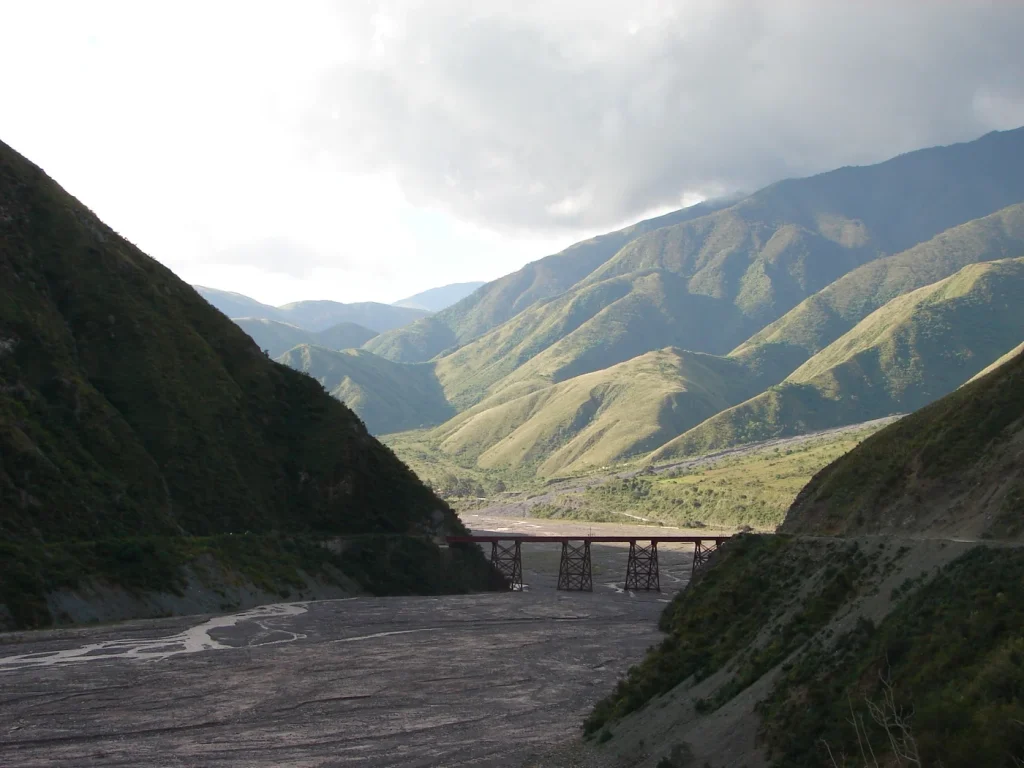

The viaduct is the visual climax, not the whole trip
La Polvorilla Viaduct is the route’s signature landmark and its highest point. Yet the circuit works best when viewed as a sequence: Salta’s lower elevation, the overland passage through Quebrada del Toro, the Puna rail journey, and the return. This is why the BUS-TRAIN-BUS choice can be compelling for travellers who value the full landscape story rather than only the train segment.
Book smartly and avoid the common planning mistakes
Start with the live departure calendar, then choose the fare type that matches the day you want. An April-to-November operating window is not a confirmed seat on a specific date. Likewise, a tariff is not a substitute for reading the current product details. Confirm the departure date, selected product, displayed currency, final price, and arrival instructions before building the rest of your Salta itinerary around the trip.
- Pick your season first. Schedule the excursion between April and November, avoiding the published rainy-season closure from December through March.
- Decide if the full road-and-rail circuit or the rail-only option better suits your priorities and budget.
- Use the live operator booking channel to confirm an actual departure date and the exact inclusions of your chosen ticket.
- Check the payment currency and total at checkout, since the published tariff uses a dollar sign without naming the currency.
- Keep departure day free from competing plans, then save your confirmed timing and arrival instructions.
La Trochita: a separate Patagonia heritage train experience
La Trochita, in Chubut, belongs in an Argentina train itinerary for a different reason. This is a Patagonia heritage experience, not an alternative version of Salta’s high-altitude circuit. Its current operator information centres on Esquel and El Maitén stations, with online ticket purchases available. Special trips over additional historic sections can be arranged in advance, subject to the operator’s current arrangements.
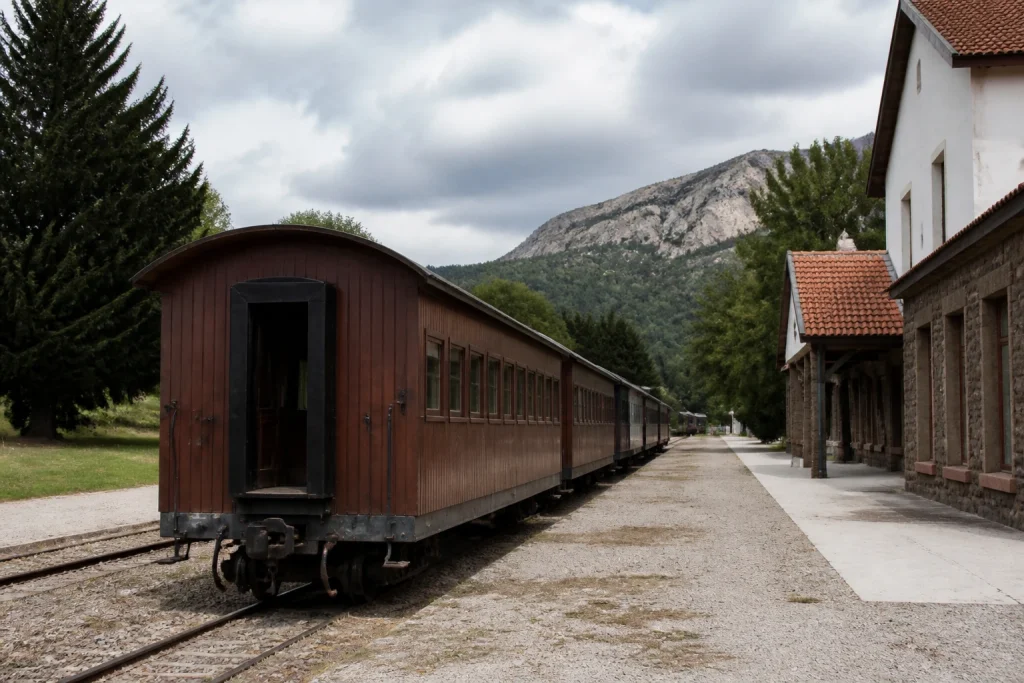
La Trochita has clearer published accessibility provisions
For scheduled La Trochita departures, passengers are asked to arrive one hour before departure for check-in. The Esquel operation also identifies a railcar with a wheelchair ramp and information in Braille, and asks travellers to contact the station ticket office during purchase so staff can prepare the experience. Those documented arrangements should not be assumed for Tren a las Nubes.
Choose La Trochita when a historic Patagonian rail outing fits your route. Choose Tren a las Nubes when Salta, the Puna, and extreme elevation are the point. They complement each other for dedicated rail travellers, but they ask for different itineraries, different preparation, and different expectations.
Who should put Tren a las Nubes on their itinerary?
Tren a las Nubes suits travellers who want a structured, scenery-led day in northwest Argentina and are prepared for serious altitude. Its strength is the complete Salta-to-Puna setting, capped by La Polvorilla Viaduct. Its limitation is equally clear: it is seasonal, in high demand, and built around a long day rather than quick transport. Choose your fare, reserve a live departure, prepare for the elevation, and let the full circuit set the pace.
Frequently asked questions
Is Tren a las Nubes a point-to-point train service?
Treat Tren a las Nubes as a tourism-oriented sightseeing circuit rather than conventional point-to-point rail transport. The published format starts in Salta, combines a high-Puna train segment with road travel, and returns to Salta by bus at about 9 p.m.
When does Tren a las Nubes operate?
The published ideal operating period is April through November. The train does not operate from December through March because of the rainy season, and specific departure dates should still be checked in the live booking channel.
How much does Tren a las Nubes cost?
For the operator’s July through September 2026 tariff period, BUS-TRAIN-BUS is listed at $233,000 for a foreign adult and $210,000 for an Argentine resident adult. SOLO TREN is listed at $180,000 and $149,500 respectively. Confirm the currency and final checkout total before paying.
How high does Tren a las Nubes go?
The circuit reaches 4,220 metres at La Polvorilla Viaduct. Salta begins at 1,187 metres, so plan for a major gain in elevation during the day and follow the operator’s advice to rest well, dress warmly, and move slowly at altitude.
Is Tren a las Nubes wheelchair accessible?
Accessibility arrangements are not set out in the published Tren a las Nubes material. Travellers needing wheelchair boarding, accessible facilities, sensory accommodations, or companion arrangements should obtain written confirmation from the operator before booking.