Where to Stay in The Andes for First Timers
For a first Andes trip in Argentina, choose a stay area by the experience you want each morning. Uco Valley places vineyards and winery dining in the foreground. The Quebrada de Humahuaca brings you to northern villages, with Tilcara and Purmamarca offering different strengths. Mendoza’s RN 7 high-mountain corridor is for travelers drawn to the road itself, with Aconcagua views, Puente del Inca, and the route toward Las Cuevas.
- Choose Uco Valley for vineyards, countryside restaurants, and lodging at or near wineries.
- Use Tilcara as the practical first base for exploring the Quebrada de Humahuaca.
- Stay in Purmamarca when the Cerro de los Siete Colores and Paseo de los Colorados are central to your plan.
- Reserve the Uspallata to Las Cuevas corridor for a high-Andes road itinerary rather than a generic first-time base.
- Check live road and weather conditions before using RN 7 in winter, especially near the Cristo Redentor crossing.
There is no single all-purpose Andes base, so treat Mendoza and Jujuy as distinct regional stays rather than interchangeable stops. Our Best Places to Visit in the Andes for First-Time Visitors guide can help shape a wider route; this guide narrows the decision to the place that best suits your overnight base and daily rhythm.
Uco Valley: best for vineyards and a Mendoza wine-country stay
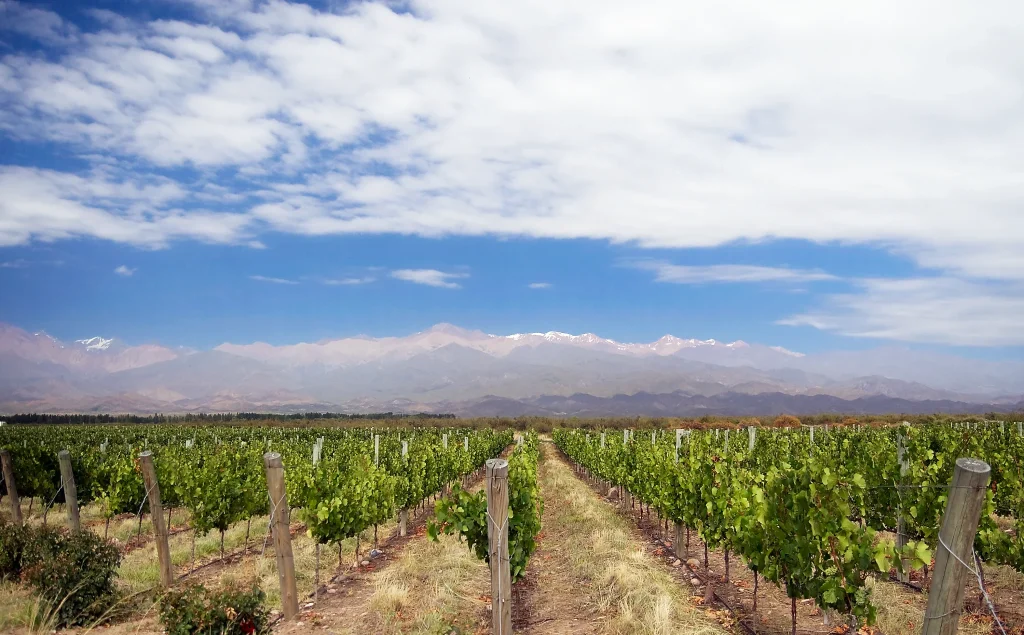
Uco Valley is the strongest choice for first-timers who want wine country to be the destination, not a day trip squeezed between city plans. South of Mendoza on RN 40, the valley combines vineyards, wineries, countryside restaurants, and accommodation that includes luxury hotels. Its setting is rural and spread out, with a dry climate and elevations of roughly 900 to 1,700 metres.
Choose a winery-area stay when wine is the point of the trip
This is the right base for long lunches, cellar-door visits, and open country scenery framed by the Andes. The tradeoff is convenience on foot: Uco Valley is not a compact, walkable city base. Visitor guidance recommends renting a car or staying in the area, so choose accommodation with your winery plans and transport approach already in mind.
Plan for changing temperatures and advance winery visits
January through April and October through December are identified as ideal periods for Uco Valley visits. The area is dry, with scarce rain, but temperatures can swing widely during the day. Bring layers even when the forecast looks inviting, and book winery visits ahead instead of assuming you can simply arrive at every estate.
Tilcara or Purmamarca: choosing a Quebrada de Humahuaca base
For a first stay in Jujuy’s Quebrada de Humahuaca, Tilcara and Purmamarca serve different priorities. Tilcara has the clearest case as an exploration base for the wider Quebrada. Purmamarca makes sense when you want to wake up near one of the region’s defining sights and build your stay around its compact village setting.

Tilcara for a practical Quebrada base
Tilcara is the most straightforward first choice when your priority is using one base to explore the Quebrada de Humahuaca. Argentina’s tourism guidance specifically identifies it as an ideal place to base yourself in the region. Choose it for that functional role, especially if your itinerary reaches beyond a single landmark-focused village stop.
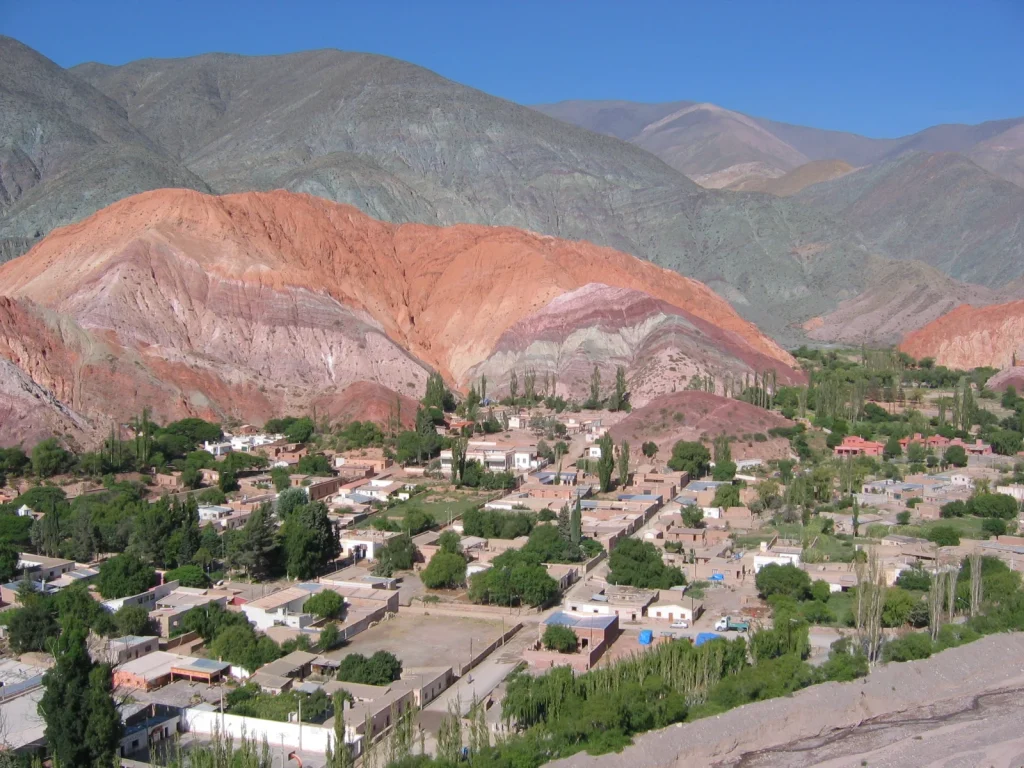
Purmamarca for the Cerro de los Siete Colores
Purmamarca is the landmark-led alternative. It is closely associated with the Cerro de los Siete Colores, local crafts, and the Paseo de los Colorados. The village sits on RN 9, 65 kilometres from San Salvador de Jujuy and 188 kilometres from Salta city. Those road distances are useful orientation points when deciding where this stay belongs in a northern Argentina route.
Make the decision by experience, not assumed price or hotel supply
Pick Tilcara for its role as a wider Quebrada base. Pick Purmamarca for immediate access to its celebrated colored-hills setting and village walks. Neither choice comes with a universal promise of lower rates, more rooms, or easier physical access, so compare individual properties for your dates and needs before committing.
Uspallata and the RN 7 corridor: stay here for the high Andes road journey
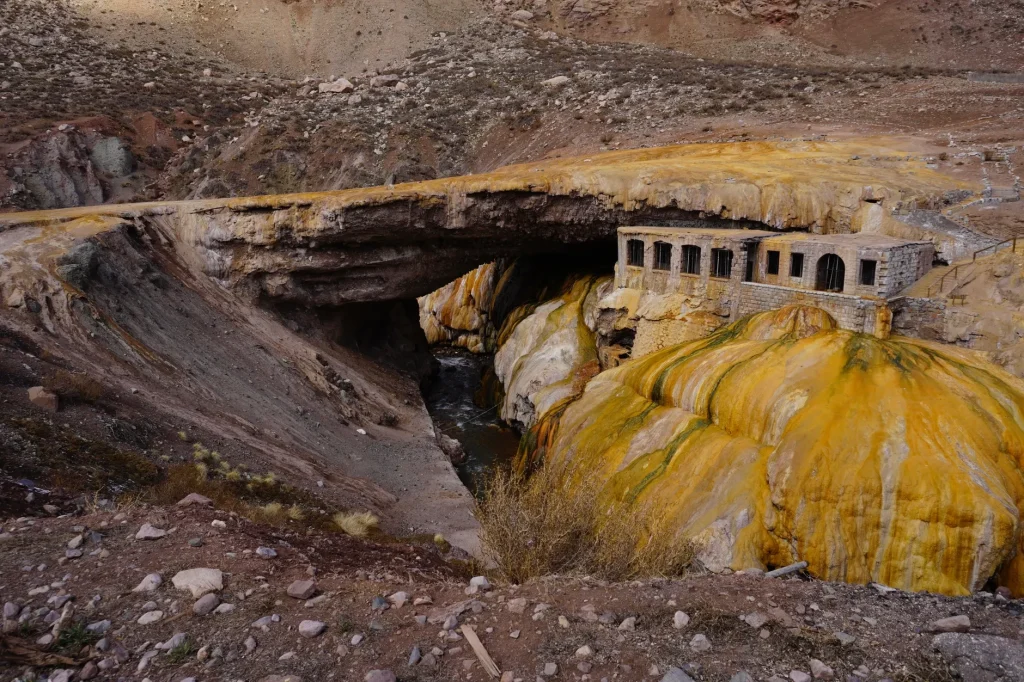
The high-mountain route west of Mendoza is a powerful choice for travelers whose main goal is the Andes road experience. The RN 7 corridor runs from Uspallata past Puente del Inca and views of Aconcagua toward Las Cuevas. The Cristo Redentor crossing links Mendoza and Chile on RN 7 and rises above 3,000 metres, giving this route a far more alpine character than a vineyard stay.
Treat it as a road itinerary with an overnight plan
Choose this corridor when mountain scenery, stops along the road, and the approach to the Chilean border are the purpose of the journey. It is not the simplest default for travelers seeking a self-contained stay with fixed transport and access arrangements. Read Altitude in the Andes: A Plain-English Acclimatisation Guide before building a plan around the highest sections of the route, then confirm your lodging and road plan together.
Winter conditions demand extra discipline. Snow and ice can affect Mendoza roads, and the international-tunnel section has faced closures during snow and whiteout conditions. Check the official daily road report and weather forecast immediately before departure. Avoid driving while it is snowing or at night, and carry warm clothing, water, and food if you are traveling the high route.
Use your main trip priority as the booking filter
Start with the experience that would disappoint you most to miss. That answer usually points cleanly to a stay area. Book the accommodation base first, then fit winery appointments, landmark walks, and road stops around it. This approach avoids trying to make one hotel solve every version of an Argentine Andes trip.
| Your main priority | Best stay area | Why it fits | Key planning point |
|---|---|---|---|
| Vineyards, winery meals, and rural accommodation | Uco Valley | It brings together vineyards, wineries, countryside restaurants, and wine-country lodging. | Rent a car or stay locally, and reserve winery visits in advance. |
| A flexible base in the Quebrada de Humahuaca | Tilcara | It is identified as an ideal base for the Quebrada. | Use it when the wider region matters more than one landmark. |
| Cerro de los Siete Colores and Paseo de los Colorados | Purmamarca | Both signature sights are directly associated with the village. | Place it thoughtfully within an RN 9 route. |
| High-Andes road scenery and Aconcagua-area stops | Uspallata to Las Cuevas corridor | RN 7 passes Puente del Inca and Aconcagua views toward the Chilean border. | Check conditions live, particularly in winter. |
Do the practical checks before you lock in a property
For Uco Valley, decide whether you will rent a car or deliberately stay near the wineries you want to visit. For the Quebrada, use Tilcara’s base role or Purmamarca’s landmark setting to narrow the search. Along RN 7, make road conditions part of the lodging decision, particularly if your arrival or departure depends on the high route. Check the reservation details for the exact location, access arrangements, and total price.
Getting around each Argentine Andes stay area
Road geography shapes the stay decision. Uco Valley lies south of Mendoza on RN 40, and local visitor guidance favors either renting a car or staying in the area for easier access. Purmamarca’s RN 9 location makes its connection to San Salvador de Jujuy and Salta useful for route planning. The high-mountain option follows RN 7 through the Mendoza corridor toward the Cristo Redentor crossing.
Avoid treating the map as a reason to rush. A vineyard base, a northern Quebrada village, and a high RN 7 stop each reward a different pace and transport plan. Concentrate a stay in the region that matches your priority, rather than expecting one lodging area to deliver Mendoza wine country, Jujuy’s villages, and the high Andes road in one sweep.
Time your stay around weather, road conditions, and reservations
Uco Valley has the clearest seasonal guidance in this comparison: January to April and October to December are recommended periods, with dry conditions but pronounced temperature shifts. That makes a layered packing plan useful for winery days that begin cool and stretch into warm afternoons. Advance reservations matter for winery visits, especially when tasting and dining are central to the stay.

On the Mendoza high route, conditions matter more than a fixed calendar rule. Winter maintenance guidance warns that snow and ice can affect travel, while border operations can change quickly during storms. Build flexibility into any RN 7 overnight plan and use the current official road and crossing updates on the day you travel, rather than relying on a status seen earlier in the trip.
Handle costs, access, and safety with sensible planning
Accommodation prices, transfer costs, and physical-access features differ by property and date, so avoid using a single broad Andes budget or accessibility label as your deciding factor. If step-free access, an adapted room, or accessible transport is essential, confirm those specific features with the accommodation or provider before booking. The same approach helps when comparing isolated rural stays with village properties.
Argentina is listed by the U.S. Department of State at Level 1, meaning travelers should exercise normal precautions. Petty crime remains a concern in tourist locations, so use the same basic habits that serve you in any busy travel area: keep valuables secure, stay aware in crowds, and avoid leaving important items unattended in a vehicle.
The simplest first-time choice
Choose Uco Valley if your first Andes memory should involve vineyards beneath a mountain skyline and lingering countryside meals. Choose Tilcara for the clearest Quebrada de Humahuaca base, or Purmamarca for a stay focused on the Cerro de los Siete Colores. Save the Uspallata to Las Cuevas corridor for a road-centered mountain journey, with live condition checks built into the plan. Once you choose the experience, the right place to stay becomes much easier to see.
Frequently asked questions
What is the best place to stay in the Argentine Andes for a first trip?
Uco Valley is the best first choice for a wine-centred stay, thanks to its vineyards, wineries, countryside restaurants, and lodging in the heart of Mendoza wine country. Tilcara is the stronger choice for using one base in the Quebrada de Humahuaca.
Should I stay in Tilcara or Purmamarca?
Stay in Tilcara for a practical base in the wider Quebrada de Humahuaca, and choose Purmamarca when the Cerro de los Siete Colores and Paseo de los Colorados are your main focus. The choice is best made by itinerary style rather than assumed price or hotel availability.
Do I need a car in Uco Valley?
A rental car or a stay within Uco Valley makes access easier because the area is rural and dispersed. Choose your accommodation with winery reservations and your transport plan in mind.
Can I stay along Mendoza's high Andes route on RN 7?
Yes, if the high-mountain road experience is the main purpose of your trip. Use the Uspallata to Las Cuevas corridor for Aconcagua-area scenery, Puente del Inca, and the road toward the Cristo Redentor crossing, but plan around current conditions.
When is the best time to stay in Uco Valley?
January through April and October through December are recommended periods for visiting Uco Valley. Expect dry conditions and sizeable temperature changes across the day, and reserve winery visits in advance.
How should I plan an RN 7 stay in winter?
Check the official daily road report and weather forecast immediately before traveling, because snow, ice, and whiteout conditions can disrupt the route. Avoid travel during snowfall or at night, and carry warm clothing, water, and food on the high route.
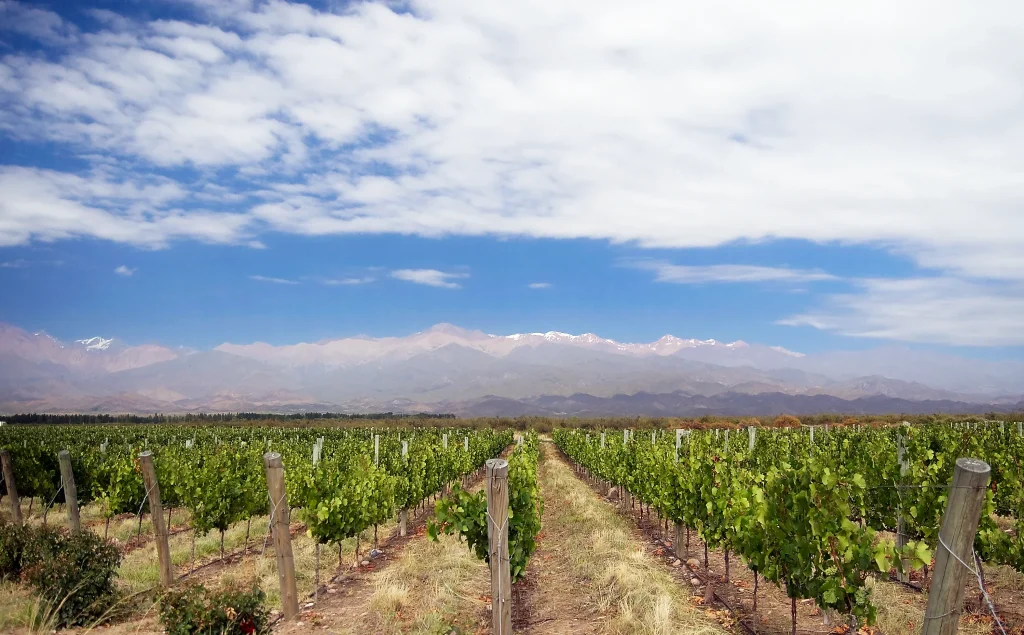
Uco Valley pairs vineyard stays with broad Andean scenery by David, CC BY 2.0.