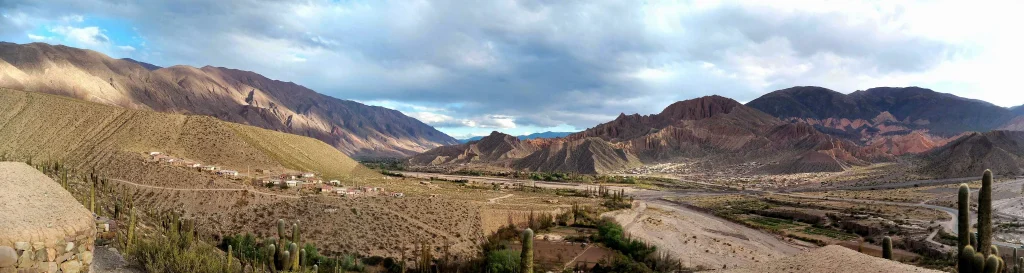
Andean Archaeology and Culture Guide
For an archaeology-and-culture-focused journey in Argentina, begin in Jujuy’s Quebrada de Humahuaca. This 155-kilometre cultural corridor follows the Río Grande and the line of the Camino Inca, carrying traces of travel and exchange across roughly 10,000 years. Its story includes early hunter-gatherers, farming societies, pre-Hispanic settlements, Inca occupation, colonial towns, and independence-era history. The most rewarding visit reads these layers together, while remembering that the valley remains a lived cultural landscape.
The essential approach to Andean heritage in Argentina
- Make the Quebrada de Humahuaca the heart of the trip, allowing time for its long cultural corridor rather than treating it as a single monument.
- Use Pucará de Tilcara as a clear introduction to pre-Hispanic settlement and later Inca remodelling, while recognizing that parts of the site were reconstructed.
- Look beyond archaeological walls: Coctaca’s terraces, local traditions, churches, vernacular buildings, and settlement patterns are part of the Quebrada’s heritage.
- Treat El Shincal de Quimivil in Catamarca as a separate Inca-focused extension, not a quick add-on to a short Jujuy itinerary.
- Check current access arrangements, transport, road conditions, admission terms, and opening times directly before travel, especially after severe weather.
Start in the Quebrada de Humahuaca
The Quebrada is a strong base for understanding how movement, agriculture, settlement, and political change shaped the Andes over many centuries. UNESCO inscribed the landscape on the World Heritage List in 2003 because its significance lies in the whole corridor, not simply in one set of ruins. Give its villages, cultivated slopes, archaeological places, and historic built environments room to connect in your mind.
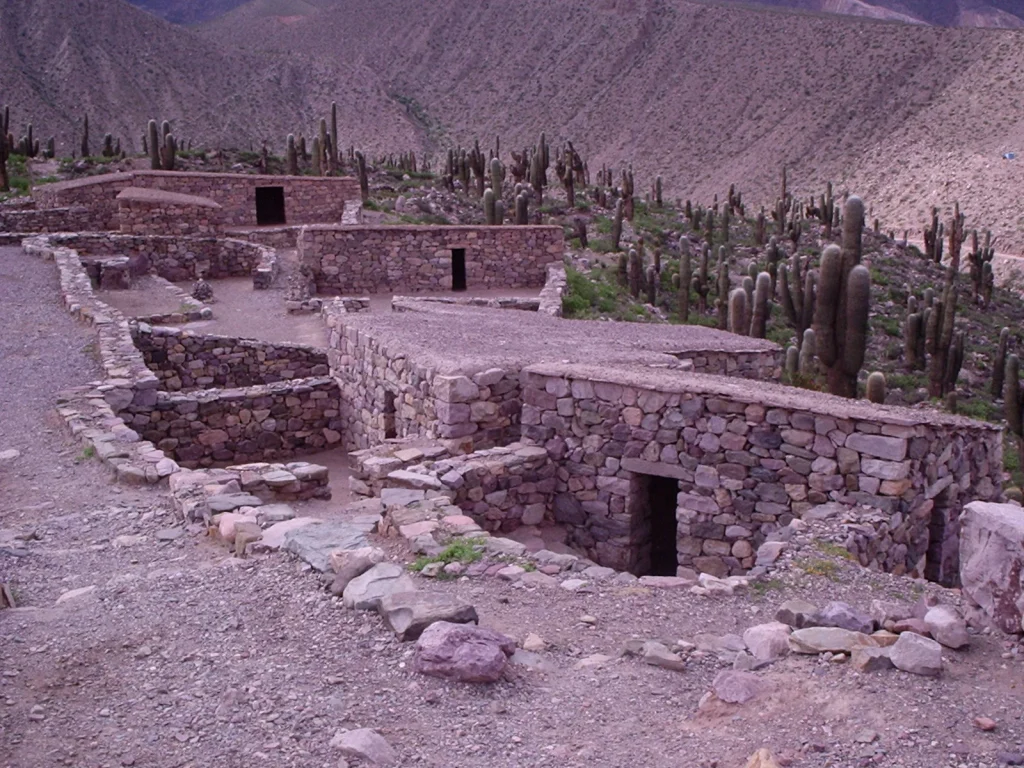
Tilcara provides a practical archaeological focus within that larger setting. Near National Route 9, at the confluence of the Grande and Huasamayo rivers, Pucará de Tilcara is the Quebrada’s largest documented pre-Hispanic settlement. Let it anchor your understanding, then use the wider valley to see why a cultural landscape matters: people moved through it, farmed it, built in it, and continue to attach meaning to it.
Read the valley as a route through time
The Quebrada’s route history extends about 10,000 years, linking early use by hunter-gatherers with later agricultural societies, pre-Hispanic settlements, Inca occupation, colonial settlement, and the era of Argentina’s independence struggles. That sequence gives a visit useful shape. Ask what each period left behind, then consider how later communities adapted older routes, fields, and settlement locations to new circumstances.
This is also a place to resist the habit of separating “nature” from “culture.” UNESCO recognizes the Quebrada as a continuing cultural landscape. Agricultural terraces, inherited building traditions, churches, settlement patterns, Indigenous cultural meanings, and everyday local practices belong to the same larger heritage story as the archaeological sites.
Understand Pucará de Tilcara before you visit
Pucará de Tilcara is one of Argentina’s key on-the-ground archaeological experiences. Its documented history begins in the 13th century, and later Inca remodelling added administrative, productive, and religious structures. The site is especially useful for travellers who want to picture a substantial pre-Hispanic settlement within the terrain of the Quebrada, rather than encounter isolated objects in a museum case.
Interpret the site with one important qualification. Pucará de Tilcara is not an untouched ruin: parts were reconstructed for tourism in the mid-20th century. That makes the settlement easier to read as a cultural stop, but some visible fabric is interpretive reconstruction rather than original surviving material. Approach it as a carefully presented archaeological landscape, and let that distinction sharpen your attention instead of diminishing the visit.
Treat a sacred landscape with care
Indigenous communities regard Pucará de Tilcara as one of their representative sacred antigales. Stay on designated paths, do not climb on or remove archaeological material, and avoid turning sacred or community heritage into a photo prop. A considered visit takes only photographs that are respectful, leaves no trace, and gives the place more attention than a rushed checklist allows.
Look for living culture beyond the ruins
A good archaeology itinerary in the Quebrada should include the cultural practices that continue around the monuments. Local traditions, vernacular architecture, churches, agricultural systems, and patterns of settlement are not decorative background. They are among the features that give this corridor its cultural value and help explain why its heritage cannot be reduced to a single ancient site.
The terraces at Coctaca offer a particularly powerful lens. They are thought to date to around 1,500 years ago and remain in use. Seen in that context, terracing is more than an old landscape feature. It connects long-established farming knowledge with the continuing life of the valley, bringing the past into the present without pretending the present has stood still.
Keep your language and expectations precise. Communities are not exhibits, and heritage does not belong to visitors. Listen, observe, and treat local cultural expression with the same care you would bring to an archaeological structure. That approach makes the journey more meaningful and helps protect the relationships that make the Quebrada more than an open-air museum.
Plan the itinerary around two distinct regions
Build the main trip around the Quebrada de Humahuaca and Tilcara, then decide separately whether you have time for Catamarca’s El Shincal de Quimivil. The two archaeological anchors sit in different provinces and deserve different planning. Avoid squeezing them into one short local excursion. A slower structure gives each place its historical context and avoids turning a cultural journey into a race between pins on a map.

- Set the Quebrada de Humahuaca as the primary cultural corridor and use Tilcara as the main archaeological reference point.
- Visit Pucará de Tilcara with its reconstructed elements and sacred significance clearly in mind.
- Make space to notice the Quebrada’s active cultural landscape, especially terraces, local architecture, churches, and settlement patterns.
- Add El Shincal de Quimivil only as a separately planned Catamarca extension with its own transport and access checks.
Before setting out, confirm current entry arrangements, operating schedules, transport options, road status, and mobility access with the relevant local providers and authorities. These practical details can change. Check local conditions again after severe weather, as flooding is among the conservation and management pressures identified for the Quebrada.
For high-elevation trip preparation, Altitude in the Andes: A Plain-English Acclimatisation Guide is a useful companion before you finalize the pace of your wider itinerary. Give yourself the flexibility to slow down and spend time understanding each place, rather than treating cultural sites as brief stops between longer drives.
Add El Shincal de Quimivil for a deeper Inca chapter
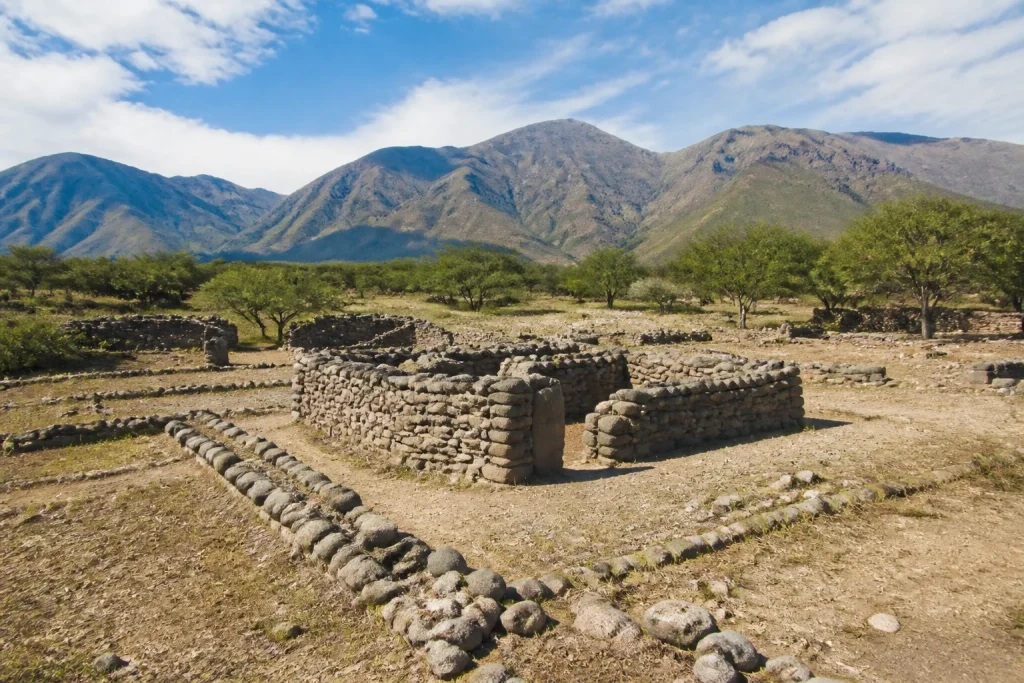
Near Londres in Catamarca, El Shincal de Quimivil offers a distinct Inca-focused extension. Constructed between 1471 and 1536, it served as the capital of a wamani, an Inca provincial unit. It is also recognized as one of the principal cities of the southern Inca Empire, giving it a different historical emphasis from the long, multi-period cultural corridor of the Quebrada.
Think of El Shincal as a second chapter, not an alternative to Jujuy. The Quebrada provides the broader story of an enduring route and living cultural landscape; El Shincal concentrates attention on Inca provincial organization. Because Catamarca and Jujuy are separate regions, make a dedicated plan and confirm current visitor access, transportation, and site arrangements before committing to the extension.
Four questions that make the archaeology easier to read
Use these questions as you move through the landscape. They turn a site visit into a clearer story without requiring you to be an archaeologist. The goal is not to memorize dates, but to notice how travel routes, settlement, farming, political change, and continuing traditions meet in the same valley.
| Question | What to look for in the Quebrada |
|---|---|
| How did people move through this landscape? | The Quebrada followed a long trade and communication route, later associated with the line of the Camino Inca. |
| How did people settle here? | Pucará de Tilcara shows a major pre-Hispanic settlement whose documented history begins in the 13th century. |
| How did Inca rule reshape existing places? | At Pucará de Tilcara, Inca remodelling added administrative, productive, and religious structures. |
| What shows continuity? | Coctaca’s terraces, still in use and thought to be around 1,500 years old, link agricultural heritage with the living landscape. |
| What came after the pre-Hispanic era? | The corridor also contains colonial settlements and associations with Argentina’s independence-era history. |
Visit lightly and help protect the landscape
The Quebrada faces real conservation pressures, including flooding, urbanization and rebuilding, agricultural intensification, infrastructure, and rising tourism. These are heritage-management challenges, not a reason to avoid the destination. They are a reminder that small visitor choices matter in a fragile cultural landscape where archaeology, active settlement, and agriculture share the same terrain.
- Follow designated paths at archaeological places and do not climb on structures.
- Leave every stone, fragment, and landscape feature where it is.
- Treat sacred places and community heritage with restraint, especially when taking photographs.
- Carry out what you bring in and avoid adding waste to sites and trails.
- Review local conditions after severe weather and adjust plans if access changes.
Make time for context, not just monuments
This journey suits travellers who want Argentina’s Andes to make historical sense on the ground. Pucará de Tilcara gives the clearest archaeological starting point, while the Quebrada de Humahuaca rewards anyone willing to read terraces, routes, buildings, and living traditions as connected evidence. Add El Shincal for a dedicated Inca extension, confirm practical details before departure, and leave enough space in the plan to look closely.
Frequently asked questions
Where should I begin an Andean archaeology trip in Argentina?
Begin in the Quebrada de Humahuaca in Jujuy. Its 155-kilometre corridor brings together a long route history, pre-Hispanic settlements, Inca occupation, colonial history, and living cultural traditions, making it the strongest primary cluster for this kind of journey.
Why is Pucará de Tilcara important?
Pucará de Tilcara is the largest documented pre-Hispanic settlement in the Quebrada de Humahuaca. Its history begins in the 13th century, and later Inca remodelling added administrative, productive, and religious structures.
Is Pucará de Tilcara completely original?
No. Parts of Pucará de Tilcara were reconstructed for tourism in the mid-20th century, so it is best understood as an interpretive archaeological landscape with both surviving and reconstructed elements.
What makes the Quebrada de Humahuaca a living cultural landscape?
Its heritage includes more than archaeological sites. Agricultural terraces at Coctaca remain in use, while local traditions, churches, vernacular architecture, settlement patterns, and Indigenous cultural meanings continue to shape the valley’s identity.
Can I combine El Shincal de Quimivil and the Quebrada de Humahuaca on a short trip?
Treat El Shincal de Quimivil as a separate Catamarca extension rather than a quick addition to a short Quebrada itinerary. It is in a different province and requires its own transport and access planning.
What practical details should I confirm before visiting archaeological sites?
Confirm current admission arrangements, opening times, transport, road conditions, and mobility access before travel. Check local conditions again after severe weather, particularly in the Quebrada de Humahuaca.
The Quebrada de Humahuaca is a long cultural corridor in northern Argentina by Lucasmb, CC BY-SA 4.0.
