Best Andes Hikes for First Timers
Argentina offers a forgiving introduction to Andes hiking, provided the first route matches your fitness and the weather. El Chaltén stands out because several short, half-day, and full-day trails begin in or near town. You can start with a Fitz Roy viewpoint, build toward a longer valley walk, and leave the hardest objective for another trip.
- Choose El Chaltén for the strongest mix of beginner routes and town-based trail access.
- Start with Mirador Fitz Roy if you want a substantial but manageable first hike.
- Pick Laguna Capri for a longer lake-and-mountain outing without the final climb to Laguna de los Tres.
- Attempt Laguna Torre only if you are ready for an 18-19 km day in changeable Patagonian weather.
- Treat Laguna de los Tres as an ambitious progression hike, not the default beginner route.
This guide focuses on Argentine destinations supported by specific route information. The main recommendations are in Patagonia, where the trails offer dramatic mountain scenery without requiring a remote expedition. Mendoza, Ushuaia, and Bariloche provide useful alternatives for travelers whose itinerary, mobility, or preferred travel style points elsewhere.
The best beginner Andes hikes compared
| Hike | Published route details | Best suited to | Main consideration |
|---|---|---|---|
| Mirador Fitz Roy | 4 km each way, about 1 hour 30 minutes each way, 350 m ascent | First-day hikers wanting a major viewpoint | The route climbs steadily and is not an accessible stroll |
| Laguna Capri | About 1 hour 45 minutes each way, 350 m ascent | Beginners seeking a lake and Fitz Roy landscape | Official distance figures conflict, so follow current trailhead information |
| Laguna Torre | About 18-19 km round trip, 3-4 hours each direction | Fit beginners ready for a full-day walk | Long exposure to rapidly changing Patagonian conditions |
| Laguna de los Tres | About 25 km round trip, 8-9 hours, 750 m ascent | Well-prepared hikers progressing beyond beginner routes | Medium-to-high difficulty with a demanding final objective |
Published difficulty labels only tell part of the story. Distance, ascent, trail conditions, wind, temperature, daylight, and the weight of your pack all shape how a hike feels. A long route described as low difficulty can still be exhausting, while a shorter climb can feel strenuous because most of its elevation is concentrated into a few kilometers.
Why El Chaltén is the best first hiking base
El Chaltén is the most practical starting point in this comparison. It lies about 220 km from El Calafate, and its network includes short, half-day, and full-day walks beginning from town. That layout reduces logistical friction and lets beginners choose an objective after checking the day's conditions.
The range of routes also creates a sensible progression. Begin with Mirador Fitz Roy, continue to Laguna Capri if the first outing goes well, and consider Laguna Torre when you know how your legs handle a longer day. This approach is safer and more enjoyable than building the entire trip around the most demanding name on the map.
El Chaltén also fits naturally into a broader Argentina itinerary. Travelers still deciding where to focus can compare it with the best places to visit in the Andes for first-time visitors before committing their available days to one region.
1. Mirador Fitz Roy: the strongest first-day choice
Mirador Fitz Roy offers the clearest balance of scenery, effort, and time for a first Andes hike. The published route is 4 km each way, takes roughly 1 hour 30 minutes in each direction, and gains 350 m. The park leaflet specifically presents it as an option for visitors with only one day.
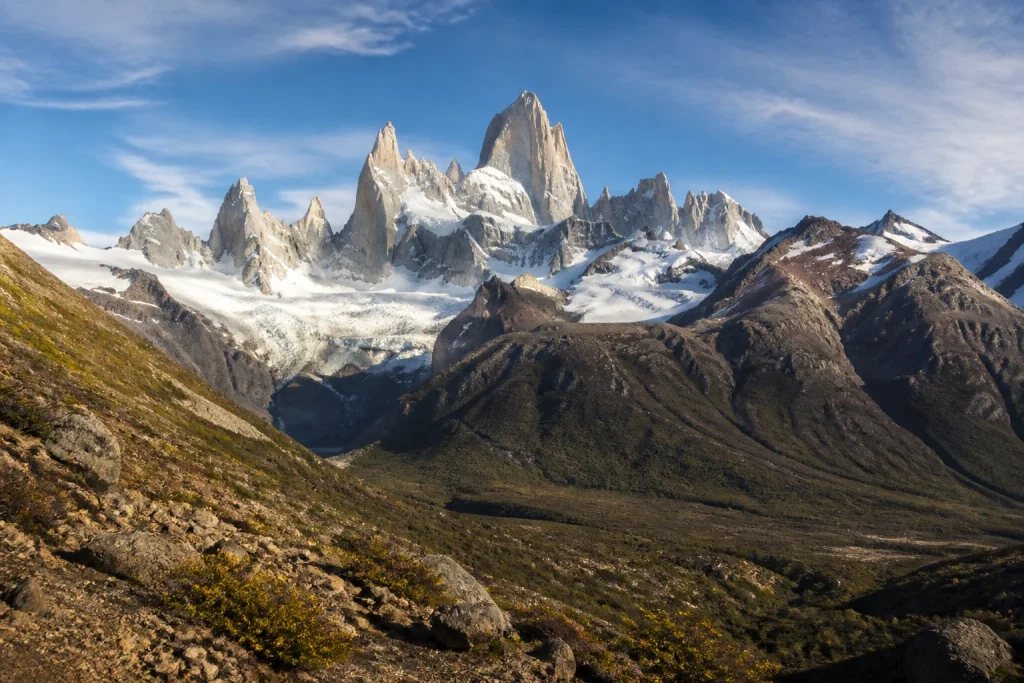
Do not mistake the short schedule for an effortless walk. The 350 m ascent makes this a real uphill hike. Take a measured pace at the beginning, allow time for breaks, and turn around if worsening conditions make the exposed viewpoint less appealing. Reaching the official objective is optional; getting back with energy in reserve is the better measure of success.
Who should choose Mirador Fitz Roy
Choose this route if you walk regularly but have limited mountain experience. It also suits travelers testing footwear, layers, and pacing before a longer outing. Anyone who finds the climb unexpectedly tiring should repeat a similar-length walk rather than advancing immediately to Laguna Torre or Laguna de los Tres.
2. Laguna Capri: the best moderate step up
Laguna Capri is the natural next step for hikers who want a lake setting and Fitz Roy scenery without continuing to Laguna de los Tres. The park leaflet gives an approximate walking time of 1 hour 45 minutes each way and 350 m of ascent, placing it within reach of active beginners who handled the shorter viewpoint comfortably.
Official information disagrees on the total distance. One tourism source describes an 8 km round trip, while another official listing contains a much larger figure that does not fit the leaflet's walking time. Follow current trailhead signs and park guidance rather than planning around a single published distance.
The advantage of Laguna Capri is flexibility. It delivers a distinct destination while avoiding the final demanding objective associated with Laguna de los Tres. It is still a mountain day, so leave enough time to return comfortably and carry layers even if El Chaltén begins the morning under clear skies.
Who should choose Laguna Capri
Pick Laguna Capri if a half-day hike sounds more appealing than a dawn-to-evening challenge. It is particularly useful as the middle outing in a three-day progression: shorter viewpoint first, Laguna Capri second, then a rest day or longer walk depending on recovery and weather.
3. Laguna Torre: the best first full-day challenge
Laguna Torre is suitable for reasonably fit beginners who already know they can remain comfortable on their feet for most of a day. Official sources place the round trip at approximately 18-19 km, with the national park estimating 3-4 hours in each direction. This is a substantial commitment even though tourism information labels the route low difficulty.
The appeal lies in a comparatively gentle valley journey rather than a short, concentrated climb. The challenge is endurance. Hours of walking magnify small problems such as damp socks, inadequate food, a rubbing backpack strap, or a pace that was too fast during the first hour.
A shorter alternative reaches a panoramic viewpoint in an approximately 5 km round trip. That makes the Laguna Torre corridor useful even when the full lake objective is too long. Decide before departure which turnaround point fits your ability, then remain willing to shorten the walk if conditions or energy levels change.
A sensible pacing plan for Laguna Torre
- Begin at a pace that feels almost too easy.
- Use the early kilometers to check footwear, layers, and pack comfort.
- Compare your progress with available daylight and current park guidance.
- Turn around before fatigue affects balance or concentration.
- Keep food, water, and a warm layer available for the return.
Why Laguna de los Tres is not the default beginner hike
Laguna de los Tres is the celebrated goal many visitors recognize, but it should not lead a list of easy Andes hikes. Official information classifies it as medium-to-high difficulty and gives a round-trip distance of about 25 km, a total time of 8-9 hours, and 750 m of ascent.
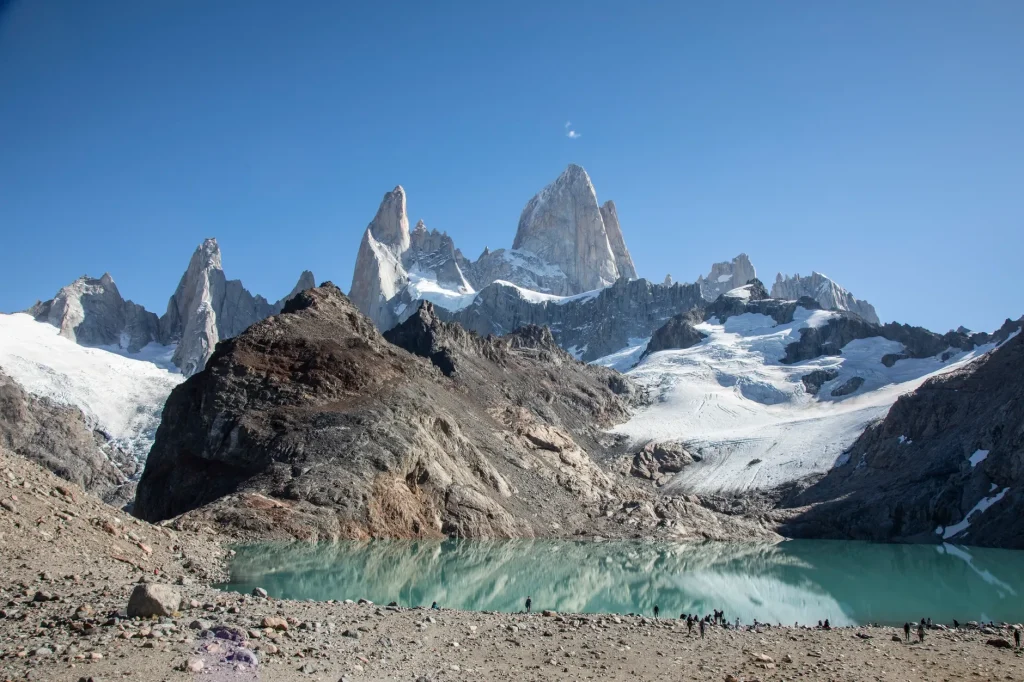
Those figures demand more than enthusiasm. A hiker needs the endurance for a long day, enough clothing for changing conditions, and the judgment to retreat before the final objective. Completing a shorter El Chaltén route first gives you useful information about your pace, recovery, and comfort in Patagonian weather.
Well-prepared beginners can keep Laguna de los Tres as a second or third hike if earlier outings feel controlled and the latest trail advice is favorable. Mirador Fitz Roy and Laguna Capri remain worthwhile fallback goals. Turning toward one of them is sound route selection, not a failed day.
Beginner alternatives beyond El Chaltén
El Chaltén has the best documented progression of beginner routes, but it is not the only useful gateway. Mendoza works for travelers seeking an Aconcagua landscape without a summit attempt. Ushuaia has the clearest low-barrier option, while Bariloche offers strong transport connections and a broad base of urban services.
Laguna de los Horcones: a low-commitment Aconcagua option
The Laguna de los Horcones circuit in Aconcagua Provincial Park offers a way to experience the mountain environment without attempting Aconcagua. The park is about 180 km from Mendoza City via National Route 7, so this works best as a long transfer or organized day excursion rather than a quick city-side walk.
Current distance, duration, trail grade, admission, and access arrangements should be checked before departure. The transfer is a major part of the day, so compare the road time with how much walking you actually want. A traveler primarily interested in several consecutive hikes will usually find El Chaltén more convenient.
If the wider itinerary continues into higher Andean terrain, review a plain-English Andes acclimatisation guide before choosing more demanding objectives. Fitness and adjustment to elevation are separate concerns, and a comfortable low-level walk does not automatically prepare someone for a higher route.
Castorera near Ushuaia: the clearest accessible alternative
Tierra del Fuego National Park has 40 km of trails at varying levels, with independent and guided hiking permitted. Its Castorera route is listed as 200 m and approximately 20 minutes. An alternative 150 m section is adapted for parking access and people with reduced mobility.
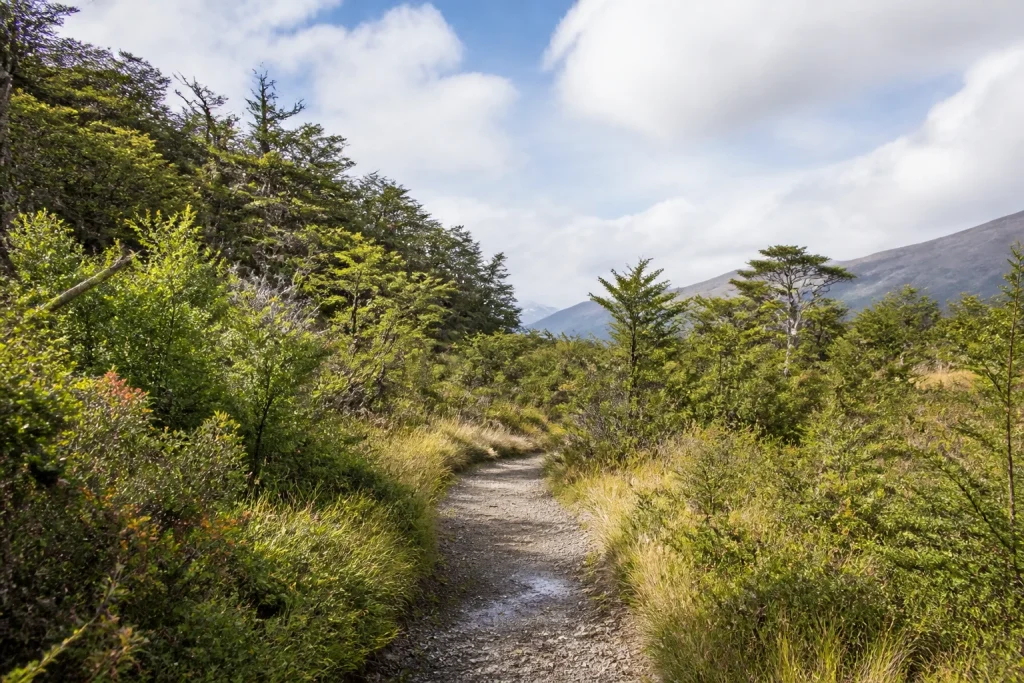
Castorera is the best documented choice here for travelers who need a very short outing or reduced-mobility provision. It is a nature walk rather than a classic high-Andes trek, but that distinction can be helpful. A first outdoor day should match the traveler's actual needs rather than an imagined standard of what mountain hiking must involve.
Accessibility conditions can change with maintenance and weather, so confirm the usable section before traveling. People considering another trail in the park should also compare its length and terrain rather than assuming all 40 km of routes have similar access.
Bariloche: the practical gateway without a single ranked route
Bariloche suits travelers who value flexible arrival options and city services. It is reachable through its international airport, by buses from many parts of Argentina, and by road. Official tourism information recommends stays of 2-7 days, giving visitors room to mix outdoor activities with a less trail-focused itinerary.
Cold mountain conditions are part of the planning picture, including cool summer nights. Carrying suitable layers matters even when the city forecast looks pleasant. The useful question is not simply whether Bariloche has hiking, but which current route fits your transport, experience, and conditions on the chosen day.
Bariloche is a sound choice when hiking is one part of the holiday. El Chaltén remains stronger when the main goal is a simple progression through clearly documented short, moderate, and full-day trails.
How to choose the right first Andes hike
Start with time, not fame. Decide how many hours you can comfortably walk while retaining enough energy for the return. Then compare ascent, distance, current conditions, and possible turnaround points. A route should leave some margin for slower sections, photographs, food breaks, and an unexpected change in weather.
| Your priority | Best starting option | Why |
|---|---|---|
| A first substantial mountain viewpoint | Mirador Fitz Roy | Shorter than the major lake objectives, with published time and ascent figures |
| A moderate lake outing | Laguna Capri | A logical step between the viewpoint and the longest day hikes |
| A full-day endurance test | Laguna Torre | Long but described as comparatively low difficulty, with a shorter viewpoint alternative |
| Reduced-mobility provision | Castorera alternative section | The source specifically documents an adapted 150 m section |
| Aconcagua scenery without a summit attempt | Laguna de los Horcones circuit | A protected-park option reached from Mendoza via a long road transfer |
Avoid choosing solely by the difficulty word printed beside a trail. Laguna Torre demonstrates why: it is described as low difficulty, yet the full route covers approximately 18-19 km and can require 3-4 hours in each direction. Duration and exposure matter as much as technical terrain.
Travel companions should plan around the least experienced member rather than splitting the difference between abilities. Agree on a turnaround rule before leaving. That conversation is much easier over breakfast than on a cold trail when one person wants to continue and another has already used most of their energy.
A three-day first-timer plan for El Chaltén
- Day one: Walk to Mirador Fitz Roy. Use the climb to test pacing, footwear, layers, and recovery.
- Day two: Choose Laguna Capri if conditions are suitable and the first day felt comfortable. Otherwise, repeat a shorter objective or rest.
- Day three: Fit hikers can consider Laguna Torre, using its panoramic viewpoint as a shorter alternative. Keep Laguna de los Tres for travelers whose earlier walks felt controlled and whose preparation matches the longer route.
The sequence should remain flexible. El Chaltén's advantage is the ability to select among several town-based walks after reviewing conditions. Do not save the longest route for a day when the forecast, trail advice, or your recovery points toward a shorter alternative.
Weather, registration, and what to carry
Check the latest trail status, weather, wind, and registration requirements immediately before setting out in Los Glaciares National Park. Conditions can change the character of even a familiar route. A manageable viewpoint walk can become an uncomfortable choice when visibility drops or strong wind arrives.
Registration at the park information center is mandatory for all trails in the northern zone from May through September. Registration is also required for remote trekking and climbing. Seasonal requirements deserve particular attention because winter conditions and operating arrangements differ from a typical summer visit.
- Supportive walking footwear already tested before the trip
- A waterproof outer layer and insulating clothing
- Food and water appropriate for the planned duration
- Sun protection, including sunglasses and sunscreen
- A charged phone plus an offline route reference
- A compact first-aid kit and any personal medication
Pack for the route you are actually walking. A full Laguna Torre day requires more food and contingency clothing than the short Castorera route. Keep essentials accessible rather than buried beneath spare items. Beginners often benefit more from a well-organized light pack than from carrying equipment they do not know how to use.
Los Glaciares park fees and trip costs
The published Los Glaciares entry rates effective June 1, 2026 are ARS 50,000 for general admission, ARS 25,000 for Argentine residents, ARS 15,000 for students, and ARS 8,000 for provincial residents. These are park-entry costs and can change, so review the current categories and purchasing rules before paying.
Park admission is only one part of the budget. Transportation from El Calafate, accommodation, food, equipment, and guiding are separate. Total costs vary considerably with season, booking date, comfort level, and whether you travel independently or join an organized outing.
A guide is not the only way to obtain a rewarding first hike, but guided outings can help travelers who are uncomfortable with navigation, weather decisions, or pacing. Check the selected trip's route, meeting arrangements, equipment list, and cancellation conditions before booking.
Which Andes hike should a first timer choose?
For most first-time hikers, Mirador Fitz Roy is the best starting choice. It has a defined objective, manageable schedule, and enough ascent to feel like a genuine mountain day. Laguna Capri is the next step, while Laguna Torre suits fit travelers prepared for a much longer outing.
Choose Castorera when accessibility or a very short nature walk matters most. Select Laguna de los Horcones when Aconcagua is central to the itinerary and a long transfer from Mendoza fits the day. Bariloche works well for a mixed holiday, though current local route details should guide the final hiking choice.
Laguna de los Tres can wait until your preparation and earlier hikes support it. Travelers who later want a multi-day Patagonian challenge can study a properly planned W Trek in Torres del Paine. The best progression is the one that builds skill and confidence without turning every day into an endurance test.
Frequently asked questions
What is the best Andes hike for a complete beginner in Argentina?
Mirador Fitz Roy is the strongest starting choice for an active beginner. The route is 4 km each way, takes about 1 hour 30 minutes in each direction, and gains 350 m. It is a sustained uphill hike, so travelers seeking a much shorter nature walk should consider Castorera in Tierra del Fuego National Park.
Is Laguna de los Tres suitable for first-time hikers?
Laguna de los Tres is suitable only for well-prepared beginners with the fitness and judgment for a demanding full day. The route is about 25 km round trip, takes 8-9 hours, gains 750 m, and is classified medium-to-high difficulty. Mirador Fitz Roy or Laguna Capri makes a better first objective.
How difficult is Laguna Torre for a beginner?
Laguna Torre is a long but comparatively gentle challenge for a reasonably fit beginner. The full trip is approximately 18-19 km and can take 3-4 hours per direction. A shorter panoramic-viewpoint option covers about 5 km round trip, giving hikers a useful alternative when the full lake route is too ambitious.
Can beginners hike independently in El Chaltén?
El Chaltén supports independent hiking on a range of short, half-day, and full-day routes beginning from town. Beginners should still review current trail status, wind, weather, and registration rules before departure. A guide can be useful for anyone uncomfortable with route decisions or changing mountain conditions.
When is trail registration required in El Chaltén?
Registration at the Los Glaciares park information center is mandatory for all northern-zone trails from May through September. It is also required for remote trekking and climbing. Check the latest park instructions immediately before hiking because trail conditions and operating arrangements can change.
How much does it cost to hike in Los Glaciares National Park?
Published park-entry rates effective June 1, 2026 are ARS 50,000 general, ARS 25,000 for Argentine residents, ARS 15,000 for students, and ARS 8,000 for provincial residents. These rates cover entry only. Transportation, lodging, food, equipment, and guides are separate, and current prices should be checked before purchase.
Is there an accessible hiking option in the Argentine Andes region?
The clearest documented low-barrier option is Castorera in Tierra del Fuego National Park. The main route is 200 m and approximately 20 minutes, while an alternative 150 m section is adapted for parking access and people with reduced mobility. Confirm current accessibility conditions before traveling.
Is Mendoza a good base for a first Andes hike?
Mendoza works well if seeing the Aconcagua landscape is the priority. The Laguna de los Horcones circuit provides an alternative to attempting Aconcagua, but the park is about 180 km from Mendoza City via National Route 7. Treat it as a long day excursion rather than a convenient city-side hike.
Should a first-time hiker choose El Chaltén or Bariloche?
Choose El Chaltén when hiking is the main purpose of the trip. Its town-based network provides a clear progression through short, half-day, and full-day routes. Choose Bariloche when flexible air, bus, and road access plus a wider city-based holiday matter more than following a specific beginner trail sequence.
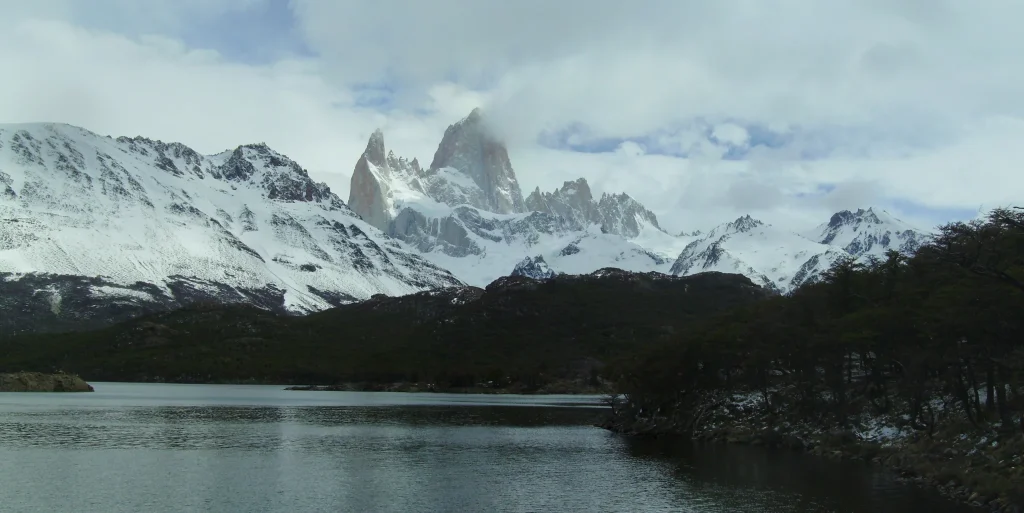
Laguna Capri offers first-time hikers a moderate lake-and-mountain objective near El Chaltén by littletroll, CC BY-SA 3.0.
