
Best Bars in The Andes
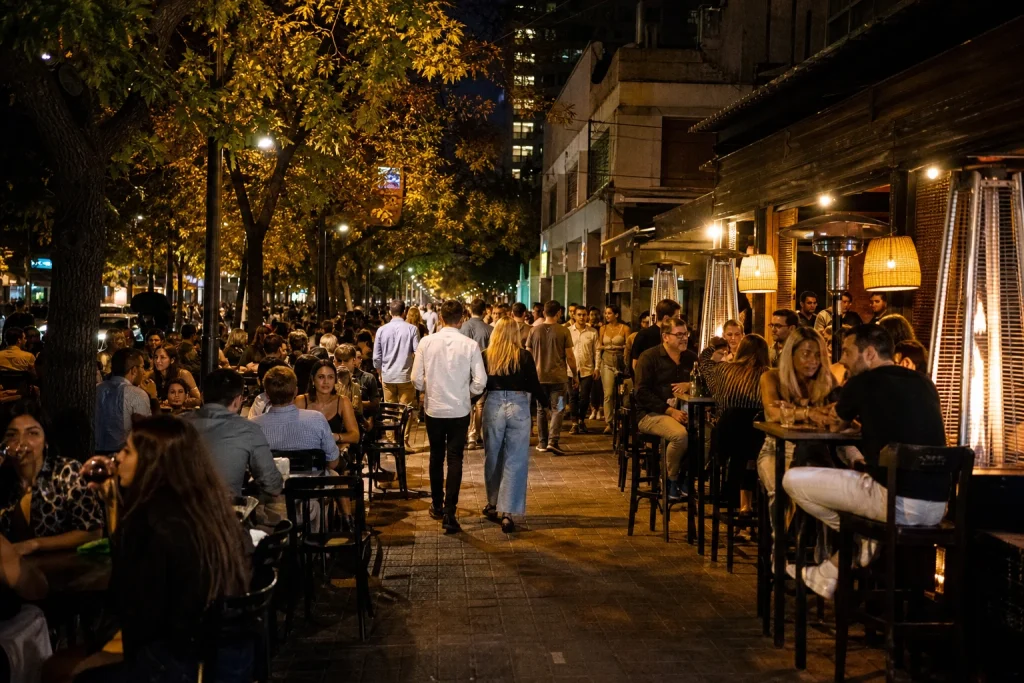
The best bars in the Argentine Andes are not confined to a single nightlife strip. Mendoza offers the clearest mix, pairing urban bar districts with vineyard terraces, guided tastings, and food-led winery visits. Farther north, Salta provides a different kind of evening through folk peñas where regional music and food take center stage. The right choice depends on whether you want an easy city bar crawl, a planned wine experience, or a cultural night out.
- Choose Avenida Arístides or central Mendoza for the easiest urban bar-hopping plan.
- Reserve a winery experience for vineyard scenery, guided tasting, and wine-paired food.
- Pick Bodega Los Toneles when you want wine tourism without traveling far from downtown Mendoza.
- Visit a Balcarce Street peña in Salta for live regional music, food, and a more cultural evening.
- Confirm current menus, prices, reservations, and operating times before traveling.
This guide compares different drinks experiences rather than forcing unlike venues into a numbered ranking. A central Mendoza bar, a vineyard terrace, and a Salta peña serve different purposes. Treating them as separate categories makes it much easier to choose a night that matches your schedule, transport plan, and interest in Argentine wine or regional culture.
How to choose an Andean bar experience
Start by deciding how structured you want the evening to be. Mendoza’s city center and Avenida Arístides suit travelers who prefer flexibility and several bars or restaurants in one urban area. The winery zones of Maipú, Luján de Cuyo, and Valle de Uco are better approached as planned destinations rather than spontaneous late-night circuits.
A winery visit usually emphasizes the wine itself. Guided tastings, vineyard surroundings, terraces, and paired food replace the fast pace of a multi-stop bar crawl. That tradeoff is worthwhile when learning about local wine matters more than moving between venues on foot.
Salta belongs in a separate category. Its best-documented night-time experience is the folk peña, particularly around Balcarce Street. Choose it when live regional music and a meal sound more appealing than a conventional urban bar circuit.
Mendoza city is the practical base for bar hopping
Mendoza sits at the foot of the Andes and is the strongest base for an Argentina-focused search for the best bars in the Andes. Avenida Arístides and the city center are its principal urban areas for bars and restaurants. Staying near either area keeps an evening flexible and separates nightlife from the longer, reservation-led outings associated with the surrounding wine districts.
Avenida Arístides for an easy multi-stop evening
Avenida Arístides is the straightforward choice when your priority is moving between several venues without turning the night into a formal excursion. Rather than building a rigid list of individual bars, begin on the avenue and choose according to the atmosphere, available seating, and current menu. This approach also leaves room to change plans if one place is crowded.
The avenue works especially well after a day trip because it does not require another tasting program or lengthy meal. Keep the night modest if another winery visit begins the next morning. Mendoza rewards attention, and an overloaded tasting schedule can make carefully made wines blur into one long memory.
Central Mendoza for dining and drinks in one area
The city center is the other practical base for bars and restaurants. It suits travelers who want dinner and drinks in the same general part of town or who prefer to keep the evening close to their accommodation. It also provides a useful fallback when a full winery day feels too ambitious.
For broader trip planning, the Chile and Argentina destination guide can help place Mendoza within a longer southern Andes itinerary. Avoid scheduling a late city night immediately before a demanding transfer or a full tasting program. A little space in the itinerary generally produces a better evening than trying to collect every possible stop.
The strongest wine-led alternatives to city bars
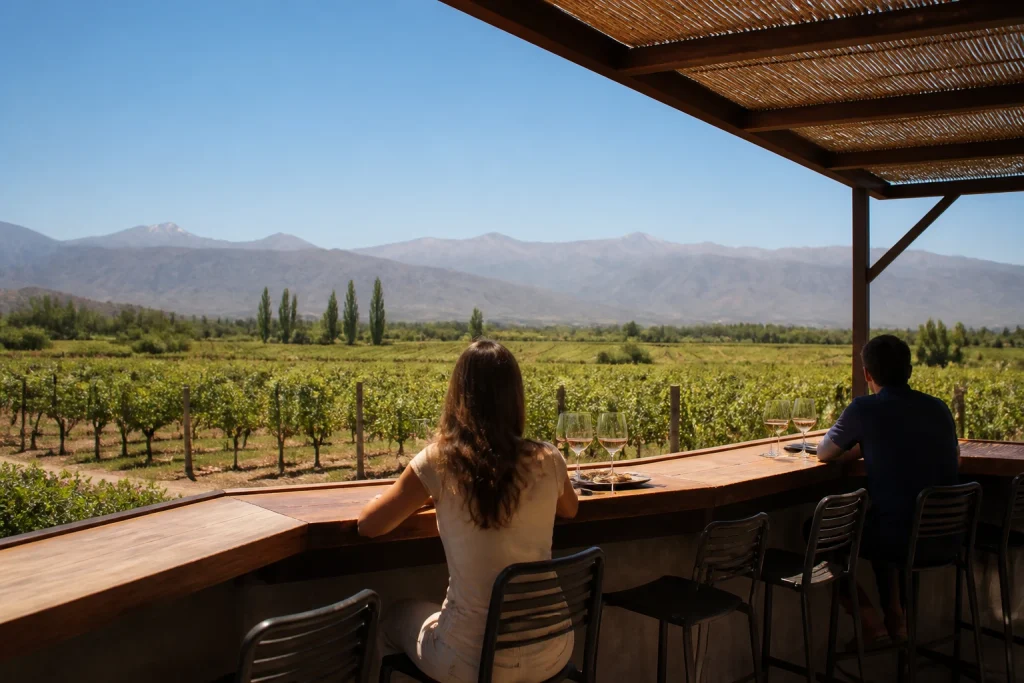
Several named venues stand out for distinct reasons, but they should not be treated as interchangeable bars. Tempus Alba offers a vineyard terrace and flexible daytime wine activities. Susana Balbo Wines emphasizes reserved food and wine experiences. Matías Riccitelli Wines combines a guided visit with tasting and a bistro, while Bodega Los Toneles offers the most convenient compromise between wine tourism and city logistics.
| Experience | Best for | Setting | Key planning point |
|---|---|---|---|
| Avenida Arístides | Flexible bar hopping | Urban Mendoza | Choose venues according to the current atmosphere and menu |
| Tempus Alba | Relaxed daytime wine tasting | Vineyard terrace in Maipú | Check current service times before visiting |
| Susana Balbo Wines | Upscale wine and food | Agrelo, Luján de Cuyo | Advance reservations are required |
| Matías Riccitelli Wines | Guided tasting with a bistro | Las Compuertas, Luján de Cuyo | Plan it as a destination outing |
| Bodega Los Toneles | Wine tourism near the city | Urban winery near downtown | Best framed as an early wine and dining stop |
| Balcarce Street peña | Regional music and food | Salta | Choose it for culture rather than bar hopping |
Tempus Alba for a vineyard terrace in Maipú
Tempus Alba is a daytime wine-bar choice about 25 kilometers from Mendoza city. Its terrace wine bar looks across the vineyard, giving visitors a stronger sense of place than an ordinary urban drinks stop. Free self-guided tours and tastings add flexibility for travelers who do not want every part of the visit organized.
The venue also lists vegetarian and gluten-free food options. Its restaurant service is characterized as a lunchtime offering from Monday through Saturday, but current hours should be checked before departure. Think of Tempus Alba as a sunny wine and lunch outing rather than a late-night bar.
This is a good fit for independent travelers who enjoy moving at their own pace. Arrange transportation before tasting, allow enough time for the return to Mendoza, and resist squeezing a second distant winery into the same period unless the logistics are already organized.
Susana Balbo Wines for a reserved food and wine experience
Susana Balbo Wines in Agrelo, Luján de Cuyo, suits travelers seeking a polished and structured outing. Available experiences include tours, tastings, blending and cooking activities. Its Osadía de Crear offering also includes four-course and six-course menus, barbecues, and picnics.
All experiences require advance reservation, so this is not the place to treat as an improvised stop on a city bar crawl. Build the day around the booking, then decide whether an additional drink in Mendoza is still appealing after returning to the city.
Choose Susana Balbo when food is nearly as important as wine and everyone in the group is comfortable committing to a set plan. The range of activities also makes it useful for companions who want more than a conventional tasting.
Matías Riccitelli Wines for a guided tasting and bistro
Matías Riccitelli Wines in Las Compuertas combines a winery visit with a bistro setting. The property stands at 1,100 meters in Luján de Cuyo, and the guided visit concludes with a tasting. It suits travelers who value a focused introduction to the wine before sitting down to eat.
This is another destination experience, not a central bar. Give it a dedicated place in the itinerary and organize the journey before drinking. Compared with Avenida Arístides, the reward is greater wine depth and a more structured meal; the limitation is less flexibility for changing venues at short notice.
Bodega Los Toneles for wine tourism close to downtown
Bodega Los Toneles is the clearest middle ground between an urban evening and a trip into the vineyard districts. This urban winery is roughly ten minutes from downtown Mendoza and offers guided tastings alongside on-site food and coffee-bar options.
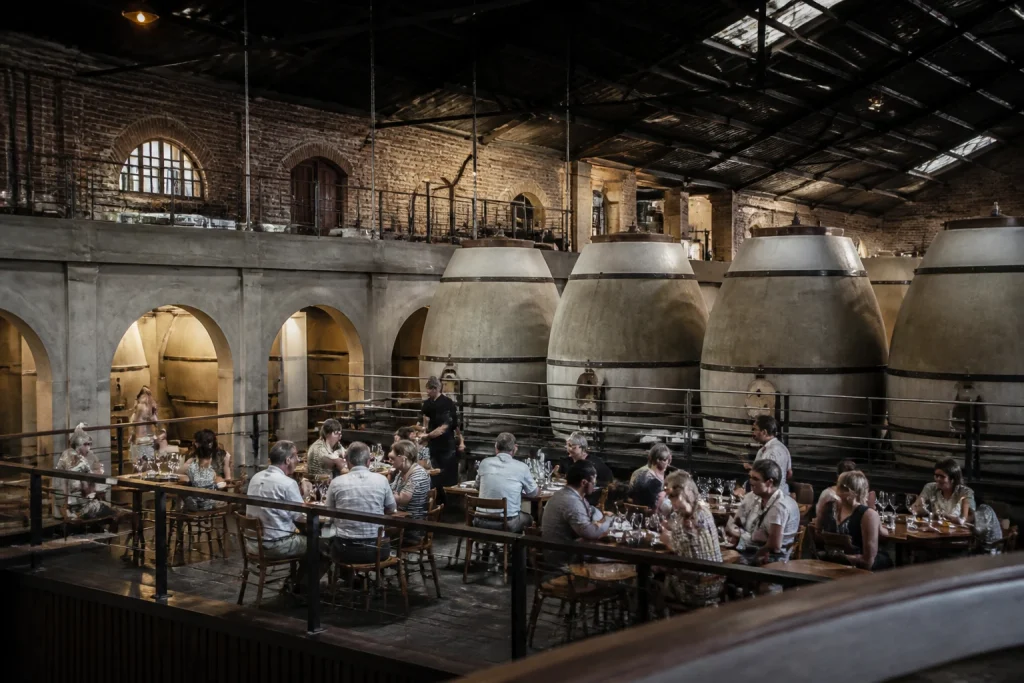
Its proximity makes it attractive when time is limited or when the group does not want a longer trip to Maipú or Luján de Cuyo. Plan it as an early wine, food, or dining stop rather than assuming it operates like a late cocktail bar. The format provides winery context while preserving more of the evening for central Mendoza.
Salta’s Balcarce Street peñas offer a cultural night out
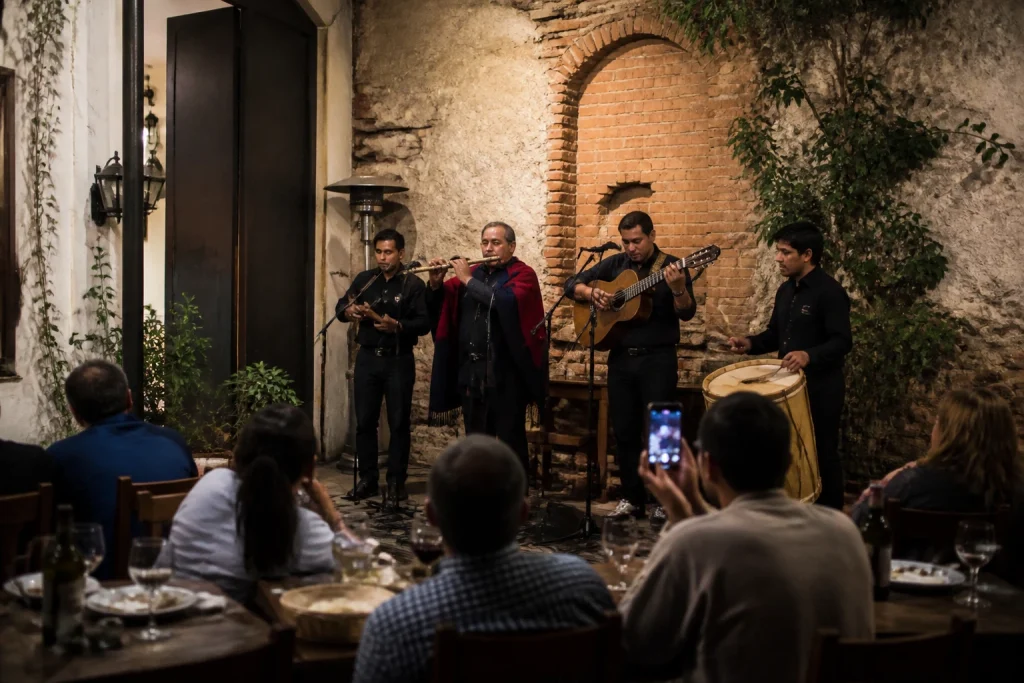
Salta changes the rhythm of an Andean evening. On Balcarce Street, the signature night-time choice is a folk peña combining regional music and food. The experience is better suited to travelers seeking local performance and a shared meal than to those hoping for a conventional sequence of bars.
The city stands at 1,187 meters and is served by Martín Miguel de Güemes International Airport. Argentina’s tourism authority recommends allowing three to six days for Salta and nearby San Lorenzo, giving visitors enough room to include a peña without reducing the city to a single night’s entertainment.
A Salta stay also fits naturally into a wider northern Andes journey. Travelers continuing to significantly higher elevations can consult the plain-English altitude acclimatisation guide before arranging the next stage. Salta itself should still be enjoyed at an unhurried pace, especially when a late musical evening follows a full day of sightseeing.
Match the venue to the evening you actually want
- Choose Avenida Arístides for a flexible, social night with several urban options.
- Choose central Mendoza when dinner, drinks, and convenient city logistics matter most.
- Choose Tempus Alba for an informal daytime tasting with a vineyard terrace.
- Choose Susana Balbo Wines for a reservation-led meal and wine experience.
- Choose Matías Riccitelli Wines for a guided winery visit followed by a tasting and bistro experience.
- Choose a Balcarce Street peña for regional music, food, and cultural atmosphere.
Bodega Los Toneles fills the gap for travelers who want winery character without spending as much of the day outside Mendoza. It can also work well for a short visit when a full wine-country itinerary would feel rushed.
Groups with mixed interests should give extra weight to format. A formal tasting rewards attention to wine, while a peña emphasizes music and shared atmosphere. An urban district gives everyone more freedom to adjust the pace, menu, and length of the night.
Build a sensible Mendoza drinks itinerary
A balanced Mendoza plan separates wine-country excursions from city nightlife. Spend one day at a reserved winery or vineyard terrace, return to the city, and keep the evening flexible. On another night, focus on Avenida Arístides or central Mendoza without adding a distant tasting appointment.
Travelers with only one full day can use Los Toneles as the convenient wine-focused option, then continue the evening downtown if energy allows. Those with more time can devote separate days to Maipú and Luján de Cuyo rather than attempting to cover several wine regions in one sweep.
If drinks are only one part of the journey, the Best Places to Visit in the Andes for First-Time Visitors guide can help balance Mendoza or Salta with other major destinations. Leave enough recovery and travel time between late evenings, winery meals, and long overland connections.
Seasonal timing can shape the experience
Autumn and spring are recommended seasons for Mendoza. Travelers visiting in August or September should also account for periods when the Zonda wind can be more intense. This does not mean plans will be disrupted, but checking local conditions before a terrace visit or road journey is sensible.
Mendoza’s principal harvest celebrations take place in February and March. Individual winery activities can follow a different calendar. Tempus Alba, for example, advertises limited-place harvest experiences between February and April that require advance booking.
In Salta, the dry season runs from June through September. A peña remains an evening activity rather than a weather-dependent outdoor excursion, but seasonal conditions still matter when it forms part of a longer itinerary around Salta and San Lorenzo.
Reservations, prices, and transport planning
Winery menus, tasting prices, opening hours, deposits, and transportation costs can change. Confirm the current details directly before traveling, especially when the venue sits outside central Mendoza. Susana Balbo requires reservations for all experiences, while Tempus Alba advises visitors to check its current hours.
Arrange the return journey before a tasting begins and do not plan to drive after drinking. For city evenings, choose accommodation and transport according to the district you expect to use. A short, simple route back at the end of the night is worth more than one additional stop.
Avoid judging value only by the number of wines poured. A guided visit, vineyard setting, meal, or live performance changes the nature of the experience. Compare what is included and decide which parts matter to your group before making a reservation.
Dietary needs and accessibility require advance planning
Tempus Alba explicitly lists vegetarian and gluten-free food choices. Broader mobility access, step-free routes, accessible toilets, hearing support, and adaptive transportation should be confirmed with each venue before booking. This is especially important at vineyard properties where terraces, production spaces, and tasting rooms can involve different parts of a site.
When traveling with dietary requirements, review the selected food experience rather than assuming that every tasting includes a suitable meal. A clear plan is particularly useful for longer reserved menus, cooking activities, and picnics.
A practical two-night plan for Mendoza
Night one: settle into the city
Begin in central Mendoza or on Avenida Arístides. Keep the first night flexible, especially after a flight or long road journey. Choose dinner and drinks according to the current atmosphere instead of committing to a complicated route across the city.
Day two: make wine the main event
Reserve Susana Balbo Wines for a structured food and wine day, choose Matías Riccitelli for a guided visit and bistro, or visit Tempus Alba for a less formal terrace experience. Los Toneles is the convenient alternative when you want to remain closer to downtown.
Night two: leave room for a change of pace
Return to the city and decide whether another drink genuinely adds to the day. A relaxed dinner can be the better ending after a substantial tasting or multi-course meal. If the winery visit was lighter, Avenida Arístides offers the flexibility to continue without committing to a fixed program.
The best choice depends on place and purpose
For accessible urban variety, begin with Avenida Arístides or central Mendoza. For wine depth and scenery, devote a separate outing to Tempus Alba, Susana Balbo Wines, or Matías Riccitelli Wines. Los Toneles works best when time is tight, while a Balcarce Street peña in Salta is the clear cultural alternative.
The main limitation is distance between categories. City bars and wine-country venues do not form one walkable circuit. Choose one principal experience for each day, organize transportation where needed, and let the Argentine Andes provide the setting rather than turning the trip into a race between glasses.
Frequently asked questions
What is the best area for bars in Mendoza?
Avenida Arístides and central Mendoza are the most practical areas for an urban night out. Both are established zones for bars and restaurants, while the surrounding winery districts are better treated as planned excursions.
Can I visit a winery without traveling far from downtown Mendoza?
Yes. Bodega Los Toneles is an urban winery roughly ten minutes from downtown Mendoza, with guided tastings plus food and coffee-bar options.
Do Mendoza winery experiences require reservations?
Reservations depend on the venue, but advance planning is wise. Susana Balbo Wines requires reservations for all experiences, and limited seasonal activities at Tempus Alba also require advance booking.
Is Mendoza or Salta better for nightlife?
Mendoza is better for urban bars and wine-led experiences, while Salta is the stronger choice for a cultural night built around regional music and food. Balcarce Street is known for its folk peñas.
When is the best time to visit Mendoza for wine experiences?
Autumn and spring are recommended for visiting Mendoza. The main harvest celebrations occur in February and March, although individual winery harvest activities can continue on their own schedules.
Can wineries and Mendoza city bars be combined in one crawl?
They are better planned as separate experiences. Central Mendoza supports flexible bar hopping, while Maipú and Luján de Cuyo venues require transportation and often involve structured tastings, meals, or reservations.
Are dietary and mobility accommodations available?
Tempus Alba lists vegetarian and gluten-free food options. Confirm mobility access and other disability-related arrangements directly with each venue before booking because facilities and transportation needs differ.
More bookable experiences
Three tours to compare
Review current provider details before booking. Discover Andes may earn a commission at no extra cost to you.
Continue exploring
More practical guides selected from the Discover Andes library.
The Andes New Year’s Eve Guide
Plan New Year's Eve in the Argentine Andes with practical advice on Mendoza, the Uco Valley, Bariloche, summer…
The Andes by Night Guide
Plan an evening or overnight journey into Argentina’s high Andes, with practical guidance on Salta and Jujuy gateways,…

The Andes First Night Guide
Use Mendoza as a practical first-night base for Argentina’s central Andes, then prepare for Aconcagua, Horcones, Puente del…
Best Museums in The Andes
Explore three rewarding museums and interpretation spaces in Argentina’s northern Andes, with practical guidance for choosing between Jujuy…