
5 Days in The Andes Itinerary
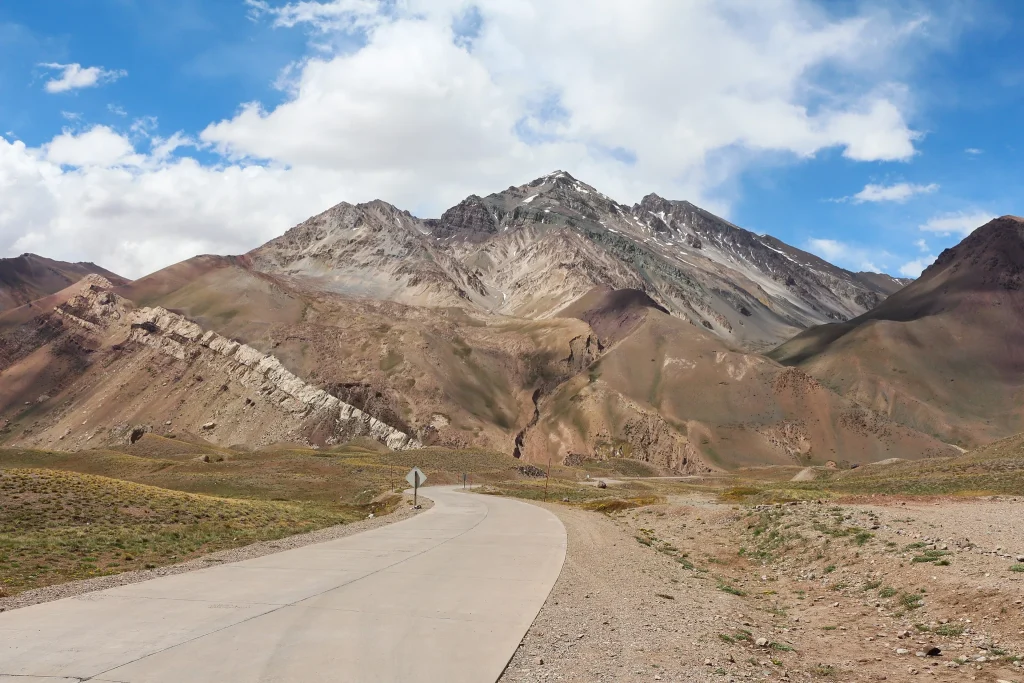
Five days is enough for a focused introduction to the Argentine Andes, provided you resist trying to cover the entire mountain chain. This itinerary uses Mendoza as its gateway, adds one day in nearby wine country, and follows Ruta Nacional 7 toward Uspallata, Puente del Inca, Horcones, and Aconcagua Provincial Park. The result balances high-mountain scenery with manageable pacing and a valuable weather buffer.
- Base the trip around Mendoza and the RN 7 corridor rather than trying to represent all of the Argentine Andes.
- Allow one full day for either Luján de Cuyo or the Uco Valley before heading into the mountains.
- Use Days 3 and 4 for Uspallata, Puente del Inca, Horcones, and an activity suited to the season.
- Treat August as a winter scenery trip, not a guaranteed Aconcagua trekking program.
- Keep Day 5 flexible in case snow, road conditions, or park access changes the mountain schedule.
This route shows one compelling corner of a vast range rather than claiming to cover the Andes as a whole. Travelers still deciding which country or region suits them can compare the best places to visit in the Andes for first-time visitors before committing to Mendoza. For a five-day Argentina trip, however, this compact route avoids losing too much time to long transfers.
Your five-day Mendoza and Aconcagua route at a glance
The sequence begins gently in Mendoza, places the wine day before the highest elevations, and groups the RN 7 sights together. You can sleep in Mendoza throughout or spend one night closer to the mountain corridor. The latter can reduce repeated driving, but it also requires more packing and accommodation coordination.
| Day | Main plan | Planning priority |
|---|---|---|
| 1 | Arrive in Mendoza and take a low-key city orientation | Rest, organize transport, and avoid an overfilled arrival day |
| 2 | Visit wineries in Luján de Cuyo or the Uco Valley | Choose one wine area and reserve the day in advance |
| 3 | Follow RN 7 through Uspallata to Puente del Inca | Check winter road conditions before departure |
| 4 | Visit Horcones and the Aconcagua area or take a guided mountain activity | Match the plan to park access, weather, and altitude tolerance |
| 5 | Use a weather buffer, visit Cacheuta, return to Mendoza, or depart | Protect this day from rigid bookings when possible |
Match the route to the season
August falls in the Argentine winter. Mendoza tourism identifies June through August as the main period for seeing snow and July through August as a season associated with skiing. Aconcagua Provincial Park presents a different planning constraint: its published season runs from November through March. An August visitor should therefore prioritize winter landscapes and confirm park access before building a day around Horcones or hiking.
During the warmer park season, the same structure works with more emphasis on a park visit or guided mountain activity. Even then, conditions at elevation can differ sharply from Mendoza. The Aconcagua area has a dry, cold climate and large temperature swings, so a warm city forecast should never be treated as a mountain forecast.
For an August trip, plan for mountain scenery first and hiking second.
Take altitude seriously without turning the trip into an expedition
Horcones stands at about 2,800 meters, while Aconcagua reaches 6,962 meters. You do not need to climb the mountain to experience the scale of the landscape, but the elevation change from Mendoza still matters. A relaxed first day, steady pacing, and a scenery-led plan make more sense than scheduling strenuous activity immediately after arrival.
Read the plain-English Andes acclimatisation guide before choosing a mountain activity, especially if you have little experience above 2,500 meters. Travelers seeking lower physical demand can concentrate on roadside viewpoints and a short park visit instead of a demanding trek. Personal health considerations should shape the final choice.
Day 1: Arrive in Mendoza and keep the pace gentle
Fly into Francisco Gabrielli International Airport, also known as El Plumerillo, and use the remainder of the day for an easy introduction to Mendoza. The goal is not to race through a checklist. Settle into your accommodation, walk through the central area if time and energy allow, and enjoy an unhurried meal before the busier days begin.
Use the afternoon to confirm the practical details for the next four days. Check the departure time for the wine excursion, review the latest RN 7 conditions, and make sure your mountain transport can adapt if weather changes. If you are arriving in winter, keep essential layers with you rather than burying them at the bottom of checked luggage.
A useful first-evening checklist
- Confirm the next morning's pickup point or driving plan.
- Check current road and park information for Days 3 and 4.
- Keep the evening flexible if your flight arrives late.
- Prepare warm layers, water, and identification for the mountain days.
Day 2: Spend a full day in Mendoza wine country
Choose either Luján de Cuyo or the Uco Valley for the second day. Both fit the Mendoza wine-country theme, but combining them in a single rushed itinerary is unnecessary. A full day in one area leaves room for vineyard scenery, planned winery visits, and lunch without making the schedule feel like a race between reservations.
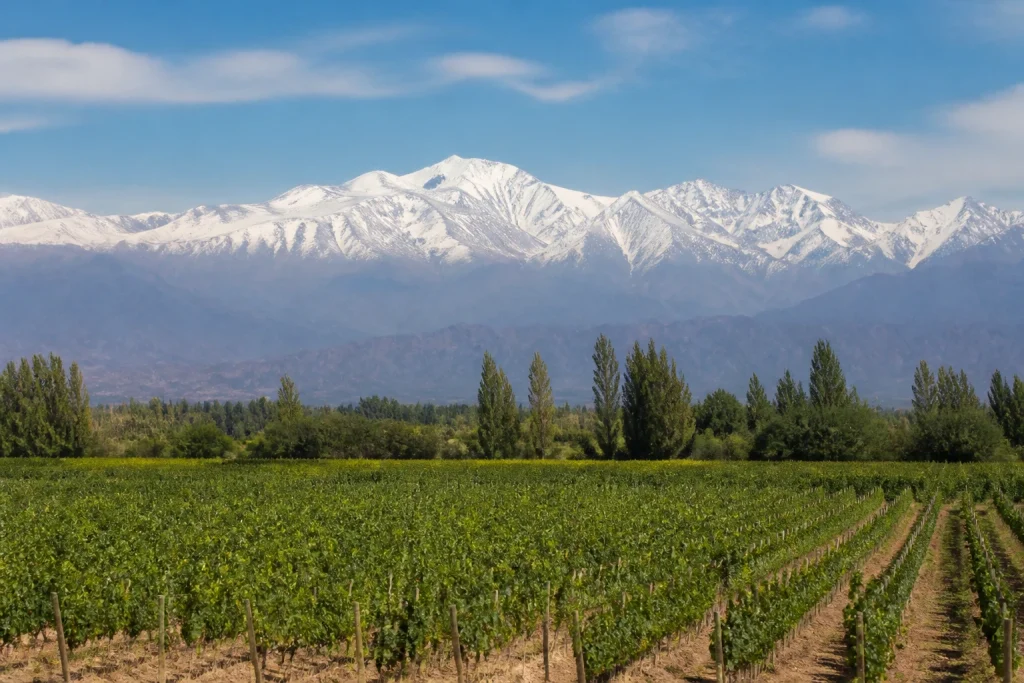
Reserve winery visits and transportation before the trip. Exact formats, inclusions, and costs depend on the venue and booking selected. If you intend to taste wine, arrange a driver, transfer, or organized excursion rather than building the day around self-driving. Review your confirmation for pickup details and the sequence of visits.
This is also the last low-elevation day before the route climbs toward Horcones. Keep the evening simple, organize cold-weather clothing, and avoid adding a late transfer. The next morning is better used on RN 7 than spent checking out of a needlessly distant hotel or recovering from an overloaded wine schedule.
- Select one wine region rather than dividing the day between two.
- Book tastings and lunch together when possible to simplify timing.
- Confirm who is providing transportation before paying.
- Leave the evening open for mountain-day preparation.
Day 3: Follow RN 7 to Uspallata and Puente del Inca
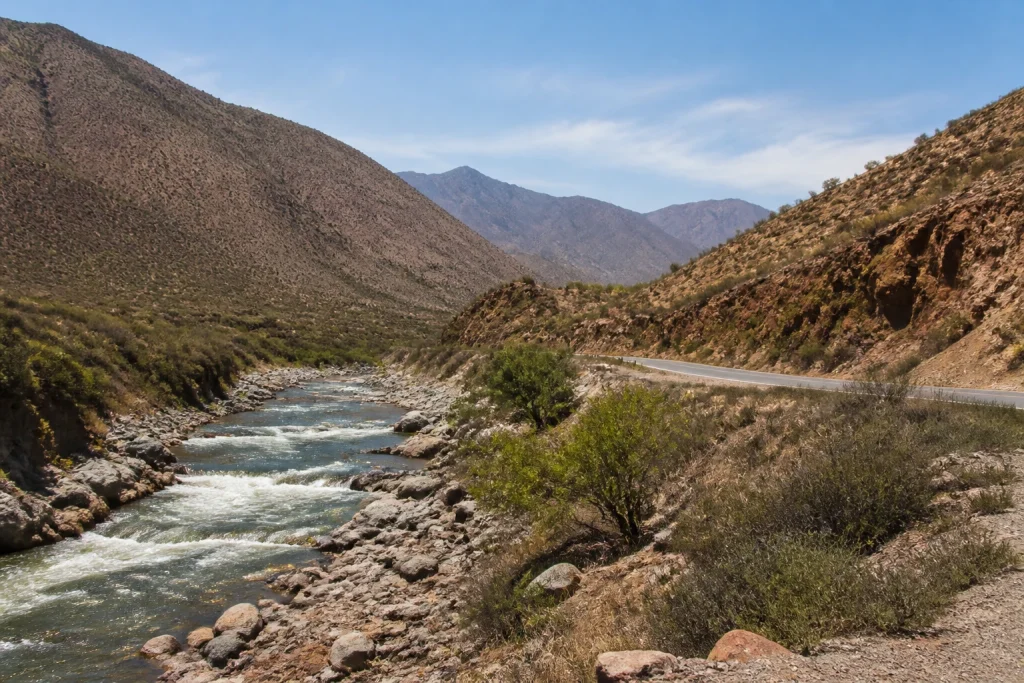
Ruta Nacional 7 is the principal westbound corridor connecting Mendoza with Uspallata, Puente del Inca, Aconcagua, and the Chilean border. Treat the road itself as part of the day. The surroundings become increasingly mountainous as the route approaches the high Andes, while winter snow can turn a straightforward sightseeing plan into a weather-dependent journey.
- Travel west from Mendoza toward Uspallata, using the town as the main intermediate stop on the mountain corridor.
- Continue toward Puente del Inca for the itinerary's principal roadside landmark stop.
- End the day's sightseeing with enough flexibility to return safely or continue to prearranged accommodation without racing winter conditions.
Do not bolt a Chilean border crossing onto this day merely because RN 7 continues west. The Cristo Redentor complex sits above 3,000 meters, and normal operations can be superseded by winter weather or changing road conditions. Border formalities also introduce an unpredictable time commitment that works against a compact five-day itinerary.
Check the pass and RN 7 status immediately before leaving Mendoza, even if you are not crossing into Chile. If conditions look unstable, use Day 3 for a lower-elevation alternative and preserve the mountain corridor for the flexible fifth day. This is the main reason the itinerary avoids placing a nonrefundable departure immediately after the first mountain attempt.
Day 4: Focus on Horcones and the Aconcagua landscape
Aconcagua Provincial Park lies about 185 kilometers from Mendoza city along RN 7. Horcones, at roughly 2,800 meters, provides the practical focus for a short visit. The objective is to experience the high-Andes setting at a sensible pace, not to approach a summit itinerary designed for experienced expedition teams.
Choose between a short park-oriented visit and a guided mountain activity suited to current conditions. In August, access and hiking plans must remain conditional because the park publishes November through March as its season. Check park status and the operator's plan shortly before departure rather than assuming summer routes are available in winter.
Build the day around your physical comfort
- Choose roadside scenery and a brief Horcones visit for the lowest-demand version of the day.
- Use a qualified guide for any more involved mountain activity.
- Allow time to adjust after arriving at elevation instead of beginning at maximum effort.
- Turn back or shorten the plan if the altitude or weather makes the day uncomfortable.
The multi-day Andean Crossing is not a substitute for this outing. That journey reaches about 4,500 meters, requires significant physical effort, and is recommended as a seven-to-ten-day experience. Trying to compress it into this itinerary would remove the acclimatisation time and flexibility that make a short Mendoza trip workable.
Day 5: Protect a buffer for weather, Cacheuta, or departure
Keep the fifth day intentionally flexible. If Days 3 and 4 ran as planned, use it for Cacheuta, another relaxed period in Mendoza, or your departure. If winter conditions delayed the high-mountain route, this becomes the backup day for the RN 7 excursion, provided the road and park situation has improved.
- Cacheuta or a lower-demand outing if the mountain days were completed.
- A second attempt at the RN 7 corridor if earlier conditions caused disruption.
- A relaxed return to Mendoza before an evening departure.
- An extra city night if transport changes make same-day travel impractical.
A buffer can feel unambitious when planning from home, but it becomes valuable once winter conditions enter the picture. Avoid filling this day with multiple fixed reservations. One flexible booking is easier to rearrange than a chain of activities tied to exact arrival times.
Transportation and lodging choices that keep the route efficient
Getting to Mendoza and the high Andes
Francisco Gabrielli International Airport is the itinerary's air gateway. Once in Mendoza, RN 7 carries the route west toward the mountain stops. The Aconcagua park area is 185 kilometers from the city, so this should be treated as a substantial excursion rather than a short detour between urban activities.
An organized excursion or private driver reduces the burden of monitoring the route while driving, while a rental car offers more control over stops and departure times. In winter, that freedom comes with responsibility for current road restrictions and changing conditions. Select the option that fits your mountain-driving experience rather than choosing on price alone.
Choosing one base or adding a mountain night
Staying in Mendoza for all five days simplifies luggage, airport access, and the wine excursion. Adding a night around Uspallata can reduce repeated travel on the mountain corridor, but it introduces another check-in and makes weather-driven changes more complicated. The Andes where-to-stay guide can help you compare these two styles before reserving accommodation.
| Base strategy | Best feature | Main tradeoff |
|---|---|---|
| Mendoza throughout | Simple logistics and easy access to the wine day | Repeated travel on mountain days |
| Mendoza plus a prearranged Uspallata-area night | Less repetition along the RN 7 corridor | Extra packing and more exposure to itinerary changes |
| Mendoza with a guided mountain excursion | No need to manage the high-Andes drive personally | Departure times and stops follow the booked program |
Costs, packing, reservations, and accessibility
Build the budget with current quotes
Trip costs vary by travel date, transport format, hotel, winery program, and mountain activity, so a fixed numeric budget would become misleading quickly. Price the itinerary using dated quotes close to departure. Keep a contingency for private transport, rebooking, or an additional night if winter conditions alter the route.
- Accommodation in Mendoza and any optional mountain-area night
- Airport and winery transportation
- Guided RN 7 or Aconcagua-area excursions
- Park entry and activity permits where applicable
- Winery visits, meals, and flexible booking charges
- A winter disruption contingency
Pack for a large change in conditions
Pack around the cold, dry high-mountain environment rather than Mendoza alone. Conditions can change substantially with elevation, and the Aconcagua area experiences large temperature swings. Several adjustable layers are more useful than one outfit designed for a single forecast.
- Warm base and insulating layers suitable for the season
- A weather-resistant outer layer
- Comfortable footwear appropriate to the booked activity
- Water and simple snacks for long transport days
- Sun protection for exposed mountain stops
- Identification and the confirmations needed for each reservation
Confirm accessibility before committing to the mountain days
Travelers with mobility, cardiopulmonary, or altitude-related needs should confirm arrangements directly with their hotel, transport provider, tour operator, and the park authority before booking. Ask specifically about step-free access, adapted restrooms, vehicle boarding, walking surfaces, and how the program can be shortened. Do not assume that a roadside itinerary is automatically accessible.
Make the five days work by keeping the focus narrow
This itinerary suits travelers who want dramatic Andean scenery without committing to a long expedition. Mendoza supplies the practical gateway and wine-country contrast, while RN 7 leads into the high mountains around Uspallata, Puente del Inca, and Aconcagua. Its main limitation is weather sensitivity, especially in winter. Reserve the essential transport and winery day, leave Day 5 flexible, and let current mountain conditions determine how ambitious Days 3 and 4 should be.
Frequently asked questions
Is five days enough for the Argentine Andes?
Yes, five days is enough for a focused Mendoza and Aconcagua corridor itinerary. It is not enough to cover the full Argentine Andes, so concentrate on Mendoza, one wine region, Uspallata, Puente del Inca, and the Horcones area.
Can I visit Aconcagua Provincial Park in August?
Treat an August park visit as conditional. August is winter, while the park publishes November through March as its season, so confirm current access and permitted activities shortly before traveling.
How high is Horcones?
Horcones is about 2,800 meters above sea level. That is far below Aconcagua's 6,962-meter summit, but the elevation change from Mendoza can still affect how comfortable and active you feel.
Do I need to rent a car for this itinerary?
No. You can use organized excursions or private transfers for the wine and mountain days. A rental car provides flexibility, but winter drivers must monitor RN 7 conditions and restrictions closely.
Should I add a same-day trip into Chile?
No, a Chile crossing is best left out of this five-day plan. The Cristo Redentor border route is above 3,000 meters, and winter weather, traffic controls, and border procedures can disrupt the schedule.
Where should I stay during the five days?
Mendoza is the simplest base for the full itinerary. An optional night around Uspallata can reduce repeated mountain travel, but it adds another check-in and makes weather-related changes more complicated.
How much does this five-day Andes itinerary cost?
Costs depend on the travel date, accommodation, winery program, transport, and mountain activity. Compare current dated quotes and include a contingency for winter rebooking, private transport, or an additional night.
The high-Andes landscape around Horcones and Aconcagua is the centerpiece of this five-day route by Bernard Gagnon, CC BY-SA 4.0.

More bookable experiences
Three tours to compare
Review current provider details before booking. Discover Andes may earn a commission at no extra cost to you.
Continue exploring
More practical guides selected from the Discover Andes library.
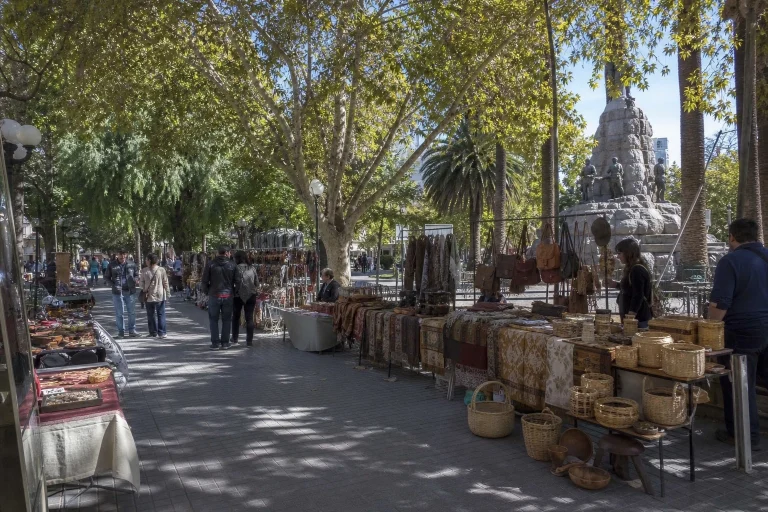
The Andes Shopping Guide
Plan a Mendoza-led shopping trip through the Argentine Andes, with practical advice on artisan markets, regional crafts, wine…
The Andes Markets Guide
Plan a market-focused trip through Salta and San Salvador de Jujuy, with practical guidance on regional food, artisan…
The Andes on a Budget Travel Guide
Plan an affordable trip through Argentina’s Andes with practical advice on choosing a region, comparing transport, handling altitude,…
The Andes Spa and Wellness Guide
Plan an Andean wellness trip through Argentina’s mountain hot springs, thermal pools, spa facilities, and volcanic landscapes, with…