
The Andes Street Food and Casual Eats Guide
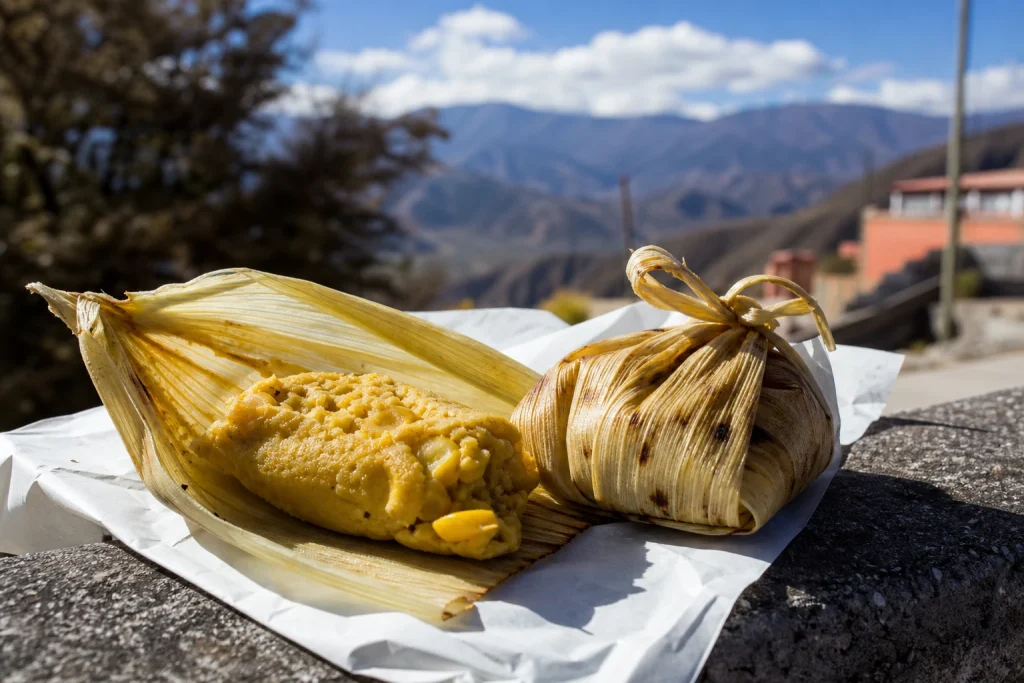
The best way to approach Andes street food in Argentina is through the country’s north, especially Jujuy and Salta. Here, corn, Andean potatoes, squash, quinoa, and regional meats shape a casual food culture found in markets, fairs, peñas, and regional-food houses. This guide focuses on the dishes worth recognizing, the settings that suit different travel styles, and the practical habits that make eating well on the road easier.
- Focus your food plans on northern Argentina, particularly Jujuy and Salta.
- Start with humitas, tamales, empanadas, locro, and the region’s corn, potato, squash, and quinoa dishes.
- Look beyond curbside snacks: markets, fairs, peñas, and regional-food houses are all part of casual eating.
- Choose thoroughly cooked food and vendors with potable water, especially when buying informally.
- Check market days, opening times, prices, and accessibility locally because they vary by place.
Think northern Argentina, not every Argentine Andean region
Argentina’s Andes stretch across very different landscapes, but the strongest casual-food traditions in this guide belong to the north. Jujuy alone brings together the Puna, the Quebrada de Humahuaca, valleys, and Yungas, each with its own food identity. Salta is a natural companion stop, particularly for travelers looking for humita in peñas and regional-food venues.
The northern dishes to recognize first
A good northern Argentine food crawl begins with the regional pantry. Corn is central, joined by Andean potatoes, squash, quinoa, beef, pork, and llama. Rather than chasing a long list of restaurant names, learn a handful of dish names and use them as your compass when you reach a market counter, a fair, or a regional menu.
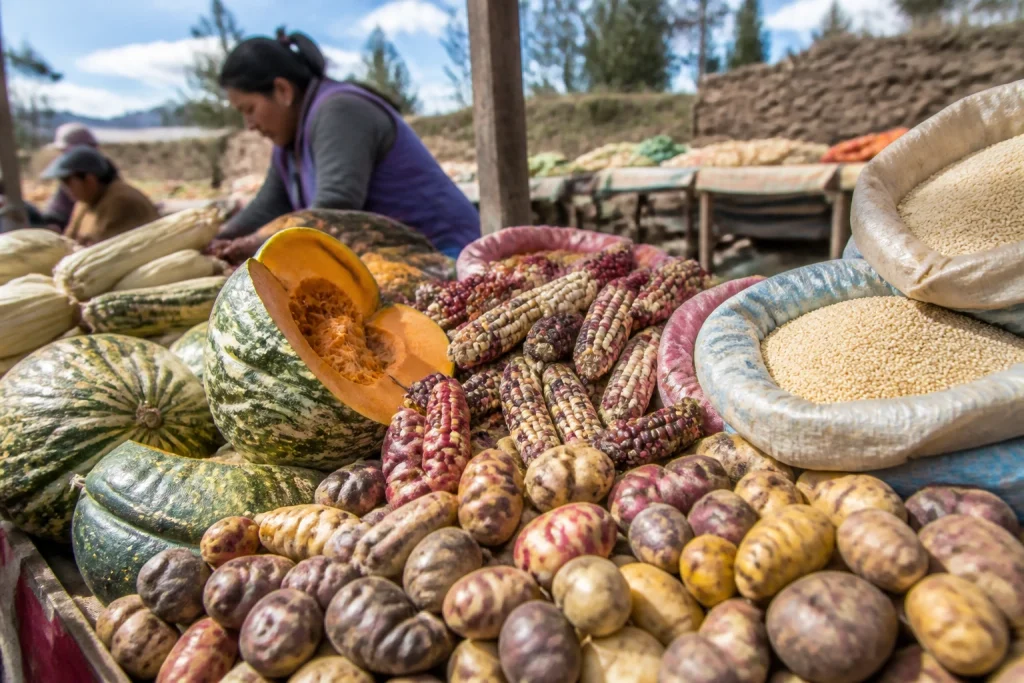
Humitas, tamales, and empanadas
Humitas, tamales, and empanadas are essential orders in the north. In Jujuy’s Quebrada, all three are among the area’s defining dishes, while humita is also widely available in Salta’s peñas and regional-food venues. Ordering one of each over several stops is a practical way to see how the same northern ingredients take different forms across a trip.
Locro, cazuelas, and hearty regional cooking
Locro belongs on the northern Argentina checklist, alongside cazuelas in the Quebrada. These are useful choices when you want a more substantial meal than a snack. Menus and recipes vary between kitchens, so ask what is in the day’s preparation if you have dietary needs or simply want to know which regional ingredients are featured.
Puna and valley specialties
Jujuy’s Puna adds calapurca, tijtincha, and huaschalocro to the regional vocabulary. In the valleys, look for buñuelos and quesillo with cayote. These names are especially helpful when a menu moves beyond the better-known tamale and empanada, turning a casual meal into a closer look at Jujuy’s varied food regions.
Where casual eating happens: markets, fairs, peñas, and regional-food houses
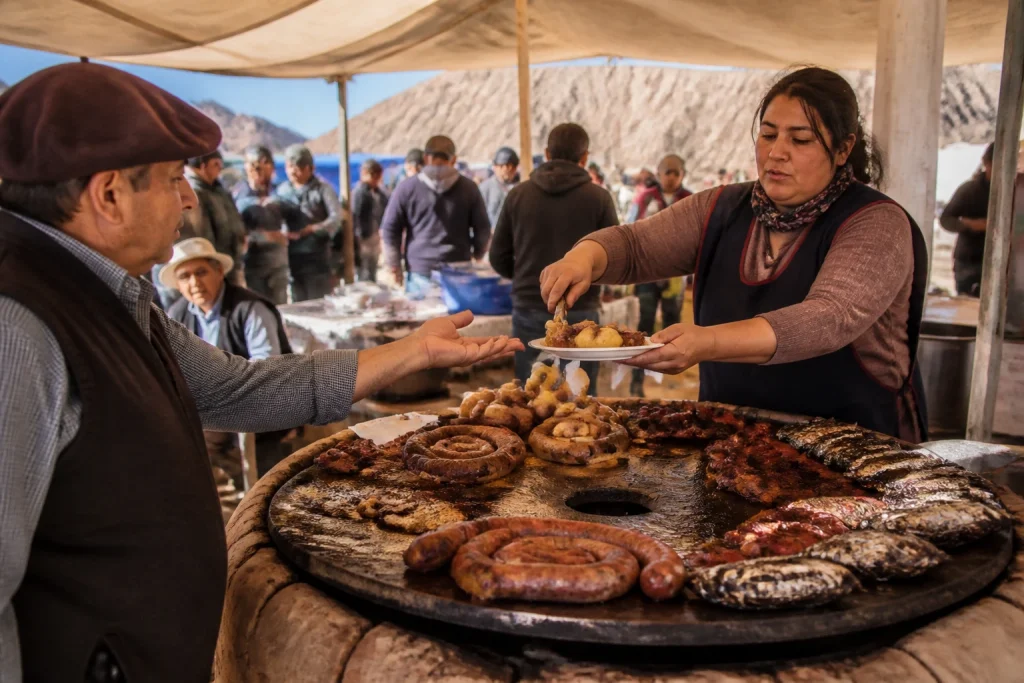
“Street food” is only part of the picture in northern Argentina. Markets and fairs can put regional dishes close at hand, while peñas and regional-food houses offer another route into local cooking. For travelers who prefer a more predictable seating and service setting, these established venues can be a better fit than an unstructured curbside stop.
- Markets: useful for seeing several regional dishes and ingredients in one stop.
- Fairs: a good place to look for casual local snacks when one is operating.
- Peñas: a Salta favorite for finding humita alongside regional food.
- Regional-food houses: a practical choice when you want a sit-down setting without shifting into formal dining.
- Informal stalls: a direct snack option when the vendor has potable water and food is being handled safely.
Keep ordering simple. Use the dish name, ask what is available that day, and choose a small number of regional specialties rather than trying to force a full meal at every stop. If a dish’s ingredients matter to you, ask before ordering. That is particularly useful with stews, fillings, and corn-based preparations, whose recipes can differ from one kitchen to another.
Eat by landscape in Jujuy
Jujuy rewards travelers who connect food stops to the landscape around them. The province’s Puna, Quebrada, valleys, and Yungas are distinct regions, and its food changes with them. Think of the province as a series of local pantries rather than one fixed menu: Puna specialties in the high country, tamales and humitas in the Quebrada, then sweeter valley orders such as buñuelos and quesillo with cayote.
| Jujuy area | Food names to look for |
|---|---|
| Puna | Calapurca, tijtincha, huaschalocro |
| Quebrada de Humahuaca | Humitas, tamales, empanadas, cazuelas |
| Valleys | Buñuelos, quesillo with cayote |
For arrival planning, Jujuy is reached by air through Gobernador Horacio Guzmán International Airport, or overland by bus or car via National Route 34. The province’s elevation can exceed 4,000 metres above sea level, so leave room in your schedule for highland travel rather than treating food stops as a race between viewpoints.
Make Salta a humita stop
In Salta, humita is a particularly useful dish to seek out because it is widely available in peñas and regional-food venues. That makes the city and province a good place to include a casual meal in the middle of sightseeing, without relying only on a single street-vendor encounter. Pair it with tamales, empanadas, or another regional dish when the menu offers them.
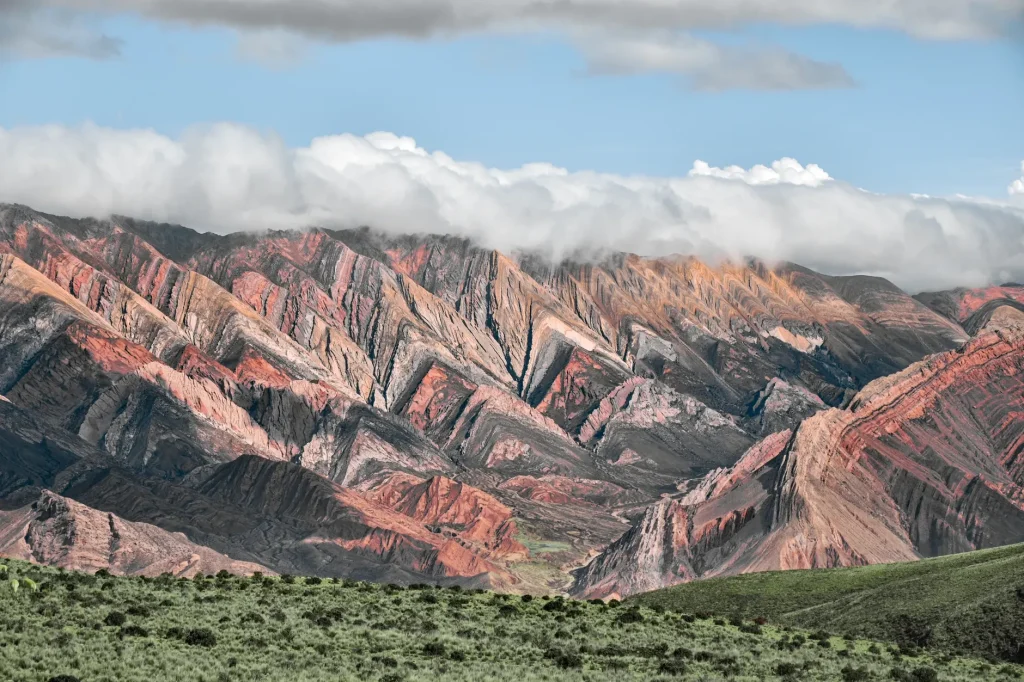
A good food day in Salta or Jujuy has some flexibility built in. Market days and food-service hours are local details, not province-wide rules, and seasonal schedules can shift. Ask locally about the next opening or fair rather than organizing a day around assumed hours. A little adaptability tends to produce better meals and fewer closed-door detours.
Build a food route around travel, not a rigid dining schedule
- Choose one easy first meal after arrival, such as a humita, tamale, or empanada.
- Use markets and fairs to compare regional ingredients and dish names before committing to a larger meal.
- Plan a peña or regional-food house when you want a seated, more structured meal stop.
- In Jujuy’s high country, keep your pace relaxed and leave time to acclimatize.
- Confirm the next market, fair, or venue’s hours locally before making a special trip.
Altitude deserves a place in every northern Argentina food plan. Salta and Jujuy include high terrain, and Jujuy can rise above 4,000 metres. Pay attention to how you feel before pushing farther into the high Andes, stay hydrated with safe water, and give your body time to adjust. For deeper planning, the site’s plain-English Andes altitude acclimatisation guide is a useful companion.
What to expect on prices and payment
Use posted prices or ask before ordering, as costs change and differ by setting. For historical context only, a January 2026 tourism-board price snapshot cited a humita en chala at about ARS 3,800 and a tamale at about ARS 2,500. Those figures are not current price guidance, but they show why a quick check at the point of purchase is more useful than relying on an old travel budget.
Skip exchange-rate conversions and blanket price promises when planning this part of a trip. Instead, treat casual eating as flexible: select the dishes that look good, confirm the cost before you order, and keep your itinerary open enough to choose a market, fair, peña, or regional-food house that is actually serving when you arrive.
Choose street food with sensible safety habits
The most useful rule is straightforward: choose vendors with potable water and food that is thoroughly cooked. Informal snacks can be a rewarding part of the trip, but food safety depends on water, hygiene, ingredient handling, cold storage, and protection from dust and other environmental contamination. If those basics are not clear, move on to another option.
- Choose food that is thoroughly cooked.
- Avoid stalls that do not have potable water.
- Skip juices, drinks, and ice cream of unknown origin.
- In hot weather, avoid ready-to-eat food that has sat unrefrigerated for more than an hour.
- Use potable water for drinking, ice, tooth-brushing, cooking, and washing produce.
Urban tap water in Argentina is generally safe, while rural water supplies may not be. That distinction matters on an Andes itinerary that moves between cities and remote highland areas. Sealed major-brand bottled drinks are generally safe, and safe hydration becomes more important when heading to higher elevations in Salta and Jujuy.
Plan ahead for accessibility and comfort
Accessibility details are highly specific to each market, peña, and food venue. Before making a particular stop central to your day, check directly about step-free access, toilets, seating, menu formats, and any transport needs that matter to you. This is especially worthwhile when combining a meal stop with travel through Jujuy’s higher and more remote areas.
The best approach: eat regionally and stay flexible
Northern Argentina’s Andes are ideal for travelers who like food with a strong sense of place and a low-key, curiosity-led rhythm. Start with humitas, tamales, empanadas, and locro; use Jujuy’s regional dishes to guide you farther; and make room for Salta’s peñas and regional-food venues. The main limitation is local variability in schedules, prices, and setup, so check nearby options as you go and choose food prepared with care.
Frequently asked questions
Which part of Argentina does this Andes street food guide cover?
This guide focuses on northern Argentina, especially Jujuy and Salta. These areas have distinct food traditions tied to Jujuy’s Puna, Quebrada de Humahuaca, valleys, and Yungas, as well as Salta’s peñas and regional-food venues.
What foods should I try in northern Argentina’s Andes?
Start with humitas, tamales, empanadas, and locro, then look for regional ingredients such as corn, Andean potatoes, squash, quinoa, beef, pork, and llama. In Jujuy, also watch for calapurca, tijtincha, huaschalocro, buñuelos, and quesillo with cayote.
Where can I find casual regional food in Jujuy and Salta?
Markets, fairs, peñas, and regional-food houses are the main casual settings to look for. Humita is widely available in Salta’s peñas and regional-food venues, while informal stalls can work well when they have potable water and safe food handling.
Is it safe to eat from street stalls in northern Argentina?
It can be a good option when the vendor has potable water and the food is thoroughly cooked. Avoid unknown-origin juices, drinks, and ice cream, and skip ready-to-eat food that has been unrefrigerated for more than an hour in hot weather.
Can I drink tap water in Salta and Jujuy?
Tap water is generally safe in urban areas, but rural supplies may not be safe. Use potable water for drinking, ice, tooth-brushing, cooking, and washing produce, especially when traveling into more remote Andean areas.
How should I plan food stops at higher elevations?
Keep the pace relaxed and allow time to acclimatize before pressing farther into high terrain. Jujuy’s elevation can exceed 4,000 metres above sea level, and altitude awareness is important throughout the higher areas of Salta and Jujuy.
More bookable experiences
Three tours to compare
Review current provider details before booking. Discover Andes may earn a commission at no extra cost to you.
Continue exploring
More practical guides selected from the Discover Andes library.
Arequipa Travel Guide
Plan a thoughtful visit to Arequipa, Peru, with a focus on its UNESCO-listed historic centre, practical road-trip checks,…
The Andes Foodie Weekend Itinerary
A focused two-night food itinerary for Mendoza, Argentina, pairing city meals with one vineyard lunch in Maipú or…
The Andes Sunset Spots Guide
Plan an Andes sunset outing in Argentina with realistic timing, high-altitude preparation, and the right choice between Aconcagua,…
The Andes Itinerary Without a Car
Plan a practical car-free Andes escape from Mendoza, using a guided Alta Montaña day trip, a flexible third…