
The Andes Sunset Spots Guide
How to plan an Andes sunset outing in Argentina
Argentina’s Andes reward an afternoon planned around permission, elevation, weather, and the return journey, rather than a last-minute chase of orange light. This guide focuses on four strong settings: Laguna de Horcones in Parque Provincial Aconcagua, Potrerillos near Mendoza, Serranía del Hornocal near Humahuaca, and the broader Quebrada de Humahuaca in Jujuy. Each offers a different balance of mountain scale, flexibility, and logistics.
- Choose Laguna de Horcones for a formal, regulated Aconcagua view, and reserve in advance.
- Treat Serranía del Hornocal as a high-altitude daylight viewpoint with excellent late-afternoon potential, not a guaranteed after-dark stop.
- Choose Potrerillos for a broad reservoir-and-mountain scene and a lower-commitment Mendoza outing.
- Use the Quebrada de Humahuaca as a flexible landscape itinerary rather than searching for one single sunset overlook.
- Check access status and conditions on the day, then give yourself a conservative margin for the return journey.
Pick the sunset setting that fits your trip
The best choice depends less on a single perfect photograph than on how you want to spend the afternoon. Aconcagua delivers the most structured mountain experience. Potrerillos is better for a relaxed scenic-drive or activity-led plan. Hornocal provides a dramatic northern highlands setting, while the Quebrada offers a wider route of mountain landscapes and outdoor activities.
| Setting | Best for | The practical tradeoff |
|---|---|---|
| Laguna de Horcones, Aconcagua | A formal high-Andes visit with a mountain-view setting | Advance reservation and a paid ticket are required; sunset access must be confirmed for the day. |
| Potrerillos, Mendoza | Reservoir, river, and mountain scenery on a lower-commitment outing | It is best for the broad Cordón del Plata landscape, not a close Aconcagua view. |
| Serranía del Hornocal, Jujuy | A striking high-altitude late-afternoon viewpoint near Humahuaca | Plan around the recommended daylight window and leave enough time for the return. |
| Quebrada de Humahuaca, Jujuy | A flexible route with mountain landscapes, hiking, riding, and 4×4 options | Road conditions, daylight, and the day’s activity plan shape the best stopping point. |
Laguna de Horcones: the formal Aconcagua mountain-view option
For the classic high-Andes setting near Argentina’s highest peak, use Laguna de Horcones in Parque Provincial Aconcagua. The park lies on National Route 7, about 185 kilometres from Mendoza city, and Horcones sits at roughly 2,800 metres above sea level. This is the right choice for travelers who want a managed mountain visit rather than assuming they can freely stop anywhere around Aconcagua.
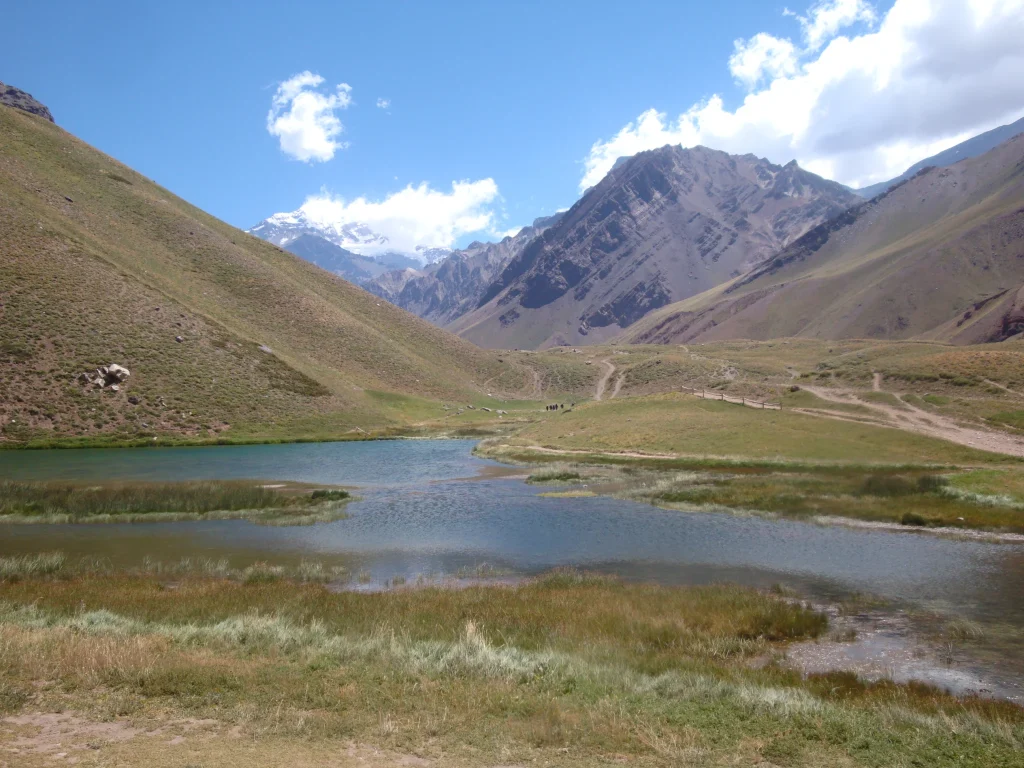

Aconcagua requires advance reservation and a paid entry ticket. Tickets are not sold at the park entrance, so settle the booking before committing to the drive. That structure makes the park a strong choice for travelers who value a defined route and regulated access, but it also makes it less spontaneous than a reservoir or a roadside landscape stop.
Do not treat Aconcagua as a guaranteed after-dark sunset stop
Laguna de Horcones is an excellent late-afternoon mountain destination, but do not plan on staying through the actual sunset unless current park rules allow it. Timed entry, trail status, operating hours, and exit procedures determine how late visitors can remain. Check the day’s official conditions before departure, especially when your whole plan depends on low-angle evening light.
Budget from the live official reservation flow rather than relying on an old Aconcagua price. Fees vary by activity and visitor category. Some past tariffs have been set in US dollars and converted into Argentine pesos using the Banco Nación buyer rate, so the final cost can also move with the exchange conversion.
The payoff is a purposeful mountain outing with a clearly defined destination. Build in time to arrive, orient yourself, enjoy the Laguna de Horcones setting, and leave according to the rules in force that day. That approach protects the experience from the one thing a big mountain view should never require: a rushed exit.
Potrerillos: broad water and mountain scenery near Mendoza
Potrerillos is the easygoing alternative when the goal is a broad Andes landscape rather than a close view of Aconcagua. The Potrerillos reservoir and the Mendoza River sit in the setting of the Cordón del Plata, combining water, open terrain, and mountain relief in one wide scene. It suits a scenic drive or an activity-led afternoon that naturally stretches toward late light.
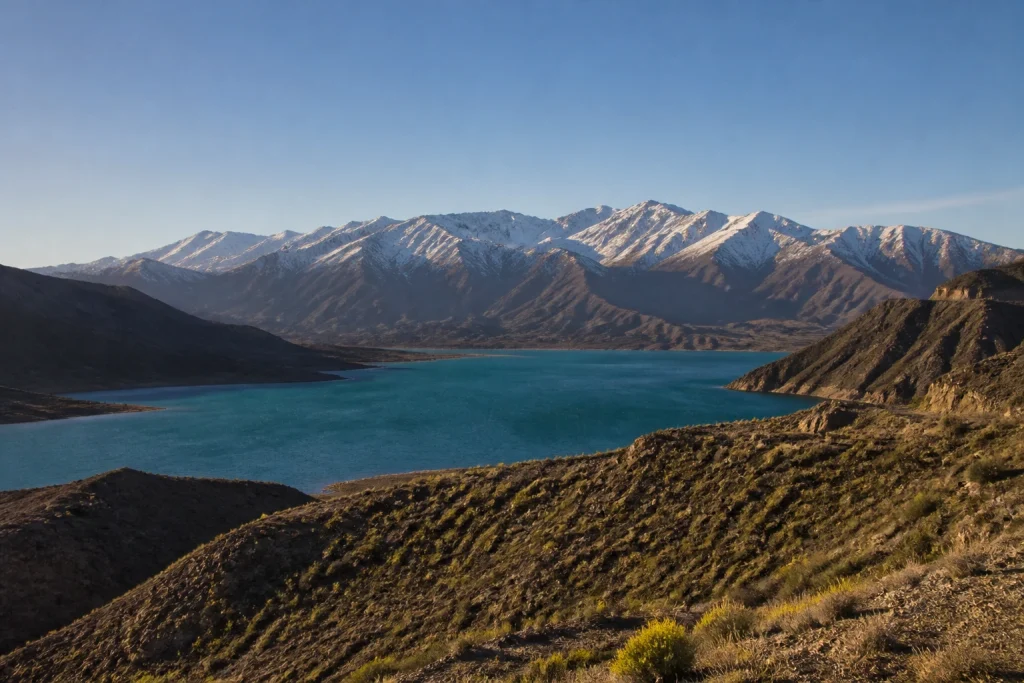
This is the Mendoza option to choose when you want visual scale without turning the outing into a formal park visit. Pick a lawful, safe place to stop, arrive with plenty of daylight, and keep the plan simple enough that you can enjoy the view without compressing the return. Potrerillos works best as part of a relaxed afternoon, not as a rigid race against the clock.
Serranía del Hornocal: a high-altitude late-afternoon spectacle
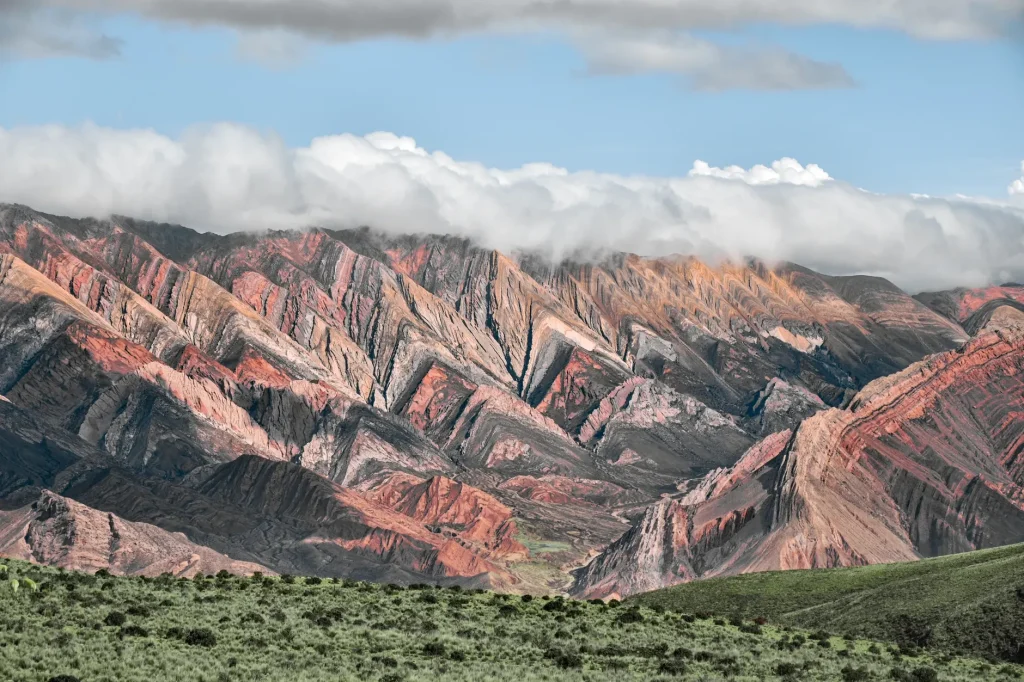
Near Humahuaca in Jujuy, Serranía del Hornocal is the northern visual standout in this guide. Its high point reaches 4,761 metres, giving the outing a genuine high-altitude character. The scale of the formation and its upland setting make it a memorable choice for travelers spending time in the Quebrada de Humahuaca.
A Jujuy tourism guide recommends visiting Hornocal between 11:30 and 18:00. That window makes it especially appealing in the later afternoon, when the landscape can take on a softer, lower-angle light. It does not promise that visitors can remain through sunset, so plan Hornocal as a daylight viewpoint and build your departure around the return journey and conditions at altitude.
Give yourself time to slow the pace, drink water, and make sensible decisions if the altitude feels demanding. High-elevation comfort shapes every choice here, so use Altitude in the Andes: A Plain-English Acclimatisation Guide before placing Hornocal or Horcones at the start of an ambitious itinerary. A calmer schedule is usually more rewarding than chasing the final minutes of daylight.
The Quebrada de Humahuaca: build a sunset route, not a single stop
The Quebrada de Humahuaca is best understood as a mountain-and-wildland itinerary, not one fixed overlook. It is reached via National Route 9 in northern Jujuy and supports hiking, riding, and 4×4 outings alongside its changing landscapes. That variety gives you more freedom to shape an afternoon around the light, your energy level, and the day’s road and weather conditions.
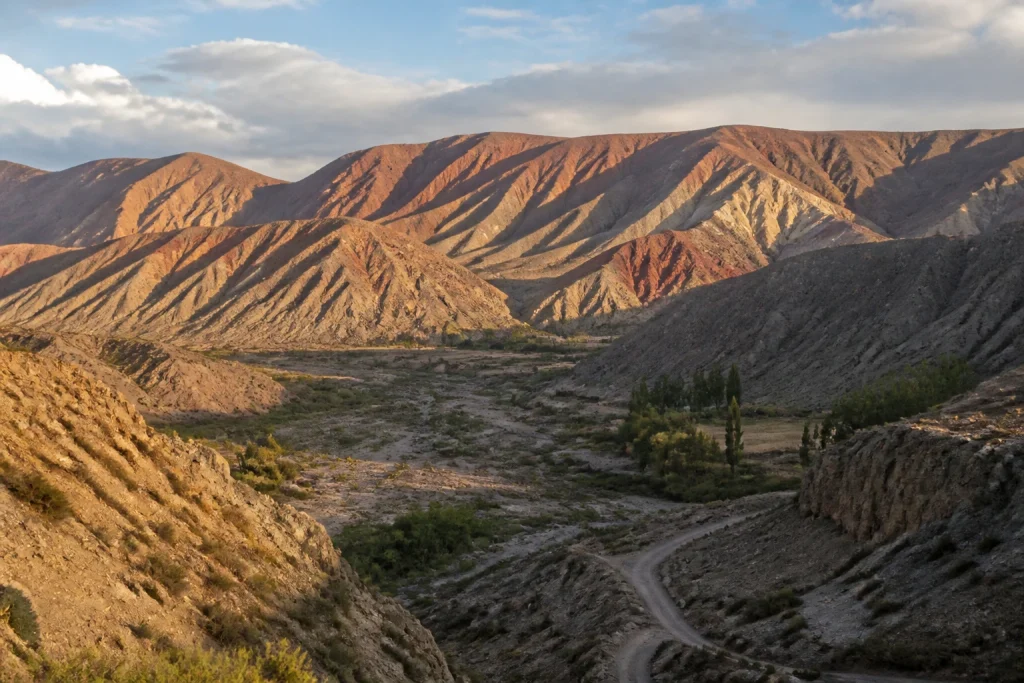
Use the Quebrada when your ideal sunset plan is a sequence of views instead of one headline destination. A route-based afternoon also gives you room to decide where to linger while staying mindful of daylight and safe travel conditions. Travelers extending the journey can pair this approach with Best Places to Visit in the Andes for First-Time Visitors for a wider regional itinerary.
Time the light around access, altitude, and the return journey
In the Andes, the practical sunset plan starts before the sun drops low. Check the local sunset time for your travel date, then work backward from the moment you need to leave. Managed parks can have entry or exit restrictions. High viewpoints demand more patience. A long drive back is far more pleasant when it is planned as part of the experience rather than left as an afterthought.
- Check the day’s access status before setting out, particularly for protected areas such as Aconcagua.
- Choose the setting first: formal park visit, reservoir landscape, high-altitude viewpoint, or a flexible Quebrada route.
- Allow time to reach the viewing area before the late-afternoon light, rather than arriving at the last minute.
- Keep a conservative buffer for weather, rest breaks, altitude, and the return journey.
- Leave when access rules, visibility, or conditions call for it, even if the colour is still improving.
Weather and changing access can reshape the plan
Weather has more authority than an itinerary in mountain country. Mendoza can suspend protected-area access because of force majeure or adverse conditions, and a paid reservation does not replace a same-day status check. Keep your plan adaptable: if a managed park is unavailable, a lower-commitment landscape such as Potrerillos can be a more practical use of the afternoon.
Prepare for altitude and exposure
Sun protection, hydration, rest breaks, and a first-aid kit belong in any mountain-day plan. These basics matter at every location in this guide, and especially at high-altitude spots such as Horcones and Hornocal. Keep the outing paced for the people in your group, rather than treating the last light of the day as a reason to ignore fatigue or exposure.
Travelers who need step-free routes, particular transport arrangements, or specific facilities should confirm those details before departure. This is especially important for remote highland outings, where the physical route and current operating arrangements strongly affect what is feasible on the day.
Choose the Andes sunset outing that matches your pace
Choose Aconcagua when a regulated, iconic mountain setting matters most and the day’s park rules fit your timing. Choose Potrerillos for an expansive reservoir-and-mountain landscape with a more relaxed feel. Choose Hornocal for a bold northern highland viewpoint during the daylight window, and choose the Quebrada de Humahuaca for a flexible landscape route. In every case, check conditions, respect the altitude, and leave enough time to get back comfortably.
Frequently asked questions
Can I plan to watch the actual sunset in Parque Provincial Aconcagua?
Do not count on it as a guaranteed sunset stop. Laguna de Horcones is a formal, timed park visit, so current operating hours, trail status, and exit rules determine whether visitors can remain into sunset.
Do I need to reserve Aconcagua in advance?
Yes. Parque Provincial Aconcagua requires an advance reservation and a paid ticket, and tickets are not sold at the park entrance.
When is the best time to visit Serranía del Hornocal?
Plan Hornocal during the recommended 11:30 to 18:00 visiting window. It is well suited to late-afternoon light, but the return journey and high altitude mean it should be treated as a daylight outing.
Which Mendoza option is better for a lower-commitment afternoon?
Potrerillos is the better fit for a lower-commitment scenic outing. Its reservoir, the Mendoza River, and the Cordón del Plata create a broad water-and-mountain setting without framing the day as a regulated Aconcagua visit.
What should I bring for an Andes sunset outing?
Bring sun protection, water, a basic first-aid kit, and allow for rest breaks. These simple precautions are especially important on high-altitude mountain days.
Are the viewpoints accessible by public transport or suitable for visitors with limited mobility?
Accessibility and transport arrangements vary by location and should be confirmed before travel. This matters most for remote highland destinations, where the route and current facilities shape the day’s feasibility.
Serranía del Hornocal is a high-altitude late-afternoon viewpoint near Humahuaca by Lucas Leonel Suárez, Pexels.
More bookable experiences
Three tours to compare
Review current provider details before booking. Discover Andes may earn a commission at no extra cost to you.
Continue exploring
More practical guides selected from the Discover Andes library.
The Andes Neighborhoods Guide
Choose the right Argentine Andes base for your trip, from Mendoza’s wine-country city rhythm to northern highland gateways,…
Best Parks and Gardens in The Andes
Plan a nature-focused stop in the Argentine Andes with this practical guide to Los Glaciares National Park, including…
The Andes Spring Travel Guide
Plan a rewarding Argentina Andes trip in spring with a practical choice between Mendoza’s wine country and Jujuy’s…

The Andes Girls Trip Guide
Plan an Andes girls trip in Argentina with practical comparisons of Mendoza, Jujuy, El Calafate, and El Chaltén,…