Best Andean Foods to Try
Argentina’s most distinctive Andean cooking is found in the northwest, where corn, squash, beans, Andean potatoes, quinoa, goat cheese, llama, and slow-cooked stews shape the table. The best foods to try are not a rigid ranking. They are a practical tasting list for travelers exploring Salta, Jujuy, Tucumán, Catamarca, and Santiago del Estero, where Andean and Creole traditions meet.
- Start with an empanada salteña: small, juicy, and often wood-fired.
- Compare humita en chala and tamales, two essential corn-based regional dishes.
- Order locro when you want a serious, slow-cooked meal rather than a snack.
- Seek out calapurca, huaschalocro, tijtincha, or llama dishes in Jujuy’s Puna and Quebrada.
- Finish with quesillo and cayote, or a fried pastry filled with cayote or quince.
Use Salta and Jujuy as the backbone of a food-focused trip. Salta offers an easy introduction through empanadas, market stalls, restaurants, and peñas, while Jujuy brings the stronger high-Andean character of the Quebrada de Humahuaca and the Puna. Menus vary by town and cook, which is part of the pleasure: the same dish can arrive with a different filling, seasoning, or level of heat.
The dishes that define an Andean food trail
A good order combines quick bites, corn dishes, one substantial stew, and a local sweet. Begin with foods that are widely associated with the northwest, then look for Puna specialties as your route climbs north and east through Jujuy. Availability is most dependable in their home regions, so treat a menu as an invitation to try what is being cooked well that day.
Empanadas salteñas
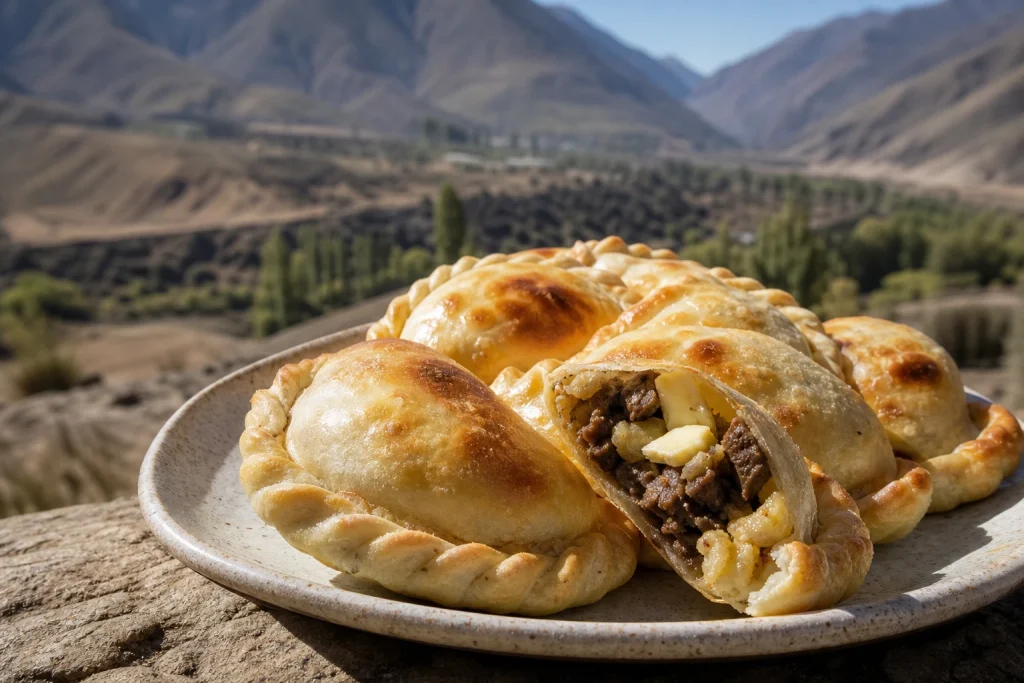
Empanadas salteñas are the natural first bite. These compact, juicy pastries are traditionally filled with hand-cut beef, potato, scallion, cumin, paprika, and hard-boiled egg, and are often cooked in a wood-fired oven. Goat cheese and charqui versions also appear. They make an excellent snack or light meal, especially when you want to sample several regional flavors without committing to a large plate.
Humita en chala
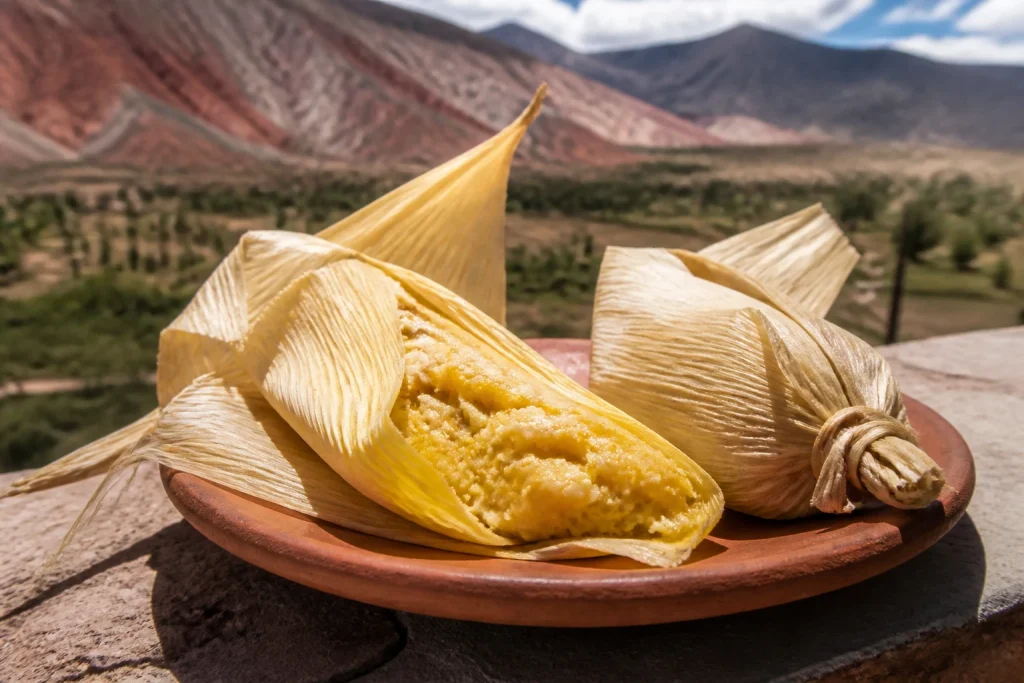
Humita en chala puts fresh corn at center stage. It is a staple across northwestern Argentina and is especially associated with the Quebrada de Humahuaca. The name refers to a corn preparation served in its husk, but recipes are not fixed. Ask how it is made at the place you choose, particularly if you have dietary requirements or are deciding between humita and a tamal.
Tamales
Tamales are another foundational corn-based choice, widely found throughout the northwest and highlighted in Jujuy’s Quebrada. They are a useful companion order to humita because the two dishes reveal how much local technique and filling choices matter in a seemingly simple wrapped preparation. Do not assume a standard vegetarian or meat filling: recipes and seasoning change from kitchen to kitchen.
Locro
Locro is the dish to choose when mountain air calls for something filling. This slow-cooked stew combines corn, squash, beans, and a mix of beef, pork, and sausage ingredients. It is often finished with a spicy oil-and-chile sauce, which can be added to taste. Locro is traditionally prominent around Argentina’s May 25 and July 9 holidays, though menus outside those dates depend on the restaurant or stall.
Calapurca, huaschalocro, and other Puna bowls
For food that feels most tied to the high Andes, look beyond the standard empanada list in Jujuy’s Puna. Regional specialties include calapurca, huaschalocro, tijtincha, and cazuelas. Their presence reflects a pantry built around quinoa, Andean potatoes, corn, and squash. These are the dishes worth prioritizing when a menu offers them, but do not expect every one to be available in every town outside the Puna or Quebrada.
Llama preparations
Llama is another characteristic ingredient in Jujuy’s regional cooking and gives a meal a distinctly high-Andean angle. Look for it in local preparations when traveling through the Puna or Quebrada rather than treating it as a guaranteed menu item throughout Argentina. Its regional context matters: llama dishes belong alongside the grains, potatoes, corn, and squash that define Jujuy’s food culture.
Quesillo, cayote, and sweet endings
Save space for quesillo, a fresh local cheese often paired with cayote or sugarcane honey. In Salta, fried pastries filled with cayote or quince offer another sweet finish. These desserts bring a welcome contrast after chile-spiked locro or a run of savory corn dishes. Adult travelers can also look for high-altitude wines in Jujuy’s temperate valleys and the Quebrada de Humahuaca.
| Dish | What to expect | When to choose it |
|---|---|---|
| Empanada salteña | Small, juicy pastry with traditional beef, potato, scallion, cumin, paprika, and egg. | A quick first taste or light meal. |
| Humita en chala | A corn preparation served in its husk; recipes vary by cook and place. | To explore the northwest’s corn traditions. |
| Tamal | A regional corn-based wrapped dish with variable fillings and seasoning. | Order alongside humita for comparison. |
| Locro | A slow-cooked stew of corn, squash, beans, and assorted meats. | When you want a substantial meal. |
| Calapurca or huaschalocro | Puna specialties associated with Jujuy’s highland cuisine. | When they appear on a Puna or Quebrada menu. |
| Quesillo with cayote | Fresh cheese paired with cayote or sugarcane honey. | A regional sweet finish. |
Where to taste Andean food in northwestern Argentina
Salta and Jujuy make the most practical bases for a focused tasting route. In Salta, seek out empanadas, tamales, humita, and regional sweets at family stalls, markets, restaurants, or peñas. In Jujuy, the flavor profile becomes more closely tied to the Quebrada and Puna, where corn, quinoa, Andean potatoes, squash, and llama are defining ingredients.
The Quebrada de Humahuaca
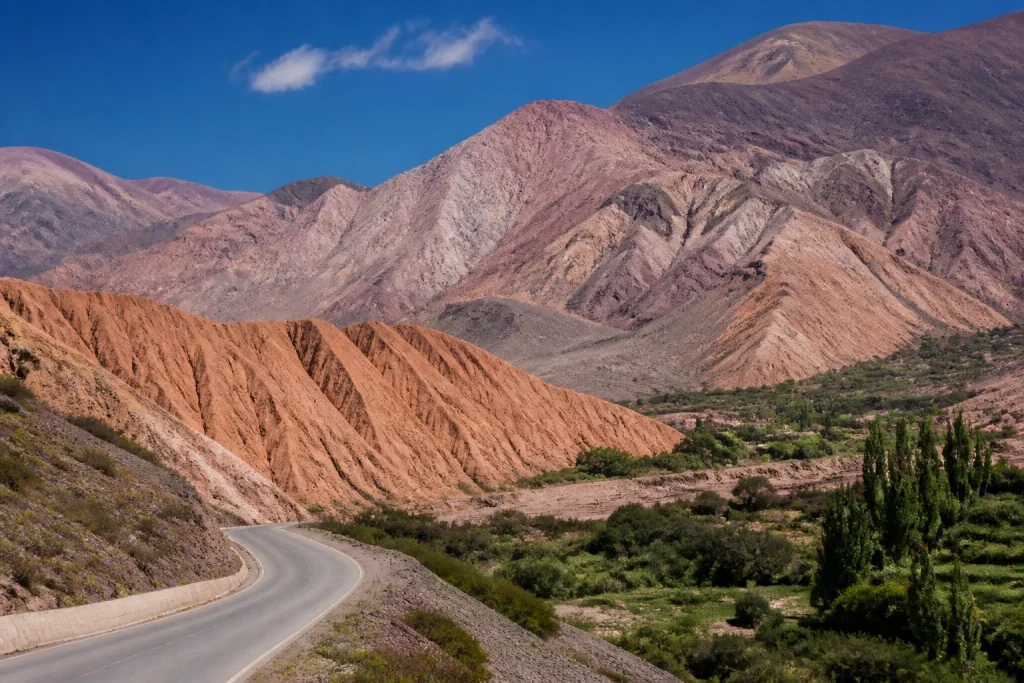
The Quebrada de Humahuaca is the clearest concentration for humitas, tamales, empanadas, and cazuelas. It lies along National Route 9, about 42 kilometers from San Salvador de Jujuy and 165 kilometers from Salta city. That makes it a logical food stop on a northbound road journey, where lunch can become a useful pause between the valley cities and higher terrain.
Jujuy’s Puna
The Puna is where the regional repertoire becomes most specifically high-Andean. Put calapurca, huaschalocro, tijtincha, and llama dishes at the top of your list here. Jujuy can rise above 4,000 meters, so take the journey gradually, drink water, eat lightly, and carry warm layers and sunscreen. For a deeper planning read, see Altitude in the Andes: A Plain-English Acclimatisation Guide before heading into the highest areas.
Food can also be part of community celebrations connected with Pachamama traditions. If you encounter a community event, follow local guidance and ask before photographing people or sacred rituals. In remote areas, services can be more limited than in the cities. Carrying some cash is sensible where connectivity is unreliable, but the specific warning about limited signal and ATM access is particularly relevant to Amaicha del Valle.
How to order a satisfying first meal
The easiest way to understand northwestern Argentine food is to order in layers rather than chase one oversized meal. Begin with an empanada, move to a corn dish, then choose a stew or Puna specialty if it is on the menu. End with quesillo and cayote. This approach gives you contrast in texture and flavor while leaving room to sample another local dish later in the day.
- Order one or two empanadas salteñas as an opening snack.
- Choose humita en chala or a tamal, then ask how the day’s version is prepared.
- Pick locro for a hearty lunch, or select calapurca, huaschalocro, or a cazuela when a Puna specialty is available.
- Share quesillo with cayote, or try a cayote- or quince-filled fried pastry for dessert.
- Add a local high-altitude wine only if you want an adult pairing with the meal.
Dietary needs: what to ask before ordering
Ask direct questions about fillings and preparation, especially when ordering traditional dishes. Empanadas salteñas are commonly meat-based, and locro generally contains assorted beef, pork, and sausage ingredients. Locro is therefore a poor default choice for vegetarians, vegans, travelers avoiding pork, or anyone seeking a lighter meal. The chile oil served with it can also add substantial heat.
Humita and tamales should be treated as recipe-dependent rather than automatically vegetarian. Cheese and meat fillings can feature in regional preparations, while seasoning changes by cook. Empanadas are not inherently gluten-free because of their pastry dough. If you have a serious allergy, celiac disease, or a strict dietary restriction, confirm both the ingredients and kitchen handling directly before ordering.
Prices, timing, and choosing where to eat
For economical sampling, family stalls and markets are the better fit. Restaurants and peñas suit travelers who want a fuller meal and, in the case of peñas, a music-oriented evening. Prices in Argentina change quickly, so use posted prices on the day rather than relying on older peso figures. In smaller towns, verify menus and opening hours before building your day around one specific dish.
If step-free entry, an accessible toilet, or reliable accessible transport is essential to your trip, contact the individual venue or provider before you go. These practical details differ widely among small-town eateries and are best confirmed for the exact place you plan to visit.
Build your Andean food route around Salta and Jujuy
Start in Salta with empanadas, humita, tamales, and cayote sweets, then follow the road toward San Salvador de Jujuy and the Quebrada de Humahuaca for deeper regional flavors. As you reach higher country, prioritize a Puna dish when one is offered and pace yourself for the altitude. This route keeps the food journey grounded in the places where these dishes are most closely associated.
The strongest food memory will often be a simple one: a juicy cumin-scented empanada, a corn dish unwrapped at the table, or a bowl of locro on a cool day. Try the familiar classics first, then let the menu lead you toward the local specialties of the Quebrada and Puna. That balance delivers a fuller taste of Argentina’s Andean northwest.
Frequently asked questions
What are the must-try Andean foods in Argentina?
Start with empanadas salteñas, humita en chala, tamales, locro, and quesillo with cayote. In Jujuy’s Puna and Quebrada, look for calapurca, huaschalocro, tijtincha, cazuelas, and llama preparations when available.
What is the difference between humita and tamales in Argentina?
Both are important corn-based dishes of northwestern Argentina, but they are distinct preparations and their fillings and seasoning vary by cook and place. Humita en chala is associated with a corn preparation served in its husk, while tamales are another regional wrapped corn dish.
Is locro vegetarian?
Traditional locro is usually not vegetarian because it contains assorted beef, pork, and sausage ingredients alongside corn, squash, and beans. Ask about the day’s recipe if you have dietary restrictions.
Where is the best area to try Andean food in Argentina?
Salta and Jujuy are the best bases, with the Quebrada de Humahuaca offering a particularly strong concentration of humitas, tamales, empanadas, and cazuelas. Jujuy’s Puna is the place to prioritize more high-Andean specialties such as calapurca, huaschalocro, and llama dishes.
Do I need to prepare for altitude on a Jujuy food trip?
Yes, especially when traveling into Jujuy’s Puna, where elevations can exceed 4,000 meters. Ascend gradually, hydrate, eat lightly, and bring warm layers and sunscreen.