The Andes Bike Tours Guide
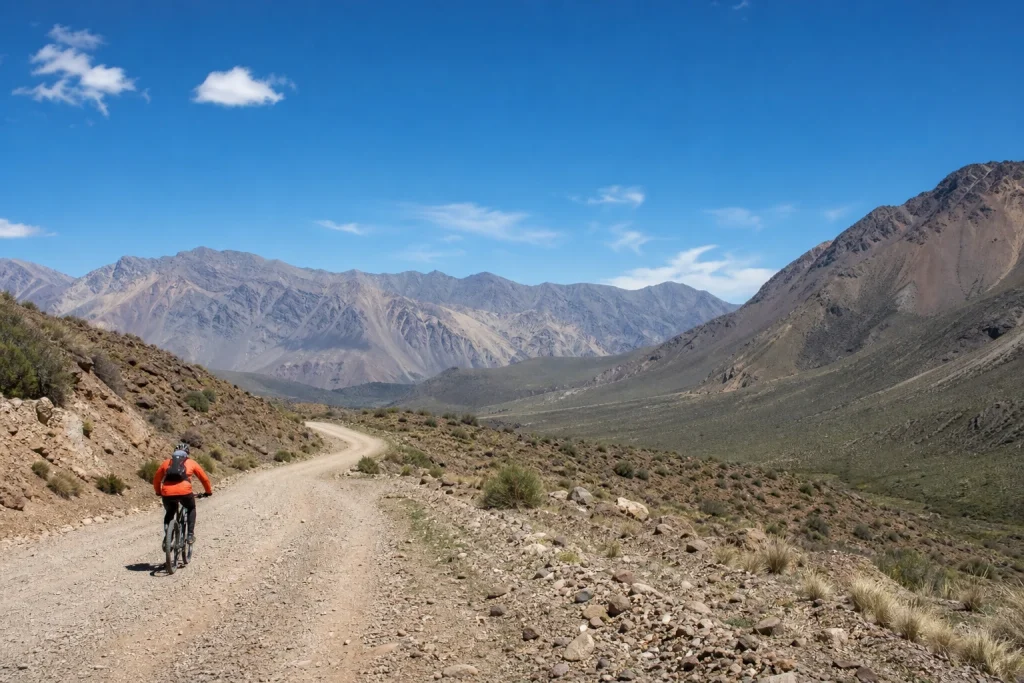
An Andes bike tour in Argentina rewards careful planning. Mendoza is the clearest starting point for many riders because Argentina’s tourism board includes mountain biking among its adventure activities. The real choices come next: base town, support level, changing mountain conditions, and the rules that govern where a bicycle can go. Use this guide to build a ride that is ambitious, well supplied, and suited to your experience.
- Start with Mendoza for the strongest officially supported mountain-biking base, or consider Salta and nearby San Lorenzo for a northern alternative.
- Autumn and spring are the recommended seasons for Mendoza; forecast checks matter, especially around the stronger Zonda winds of August and September.
- Treat high-country elevation as a serious planning factor, with layers, sun protection, water, and time to adapt.
- In national parks, ride only on routes specifically authorized for bicycles.
- Get dated quotes for tours, rentals, transfers, and access costs rather than relying on a single published price.
Choose an Argentine base before choosing a bike tour
Mendoza makes a practical first focus for Andes bike tours. It has official recognition as a destination for mountain biking, and it gives riders a defined place to begin comparing guided rides, rentals, accommodation, and transport plans. Rather than booking the first dramatic-looking route, decide how much elevation, remoteness, and vehicle support you want in a day.
For Mendoza, autumn and spring are the seasons recommended for visits. Summers are dry and winters are humid, while the Zonda wind is more intense in August and September. That does not rule out riding in other periods, but it makes a current local forecast and an operator’s route assessment essential shortly before departure.
| Base | What is established | How to use it in your planning |
|---|---|---|
| Mendoza | Mountain biking is listed among the destination’s adventure activities. | Use it as the main base for comparing Andes-focused bike experiences and support options. |
| Salta and San Lorenzo | Mountain biking is listed among outdoor activities; San Lorenzo lies 12 km from Salta city. | Consider it as a northern alternative, then confirm the exact trail, transfer, and bike arrangements with the chosen provider. |
Pick the tour format that matches your confidence and logistics
The useful distinction is not simply mountain bike versus road bike. It is how much help you need when the route changes. Guided and self-guided formats can both work, but they place responsibility for navigation, repairs, weather decisions, transport, and route permission in very different hands.
Guided rides for high-consequence terrain
A guided format is the sensible choice when a route is remote, high, technically demanding, or dependent on a shuttle. Ask for the actual riding surface, total climbing and descending, expected riding time, vehicle support, mechanical backup, and the guide’s plan if weather changes. In protected areas, also ask which approved route the group will use and whether a guide is required.
Self-guided riding for independent planners
Self-guided riding suits cyclists who are comfortable maintaining a bike, navigating without a lead guide, and changing a plan when conditions demand it. Build the bicycle’s journey into the itinerary as well. Carriers set their own bicycle carriage and baggage rules, while pickup points and bike transport are arranged by individual operators, so confirm those details before committing to travel dates.
A hybrid approach
A balanced trip can combine shorter independent rides near a chosen base with a guided high-country day. This approach keeps the complicated route, weather, and access decisions inside an organized outing while leaving space to explore at your own pace on days with simpler logistics. Match every independent ride to your current fitness, bike setup, and navigation skills.
Plan for altitude, sun, wind, and fast temperature shifts
High Andes travel needs more than strong legs. For regional context, Argentina’s Andean Crossing experience reaches 4,500 m and is described as dry, with large temperature swings and a need for physical effort at altitude. Use that figure to understand the high-country environment, not as an elevation promised by any cycling itinerary. A bike route’s maximum altitude must come from its operator or route manager.
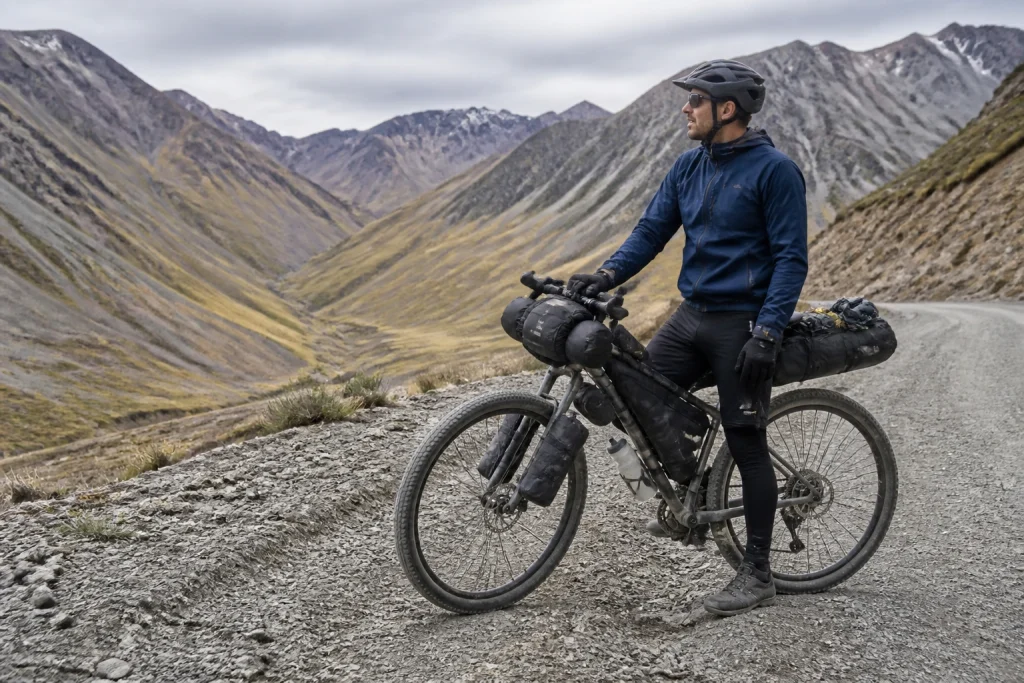
- Carry warm layers that can be added quickly when temperature and wind change.
- Use sun protection appropriate for exposed, high-country conditions.
- Bring enough water capacity and food for the route, not just the distance shown on a map.
- Pack repair supplies, a navigation method, and an emergency communication plan for remote riding.
- Check that the bicycle has effective steering, brakes, mirrors, a warning device, mudguards, and lights or reflective signaling for road-connected riding.
- Wear a helmet and inspect the bike before every departure.
Give yourself time to adapt before demanding high-country riding. The site’s “Altitude in the Andes: A Plain-English Acclimatisation Guide” is useful background for shaping those first days. Keep the opening rides conservative, pay attention to how you feel, and avoid treating a scenic high route as a fitness test on arrival.
Respect protected-area cycling rules
A trail on a map is not automatically a bike trail. Argentina’s National Parks service directs cyclists to use only routes authorized for bicycles and to check the specific circuit for weather, openings, and any guide requirement. For commercially guided bicycle excursions in protected areas, regulations limit riding to authorized routes, vehicle tracks, or secondary roads as applicable.
This rule matters most when a route passes through a protected landscape. Do not assume that hiking paths, scenic tracks, e-bike routes, or trails used in online videos are open to bicycles. Ask the park or operator about the exact circuit you intend to ride, then treat a closure, weather restriction, or reroute as part of normal mountain travel rather than an inconvenience to work around.
- Choose a base and decide how much supported riding you want.
- Request the current route description, including surface, elevation profile, and turnaround plan.
- Match the route to your experience rather than a broad “beginner” or “advanced” label.
- Confirm bicycle authorization directly for any protected-area section.
- Keep a lower-commitment alternative for a day affected by weather or wind.
Treat road sections as part of the ride, not a transfer gap
Road-connected sections deserve the same attention as the mountain portion. Argentina’s traffic-law text lists bicycle requirements including effective steering and brakes, mirrors, a bell or similar warning device, a helmet, mudguards, and lights or reflective signaling. Check your own bicycle or rental against those essentials before leaving town.
For remote riding, legal equipment is the starting line rather than the whole kit. A pump, spare tube or repair method, multitool, charged navigation device, extra water, layers, and a clear return plan are just as important. Tell someone where you expect to ride, especially if the route has limited services or relies on a later pickup.
Solve bike transport and arrival logistics early
Mendoza and the Salta-San Lorenzo area are established activity bases, but the details that determine a smooth bike trip are provider-specific. Confirm your chosen carrier’s bicycle packing, baggage, and carriage policy before purchasing transport. If a tour includes a shuttle, establish the meeting point, pickup timing, bike transport method, and what happens if conditions require a change of route.
Bring your own bicycle or rent locally
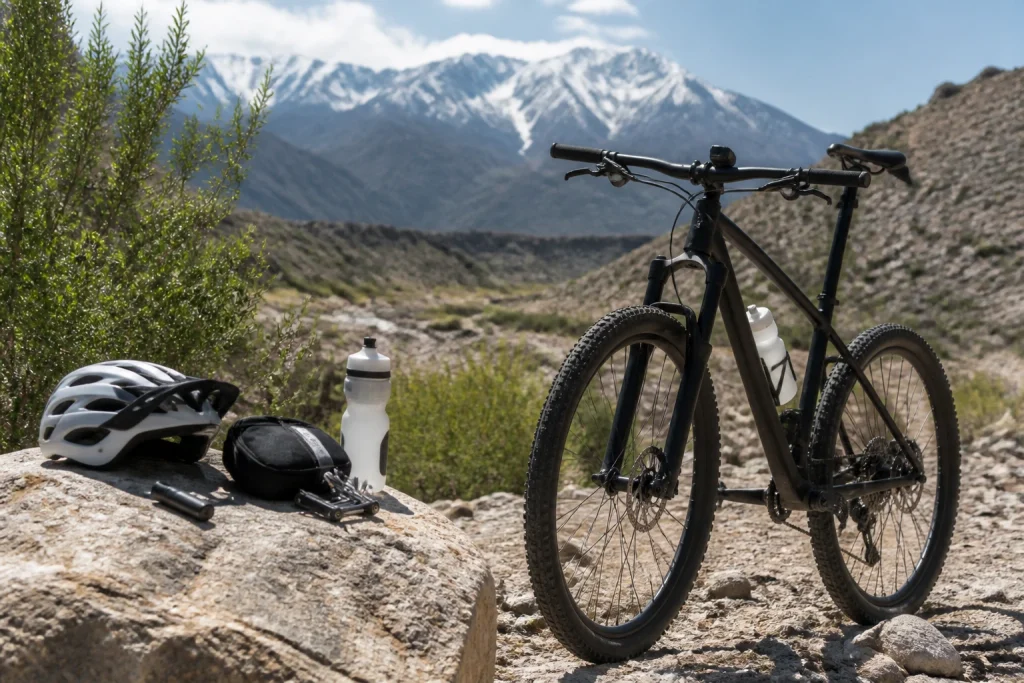
Bringing your own bike gives you a familiar fit and setup, but it adds packing and carrier decisions. Renting reduces those transport tasks, but availability, sizing, pedal compatibility, repair support, and the suitability of the bike for the intended terrain all need to be settled with the provider. Do not assume that e-bikes, adaptive cycles, trailers, or children’s equipment are available.
Budget with variables, not a headline price
Andes bike-tour costs depend on the format you choose. A guided day, a private transfer, rental equipment, accommodation, food, park access, and contingency transport can each change the total. Ask for a dated quote that separates what is included from what remains your responsibility, especially for shuttles, bicycle transport, equipment, and route changes caused by weather.
| Budget item | What to clarify before booking |
|---|---|
| Riding format | Guide services, group size, route support, and what happens if the route changes. |
| Bicycle | Rental model, size, pedals, helmet, repair kit, and damage terms. |
| Transport | Pickup point, shuttle inclusion, bike carriage, and return arrangements. |
| Access and overnight costs | Any required access arrangements, accommodation, food, and backup transport. |
Ask operators questions that reveal the real ride
A polished photo is less useful than a specific answer. Good planning starts when the provider can describe the day in practical terms and adapt the plan to your experience. Put the questions below in one message, then compare the answers rather than comparing only the route names or promotional images.
- What is the exact authorized route, surface, elevation gain, and maximum elevation?
- How long is the expected riding time, and is there a vehicle support or bailout option?
- What bicycle, helmet, repair equipment, food, and water support are included?
- Where is the meeting point, and how are riders and bicycles transported?
- What experience level is genuinely needed for this specific route?
- What is the weather and wind contingency plan?
- If the ride enters a protected area, what bicycle authorization or guide arrangement applies?
Build a focused Andes bike trip
The most rewarding Andes bike tour is usually the one that matches its landscape to the rider. Choose Mendoza for the strongest established mountain-biking starting point, or look at Salta and San Lorenzo for a northern option. Then prioritize a route with clear access, realistic altitude demands, dependable bike logistics, and a weather-aware backup plan. Save the hardest or highest day until you have settled in and know how the mountains are behaving.
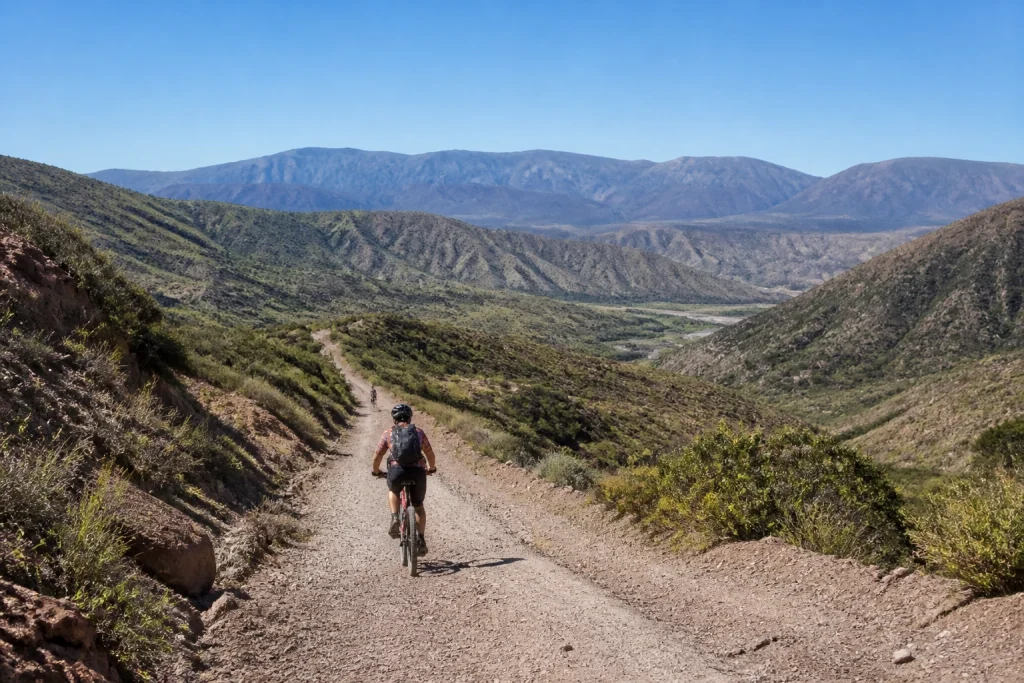
Frequently asked questions
Where is the best base for Andes bike tours in Argentina?
Mendoza is the strongest starting point because mountain biking is listed among its official adventure activities. Salta and San Lorenzo are also worth considering for a northern alternative, but confirm the exact riding arrangements with your provider.
What is the best season for a bike tour around Mendoza?
Autumn and spring are the recommended seasons for visiting Mendoza. Summer is dry and winter is humid; in August and September, check forecasts carefully because the Zonda wind is more intense during that period.
Can I cycle in Argentina’s national parks?
Yes, but only on routes authorized for bicycles. Check the individual park for the desired circuit, weather, openings, and any guide requirement before you ride.
Are high-Andes bike rides suitable for beginners?
Suitability depends on the specific route, altitude, surface, weather, and support rather than a general label. High-country travel can be physically demanding and altitude-sensitive, so ask for route-specific details before booking.
What safety equipment should I take on an Andes bike ride?
Use a helmet and ensure the bicycle has effective steering, brakes, mirrors, a warning device, mudguards, and lights or reflective signaling for road-connected riding. For remote mountain days, add repair supplies, water capacity, layers, navigation, sun protection, and an emergency plan.
How much do Andes bike tours in Argentina cost?
Costs vary by guided or self-guided format, bicycle rental or transport, transfers, lodging, food, access arrangements, and contingency transport. Request a dated quote that clearly lists inclusions for your chosen trip.
More bookable experiences
Three tours to compare
Review current provider details before booking. Discover Andes may earn a commission at no extra cost to you.
Continue exploring
More practical guides selected from the Discover Andes library.
Best Mountains in the Andes
Compare four standout mountains in Argentina’s Andes, including Aconcagua, Fitz Roy, Cerro Tronador, and Lanín, with practical guidance…

Best The Andes Photo Spots
Plan a photography-focused trip to El Chaltén, Argentina, with Laguna de los Tres, Laguna Capri, Laguna Torre, and…
The Andes Solo Travel Guide
Plan a rewarding solo trip through Argentina’s Andes by choosing the right region, timing mountain travel carefully, and…
The Andes Art and Culture Guide
Explore the art, living traditions, museums, historic streets, crafts and high-desert cultural landscapes of Argentina’s northwest, with practical…