Where to Eat in The Andes
For a food-led trip into the Argentine Andes, set your sights on Salta and Jujuy. Argentina’s mountain country also reaches Mendoza, Bariloche, and El Chaltén, yet the north offers the clearest route through empanadas, corn dishes, highland stews, folk-music dinners, and regional wine. This guide focuses on those northern Andes, where a meal can be as memorable as the road between towns.
A northern Argentina food route, not the whole mountain chain
- Use Salta city for the easiest mix of regional food, casual empanadas, and evening folk-music peñas.
- Order knife-cut beef empanadas in Salta, then make room for humitas, tamales, and cazuelas in Tilcara and the Quebrada de Humahuaca.
- Treat the Puna as the place to seek calapurca and other highland dishes, with flexibility built into the plan.
- Pair regional cooking with Torrontés in Salta or wines from Jujuy’s valleys and Quebrada de Humahuaca.
- Allow two to four days for Salta and two to five for Jujuy if food is a central reason for the trip.
Think of this as a route with three distinct appetites. Salta city is social and convenient, with regional dishes and peñas gathered around Calle Balcarce. Tilcara and the Quebrada bring corn-based classics into focus. The Puna calls for more patience, warmer clothes, and an appetite for foods that are not always listed in conventional restaurants.
| Stop | Foods to seek | Best reason to include it |
|---|---|---|
| Salta city | Knife-cut beef empanadas, humitas, tortillas al rescoldo, llama or goat asado | The most straightforward base for casual regional meals and a folk-music evening. |
| Tilcara and the Quebrada de Humahuaca | Humitas, tamales, empanadas, cazuelas, pastel de llama | A concentrated introduction to Jujuy’s regional cooking. |
| The Jujuy Puna | Calapurca, tijtincha, huaschalocro | The most specialized high-altitude food search, best approached with flexibility. |
| Salta and Jujuy wine areas | Torrontés and other high-altitude wines | A more leisurely food-and-wine meal that fits a separate winery stop. |
The route works best when meals shape the day rather than interrupt it. Keep an informal Salta lunch light enough for an evening peña, arrive early when a popular Tilcara kitchen is on the plan, and leave the Puna portion open to local advice. These places reward curiosity, but they do not need a frantic checklist.
Eat and listen in Salta city
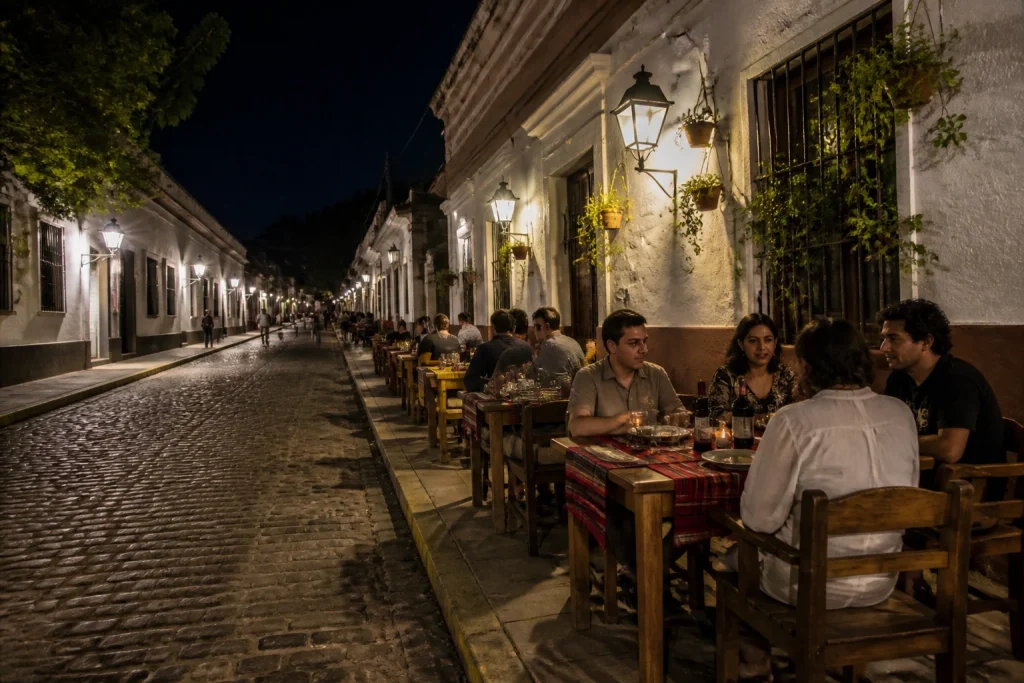
Salta city is the most practical first stop for travelers who want to eat well without turning every meal into a long detour. Calle Balcarce brings together bars, regional-food restaurants, and folk-music peñas. It is a useful place to begin with classic northern flavors, then settle in for an evening built around dinner and live folklore.
Start with a Salta-style empanada
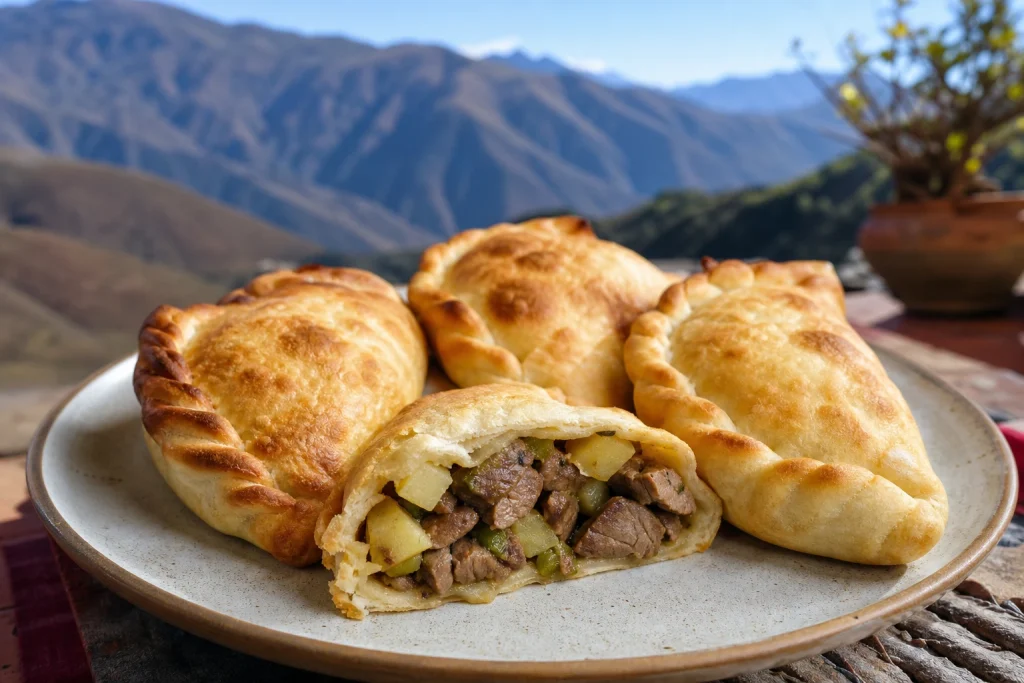
The signature salteña empanada is a strong opening order: its filling combines knife-cut beef, potato, scallion, and regional seasoning. It is the sort of food that suits an unhurried, casual stop before a day of city wandering or a drive onward. Order it alongside other local staples such as humitas or tortillas al rescoldo when they are available.
Mercado Artesanal de Salta is a useful daytime lead for traditional salteña empanadas. Go for the informal setting and the regional specialty rather than a formal meal. Opening times, menus, and service arrangements can change, so check current details before planning a special journey across town.
Make one dinner a peña night
A peña gives Salta dinner a built-in soundtrack. Balderrama and Los Gauchos de Güemes are classic names in the city’s folk-music scene, while Calle Balcarce remains the natural district for an evening out. Save this plan for nighttime, and allow the meal to unfold at its own pace instead of treating it as a quick stop between sights.
For travelers with limited time, Salta is the lower-logistics choice: regional dishes are easier to seek here than in the more remote highlands, and dinner can double as a cultural evening. Choose a peña for atmosphere, but confirm that day’s program and table arrangements directly before you go.
Find humitas, tamales, and llama dishes in Tilcara
Tilcara is the place to slow down and eat through Jujuy’s best-known regional dishes. Humitas, tamales, empanadas, and cazuelas form the foundation here. These are the flavors to prioritize over generic café food, especially if the Quebrada de Humahuaca is only one part of a broader northern Argentina itinerary.
Choose corn dishes first
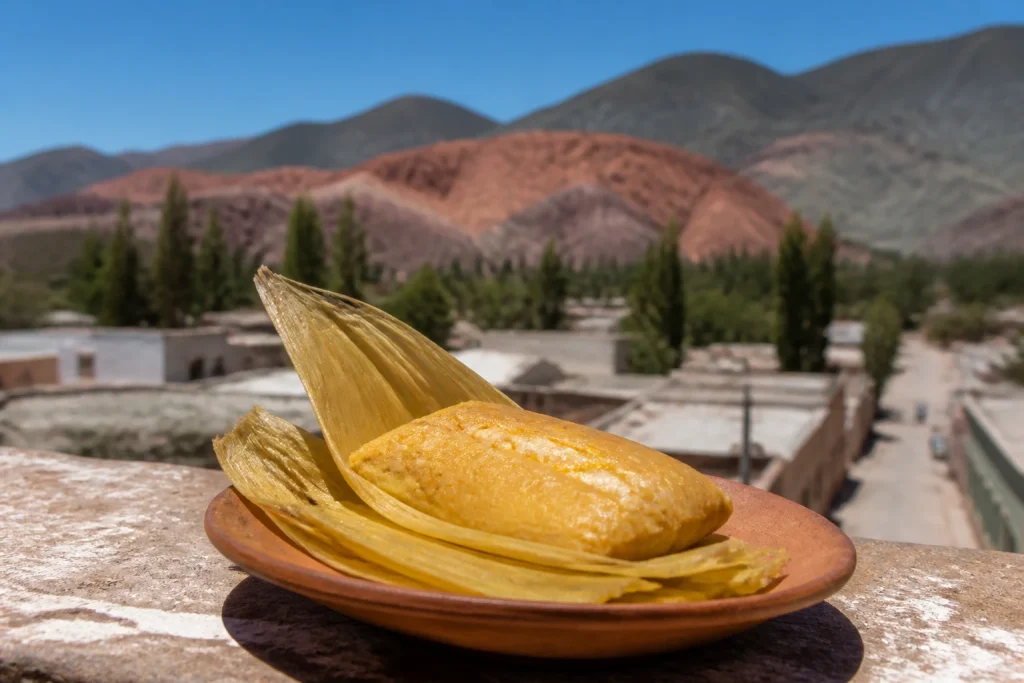
Humitas deserve a place near the top of the list in Tilcara. Tamales offer another essential regional order, while cazuelas provide a more substantial choice when you want a proper sit-down meal. Pastel de llama is another dish to look for if you want to move beyond the most familiar northern Argentine standards.
Restaurante La Picadita is a notable lead for humita, and Los Puestos is flagged for humita and pastel de llama. La Picadita can sell out early, so eat earlier in the day if it is a priority and keep a second option in mind. That small adjustment is often more useful than trying to fit every meal into a fixed schedule.
Tilcara suits travelers who enjoy building a day around one excellent regional dish, then letting the rest remain flexible. The smart approach is simple: order local foods first, arrive early at popular places, and use the town as a base for tasting rather than trying to reproduce a city-style dining crawl.
Seek the Puna’s warming highland dishes with patience
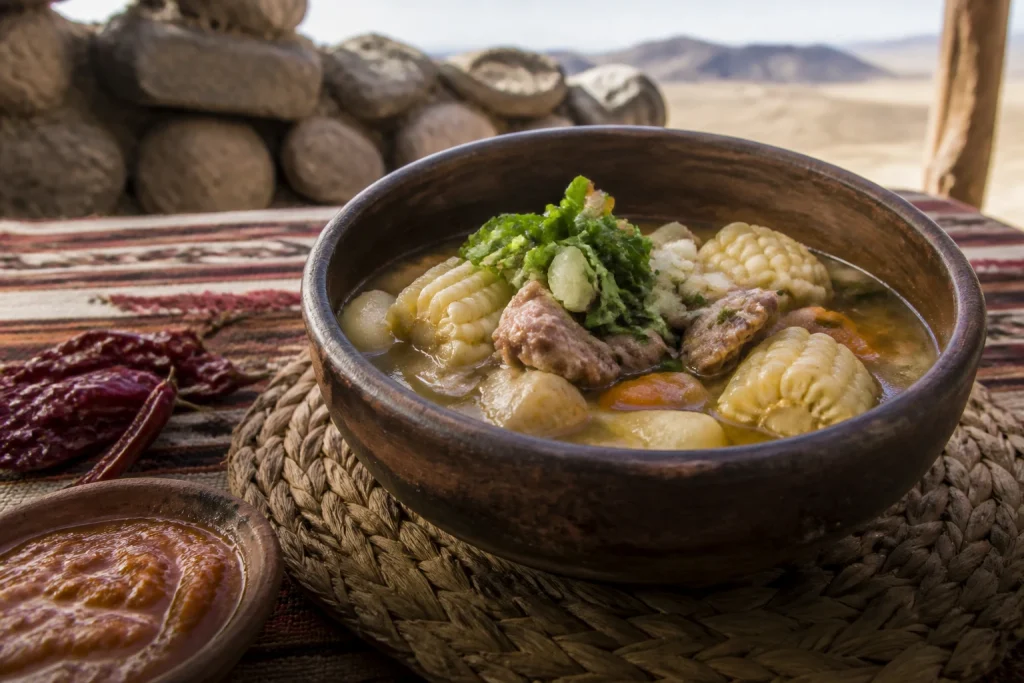
The Puna is where northern Andean food becomes more specialized. Look for calapurca, tijtincha, and huaschalocro, dishes associated with the highlands of Jujuy. Calapurca is especially worth seeking: a warming stew of corn and meat, it is closely tied to the high Puna and suits the region’s dry, high-elevation conditions.
Do not build the day around one elusive dish
Calapurca is difficult to find in conventional restaurants, so treat it as a rewarding possibility rather than a guaranteed menu item. Ask locally about cooks or seasonal opportunities, and be ready to choose another regional dish if it is unavailable. This is the Puna’s central dining tradeoff: the food can be distinctive, but the search is less predictable than in Salta or Tilcara.
Plan for altitude and sharp temperature changes
Parts of Jujuy rise above 4,000 meters and conditions are predominantly dry. Pack warm layers for changing temperatures and sunscreen for daytime exposure, then give this leg of the route more breathing room than a city meal stop. The companion article, Altitude in the Andes: A Plain-English Acclimatisation Guide, is useful reading before adding Puna dining to a packed itinerary.
- Bring warm clothing, even when the day begins bright and dry.
- Carry sunscreen for time spent outdoors between meals and stops.
- Allow extra flexibility for the Puna rather than planning meals on a tight timetable.
Pair northern dishes with high-altitude wine
Wine belongs in this food itinerary, but it serves a different purpose from a low-key market lunch or town empanada stop. Torrontés is Salta’s signature grape, and Jujuy also produces wines in its mild valleys and the Quebrada de Humahuaca. Choose a wine-focused meal when you want to linger over regional cooking and tasting, rather than when you need the quickest, least expensive meal of the day.
Keep the two experiences distinct in your planning. Casual town eating is ideal for trying a broad range of dishes across Salta and Jujuy. Winery dining is better treated as its own occasion, where the meal and the wines share center stage. Both belong on a northern Andes route, but they fit different budgets and rhythms.
Build an itinerary around Salta and Jujuy gateways
Give the route enough time to move at a comfortable pace. Salta is best with two to four days, while Jujuy merits two to five days. Those ranges leave room for a city meal, a peña night, a Quebrada food stop, and a more deliberate highland excursion without forcing every experience into a single day.
| Available time | Food-first plan |
|---|---|
| Two to three days | Base in Salta, eat empanadas and regional dishes, and reserve one evening for a peña. |
| Four to six days | Add Tilcara and the Quebrada de Humahuaca for humitas, tamales, cazuelas, and llama dishes. |
| A longer northern route | Include the Jujuy Puna with a flexible plan for highland cooking and changing conditions. |
Use Salta city and Jujuy as transport gateways rather than assuming every mountain village is equally simple to reach. Salta’s General Martín Miguel de Güemes airport and Jujuy’s Gobernador Horacio Guzmán airport provide air access, while National Route 34 connects the provinces by road for bus and private-vehicle travel. Confirm current transport schedules and the final leg to your chosen town close to departure.
Budget by meal style, then confirm the details
Avoid planning this route around old peso or dollar figures. A useful rule is to treat market and empanada meals as the low-commitment option, peña dinners as a more substantial evening out, and winery dining as the higher-cost food-and-wine experience. Check current menus, reservation terms, and payment arrangements before committing to a particular place.
Accessibility and dietary arrangements vary by venue and should be checked directly when they matter to your trip. Ask about step-free entry, accessible toilets, seating, menu formats, and ingredient needs before traveling to a specific market, peña, or restaurant. This is particularly worthwhile when a meal stop is a key part of a long driving day.
The best northern Andes food plan is a flexible one
Start in Salta for the easiest introduction, move to Tilcara for humitas and other Jujuy staples, then add the Puna when you have time to travel slowly and eat opportunistically. This route suits curious travelers who value regional cooking over polished uniformity. Its main limitation is that the most remote specialties cannot be guaranteed, but that is also what makes a successful highland meal feel like part of the journey.
Frequently asked questions
What foods should I try in the northern Argentine Andes?
Start with Salta-style knife-cut beef empanadas, then seek humitas, tamales, cazuelas, and pastel de llama in Jujuy. In the high Puna, look for calapurca, tijtincha, and huaschalocro when local availability allows.
Where should I eat in Salta for local food and music?
Calle Balcarce is Salta’s most useful district for regional-food restaurants, bars, and folk-music peñas. Mercado Artesanal de Salta is a daytime lead for traditional empanadas, while Balderrama and Los Gauchos de Güemes are classic peña names for an evening out.
Where can I find calapurca in Jujuy?
Look for calapurca in the Jujuy Puna, where the corn-and-meat stew is associated with highland cooking. It is hard to find in conventional restaurants, so ask locally and keep your meal plan flexible.
How long should a Salta and Jujuy food trip take?
Allow two to four days in Salta and two to five days in Jujuy for a relaxed food-focused itinerary. More time is useful if you want to include Tilcara, the Quebrada de Humahuaca, and the Puna without rushing.
Can I reach Salta and Jujuy by air or bus?
Yes. Salta is served by General Martín Miguel de Güemes airport and Jujuy by Gobernador Horacio Guzmán airport, while National Route 34 provides road access by bus or private vehicle. Confirm current schedules and onward connections before departure.
Are restaurants and peñas in the northern Andes accessible?
Do not assume a venue has step-free access or specific dietary facilities. Check directly with each market, peña, or restaurant about access, toilets, seating, menus, and ingredient needs before making a special trip.